New Q&A – The Airbnb Host

The one thing still working in crisis-stricken Greece is tourism. Thus many Greeks, looking for ways to supplement their income, have started setting up their houses and flats as Airbnb accommodation. Whether in Athens, in the countryside or on the islands, this is good news for travelers, since they get to experience a side of Greek life not visible in a hotel. Strolling in an unknown neighborhood, buying a bottle of milk in the corner shop, having coffee or an ice cream in a local café. And this at a very reasonable price and, if one choses well, accompanied by a warm welcome. 

Meet Ioannis Vasileiou, proud owner of an apartment in one of the cooler neighborhoods of Athens. 
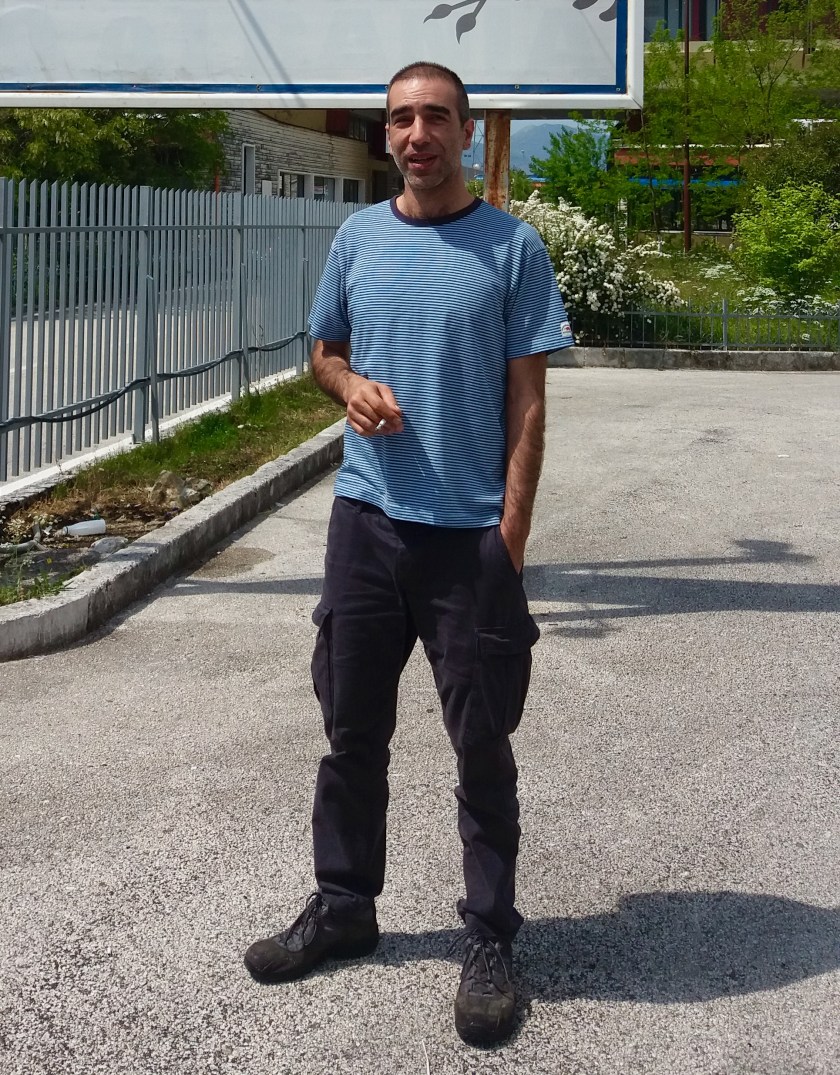
 

Tell us a little about yourself

I was born in Athens but after a while my family moved to my father’s birthplace, Eleousa, a village a few km outside the city of Ioannina in North West Greece, very close to the borders with Albania. In 1999 after finishing high school I went to Mytilini (the capital of Lesvos Island) to study Social Anthropology & History at the University of the Aegean. After I took my degree I spent one year in the army (there is no choice in Greece, you either go to the army or you leave the country until you reach your 40s or you must have a physical or mental health issue in order to avoid it) and then went back to Ioannina. I spent around 10 more years in Ioannina in various jobs (that were never related to my degree) ranging from the chicken industry to bookstores. For the last 3 years I’ve lived in Athens. Throughout my life (well, after the age of 9) what I mostly loved was to discover new music and collect it in every possible way (tapes, vinyls, CDs, CDrs, MP3s)—I never stopped buying music even after MP3. MP3s only helped me to discover even more music.
Since last summer I own an apartment in the center of Athens that I offer for rent to travellers through Airbnb.

What were the major difficulties you’ve faced in the last five years?

I thought a lot before answering this question. I could easily write several pages to answer. If I had to answer with just one word, this word would be Depression. Not just my depression but the whole country’s depression. How would you feel if suddenly you were not able to do all the things you loved and enjoyed doing and especially if this was not caused by your choices but other people’s choices? I loved to wake up every day and go to my work and meet my colleagues, I loved to go to a record store and browse for hours until I bought something, I loved to go out with my friends for a drink, I loved to plan my holidays. After a few years of the crisis I was not able to feel the same. I started to hate my work, because my boss was not paying me on time, and when he was paying it was always less than it should be. I could not make jokes with my colleagues, they were all uncertain about their future, and the future of their kids. I remember one specific colleague saying everyday, ‘What will I do? I have two kids to take care of.’ I could no longer go to record stores and buy music, instead of that I had started selling (piece by piece) my collection in order to pay my bills and my rent. I had friends I wanted to call to have a coffee with them, but sometimes I wouldn’t because I knew they had no money in their pocket, not even for a coffee. Holidays?


Did anyone in particular inspire you or help you?

I get inspiration from everyone and everything that can “touch” me. It can be a behaviour, a book, a song, an artist, a friend, a teacher, a family member etc. But if I need to answer in particular no one has inspired me and helped me as much as my parents did. Thanks to them I learned to be frugal. Thanks to them I always had money in my pocket (even in the most difficult times) not just for my coffee but for my friend’s coffee too. Thanks to them I now own a flat that offers me a monthly income good enough so that I will not have to work for a boss or a company that treats its employees like slaves.

What are your hopes/plans for the future?

My only hope is that I will continue to be able to maintain my personality. That I will be able to resist to anything I find not fair. I don’t have plans for the future. Greece is still a place where uncertainty is the only thing you can be certain of.

What are your hopes for Greece? What changes do you hope to see happen?

Greece since the very first moment that it became a nation is a country where corruption rules. I don’t mean that Greeks are corrupted. The only people who are corrupted in Greece are those who are in to politics and critical positions. Corruption is not something in our DNA, all the corrupted Greeks became corrupted by forces outside of the country. If anyone wants to discuss this further with me it will be my pleasure. This is what I hope and wish will change to the better. Some tiny changes have already started to happen but this is a very long road…


Have you considered leaving? If so, where would you like to go, and why?

Thankfully I never seriously considered leaving Greece. Even though I could and even had a job offer from abroad (my brother is living abroad, he did not leave Greece because of the crisis, but because of the crisis he is not thinking to return. When I visited him in the early years of crisis, his boss offered to take me in his company too.)
The fact that I do not have a family of my own yet, saved me from this thought. All the friends I have that started a family and are now outside of Greece are not considering coming back and I can understand why.

If you have already decided to leave what would make you stay?

“There’s nothing like the Sun,” would be my answer to this question.

Are you actively doing anything to help with the situation? Is there something you would like to do?

Am I? I don’t know. One of the things that the depression I mentioned above did to all Greeks was to make them inactive. Can you imagine that there were (some still are) people working in jobs without getting paid at all for a whole year? Do you know what the majority of them did about it? Nothing! Because they were all afraid that they would lose their job and they would not be able to find a new one. Do you remember my colleague with the 2 kids? We were also friends, I was trying to convince him and my other colleagues to demand our money when our boss started not paying us properly. His answer was always the same “I have 2 kids…”. A few months later our boss started to ask us to put our signature for monthly payments that we had never taken. I refused to sign and I was fired. After one year and a half I managed to get paid in full the 3 month’s salary that he owed me. My colleague continued to work on the same job for a few more years until he was fired too. Our terrible boss owes him now the salaries for almost a year. I saw my colleague a few months ago in his new job, he has no hope at all that he will ever get these payments. He was such a good employee, anyone would give him a job, but the uncertainty and the fear he had could not let him understand it and take a risk for his own good. If I am doing something actively it is that I try to respect not just my rights but everyone’s rights. If I see something that looks to me unfair, I will point at it instead of looking the other way.


How do you see Greece in 5, 10 years?

I really can not look that much forward. Greece has the finest tourist product to offer, but tourism as much as it can help a country to recover from a financial crisis, can also bring disaster. So I think that in 10 years we will know the answer. I only hope that we will not become the poor local servants of the wealthy foreigners.

How do you cope with obstacles and frustrations in your everyday life ?

I think that we Greeks and maybe Mediterraneans in general know how to cope with all the obstacles and difficulties. We can have patience with them, but we can also put them aside for a while and have a nice time. To give you an example, I used to go out in bars like most of the people… when I could not afford it anymore I did not stay in depression in my house, I went out with friends having a nice time on a pedestrian street or a square, with a beer in our hand bought from the mini market.

What are the positive sides of living in Greece? Have you had any good experiences lately?

One good result of the financial crisis, was that all the independent and underground culture was raised to a new era. A lot of people stopped consuming whatever the TV was advertising and started to support DIY actions. Some of the best live music I have ever heard was free of charge or pay what you feel/can, the best theatrical performance I ever saw in my life was not in a theater but in a squat with the actors leaving a hat after the performance for the people to support them if they were able.

The view from the terrace

To finish off, since we are on such an interesting subject, can you tell us something about the Airbnb phenomenon?

Like everything else, it has its positive and negative sides. It’s a new proposition for travelers that has an impact both on society and on the economy. In many tourist destinations the locals are complaining because it has created a shortage of available rentals—for example, in the city of Chania in Crete, students found it really hard to find accommodation at the start of the school year. On the other hand, the Airbnb sector has helped to prevent a catastrophic downslide of property prices. Of course this has not stopped foreign investors from acquiring real estate in order to exploit it in this way.

In my own case—and in those of many others—it has been a life-saver, because it has allowed us to make a decent living without being at the mercy of unscrupulous employers. 

And here I have a piece of advice for prospective travelers: to opt for places such as mine, homes with character and a warm welcome. Investors offer a standardized product, not much different from being in a hotel. In some ways worse, since these properties are totally impersonal, and many are now applying the concept of self check-in, where you never even get to meet your host.

Whereas nothing gives me more pleasure than to welcome my guests, and advise them about local shops, open air cinemas and even their next destination. 

Choosing such a host is easy if you look at their profiles online.

Here would be a good spot to insert the link to Ioannis’ appartement, in case anyone is planning to travel to Greece and is looking for a place to stay, a warm welcome and some decent music.

https://www.airbnb.gr/rooms/19177785

Dining out

We frequent our local fish shack all winter, too, when the interior is cosy and your clothes end up smelling of fried fish, and sometimes salt spray hits the windows. But now they’ve put their tables out, by the rocks.


Its name is Xypolitos, meaning ‘barefoot’.

Fishbones and wine. When darkness falls, they switch on the lights.


A blue evening. Around fifteen minutes away from where we live. Worth the drive?

Summer colors


I love this season, and can’t resist posting about it each year. The swallows have arrived, geckos are running up the walls. As everything is drying up, colors burst all around .

My agapanthus is out.


Oleander bushes are the best things to plant in Greece, since they don’t need water once they’ve had a good start in life. They can grow to be huge, and flower all summer long.


Bougainvillea – bright as flames.


Even roadside weeds are pretty.


And the figs are coming along nicely.

#ilovesummer

Experiments in eco printing


I tried eco printing some time ago, having seen some interesting posts on Instagram. Eco printing consists in creating marks on paper or cloth, using vegetable material. As you can imagine, depending on the type of paper or cloth, the results vary widely. Cotton will dye differently from silk, and watercolor paper differently from rice paper. Various plants and flowers also leave more or less color, in more or less distinct patterns. Apparently red cabbage makes bright blue marks, something I have yet to try.


It is necessary to use a mordant such as alum powder or rusty metal to help the color adhere to the material better. After that, the plants are placed upon the paper, tied in bundles, and either left in the sun for a day or more, boiled, or steamed. Some people place paper sheets flat between boards, others roll them up in a bundle tied with string. The whole thing is a lot of fun since you can never be sure of the result—only perhaps if you have done this for years? But even then, I saw on Instagram that people are always getting surprises. The idea is to experiment as far as your fancy takes you.


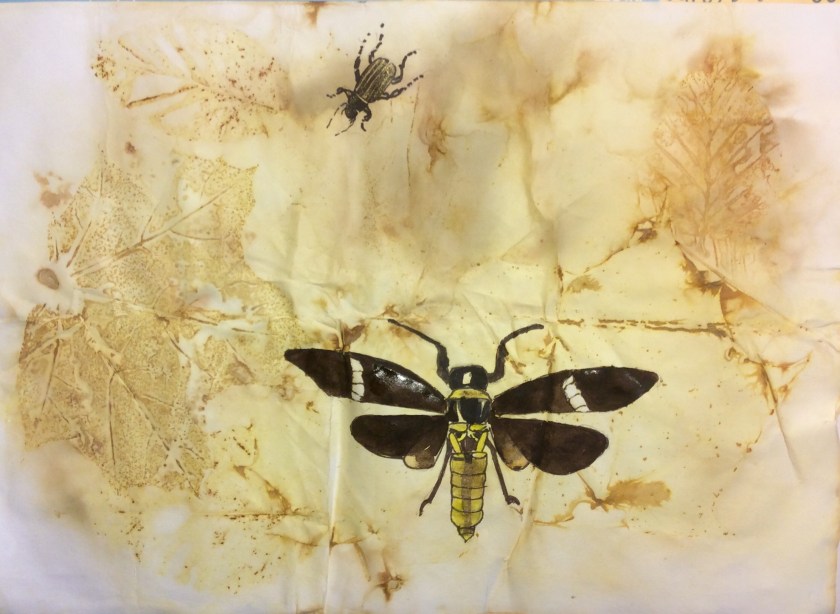
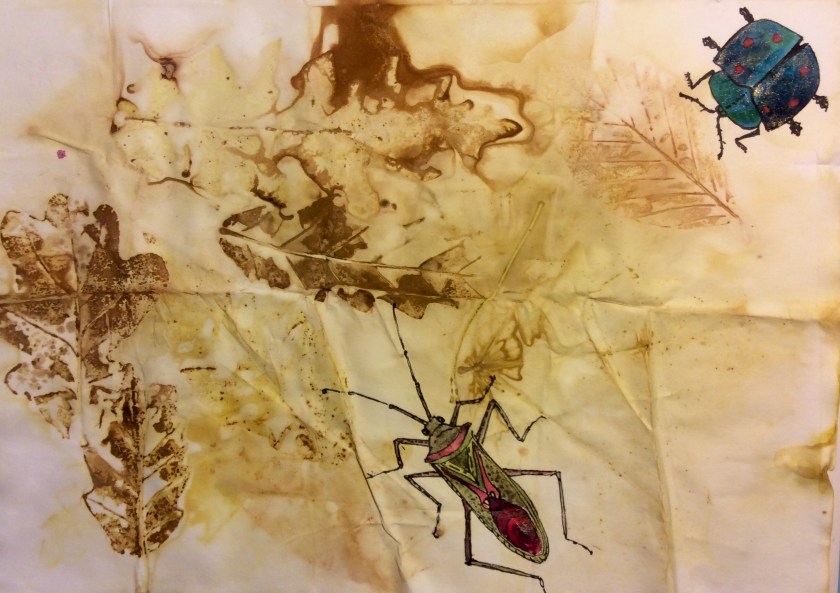
The first time I tried it, I soaked the paper in water with alum and used dead leaves, mostly maple and oak, since it was the autumn. The results were quite satisfying, and I painted moths and insects on top, and even a lizard.

This time I wanted to created material I could use for collage, in a series of paintings I’m planning about Greek nature. As some of you might know, I’m very into layers and textures at the moment, so I thought this would provide an extra dimension. I wanted to try rice paper, because of the transparency, so I used some of that, plus normal watercolor paper I had left over from last time and kadhi paper, which is made from cotton rag. At the last minute, I threw in some tissue paper too.


For the plant material I gathered a collection of fresh green leaves and flowers: bougainvillea, oleander, lavender, along with fig, olive and plane tree leaves. And some sprigs of rosemary.

As I wanted to get quite a subtle effect, I used vinegar and rusty metal as a mordant instead of alum. The results were full of surprises, as always.

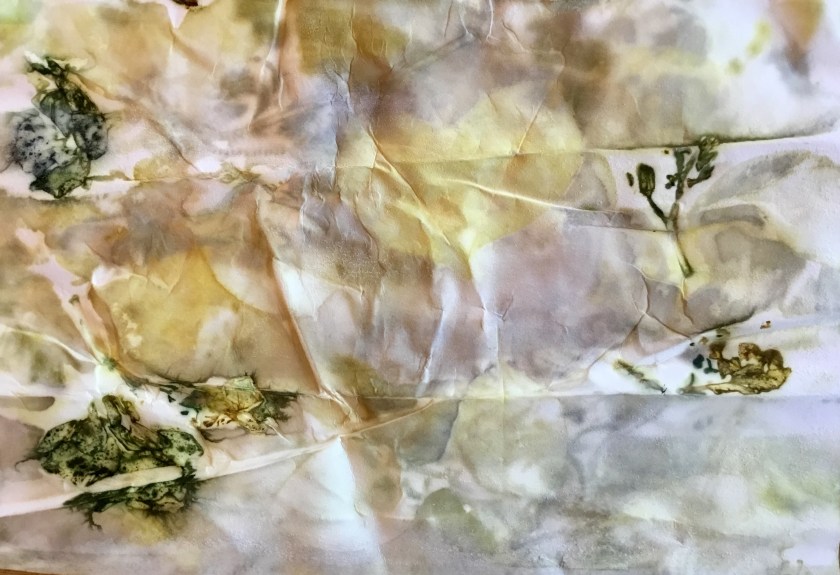
Strangely, the bougainvillea flowers left almost no marks on the paper, despite their bright coloring. Generally colors were a lot less bright than on the paper which had been soaked in the alum solution, and marks a lot more distinct on watercolor paper than on the rice paper.

The rice paper sheets stuck to each other and tended to tear when I tried to separate them. Of course, I did so while they were still damp, so maybe I should have been more patient and let them dry first. The tissue paper came out like a wad of used Kleenex, and I only managed to salvage a few scraps.


As seen above, the results look rather a sorry lot. However, they will still do my job, since I will be tearing pieces off, glueing them to my paper and painting or drawing on top. So I have ended up with a large pile of very interesting material to experiment with, and can’t wait to get started!

I have not here included instructions for making eco prints, as these vary wildly and there are many to be found easily by googling. However, I will recommend two Instagram sites: Fallowflora and book.and.paper.arts have some great examples and are worth taking a look at.

If anyone has done or does this and has some tips or remarks for me, I would be very pleased to have them!


Some news

Summertime living makes things seem less grim, especially if one can get away for a day or two. For Greeks, though, life continues to be a struggle, with ever-rising taxation, constantly changing rules and laws, and a failing infrastructure. A quick glance at the papers reveals the following:

– The dramatic worsening of the Italian economic crisis has put a damper on the government’s hopes to stage a smooth exit from the bailout program in August. The political earthquake in Italy has caused shivers in the whole of Europe, given that its economy is the third largest in Europe, and nearly ten times larger than that of Greece.


Consolation


– In Lesvos, refugee arrivals from Turkey have not abated, resulting in the hotspot of Moria being inundated by 7.300 people (for 3.000 places). There have been clashes between migrants from Arab countries and Kurdish residents over religious differences, and hundreds of people have dispersed over the island, sleeping rough in parks and woods. Fearing for their safety, they are refusing to return to state-run camps. Plans have been made for the creation of more reception facilities, but the local authorities have reacted forcefully against these. It is true the islanders have borne more than their fair share of this burden, but nevertheless  immediate solutions must be found.


More consolation


-Meanwhile, the leader of the opposition Kyriakos Mitsotakis presented his business model for the country. His message was: No to more taxes and social contributions, yes to investments and new jobs, but also to healthy entrepreneurship. Amen to that? Well, I’m not getting my hopes up, we’ve heard this before. Many times, by all sides.

To end on a better note, there is something we can be proud of:
In its annual report, the European Environmental Agency has said that 95.9 per cent of all coastal bathing waters in Greece are of excellent quality. Off to the beach, then, to drown our sorrows in the crystal clear waters.


A beach in Thasos, Greece


Catch a boat to an island

From most places in Europe, at least, Greece is a very accessible destination. A couple of hours on a plane (around four for the furthest countries) and you’re in Athens. Starting this month, there are even direct flights to some islands, such as Corfu and Crete.


June is an ideal month to visit: cool enough to wander about ancient sites, warm enough to swim. Still green, but with summer blossoms such as oleander and bougainvillea in full bloom. School’s not out yet, so it’s still pretty quiet and prices are lower than in the high season.

There are plenty of things to see and do in Athens itself, and there are many beautiful mainland sites worth a visit, such as the Meteora or Mycenae. However, one of the most fun things to do is catch a boat to an island.


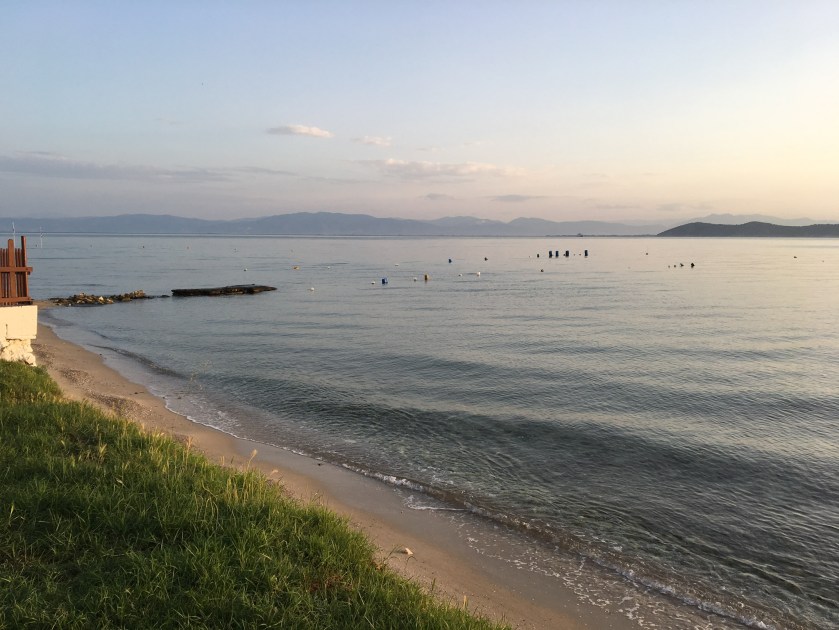
Get a room by the beach.


Watch the sunset. Wispy clouds and lavender mountains.


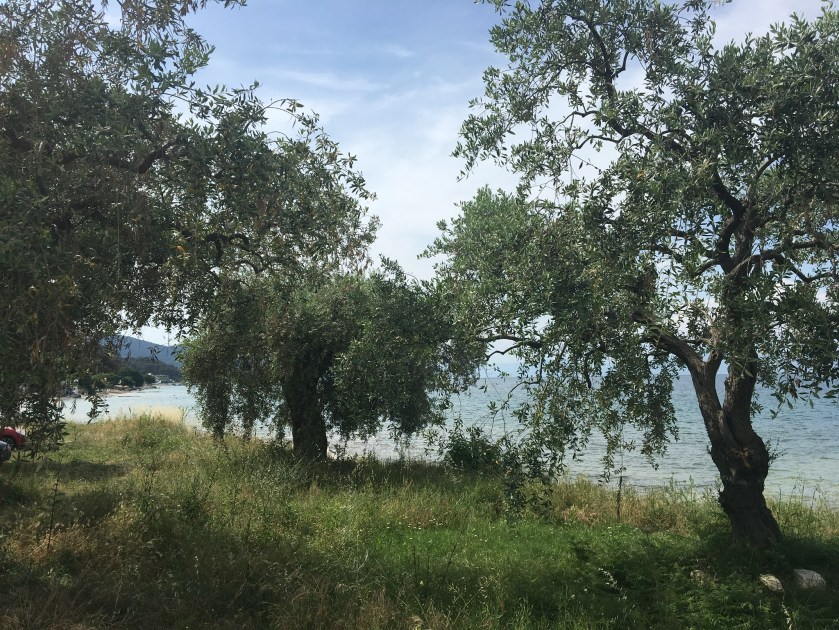
Sit by an ancient olive tree.


Eat outdoors.


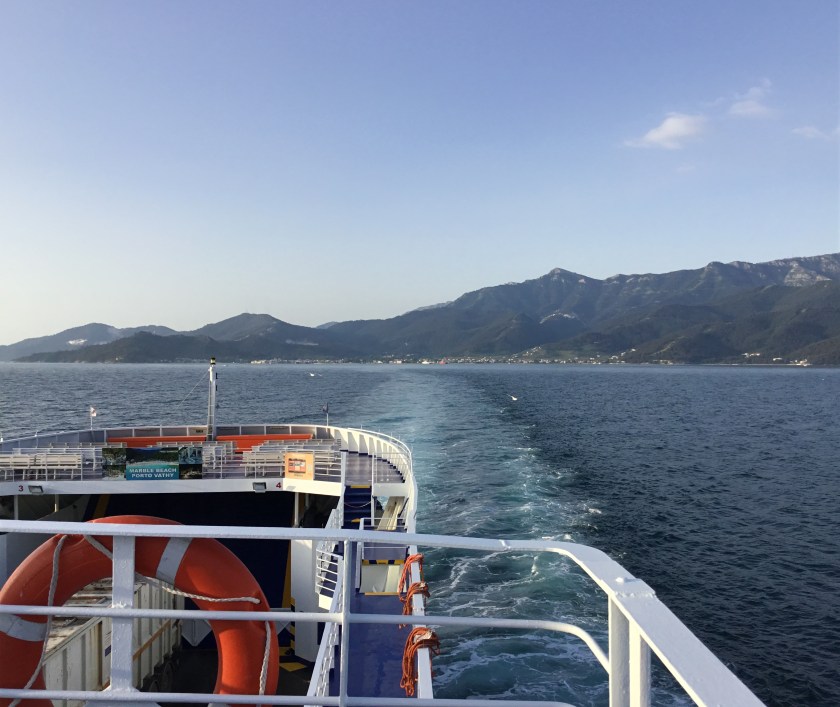
These pictures are from Thasos, a large, wooded island in the North Aegean. But with a couple of hundred inhabited islands to choose from, there’s something for every taste.


Gulls follow the boat.


Have I tempted you?

High Society

Having been invited to Amsterdam for the birthday of a dear friend, a group of us were lucky enough to visit a temporary exhibition at the Rijksmuseum entitled High Society.


The lovely Amsterdam architecture on one of the central canals


The exhibition features a collection of 35 full-length, life-size portraits of monarchs, aristocrats and rich citizens, by great masters in art history. It spans four centuries (from early 16th to the start of the 20th), and is styled as a party—featuring power, wealth, and massive egos. Because of the time and expense involved in painting such large canvases, this was a form of portraiture reserved for royal and noble subjects and, in later years, for what would now be known as ‘the one percent’.

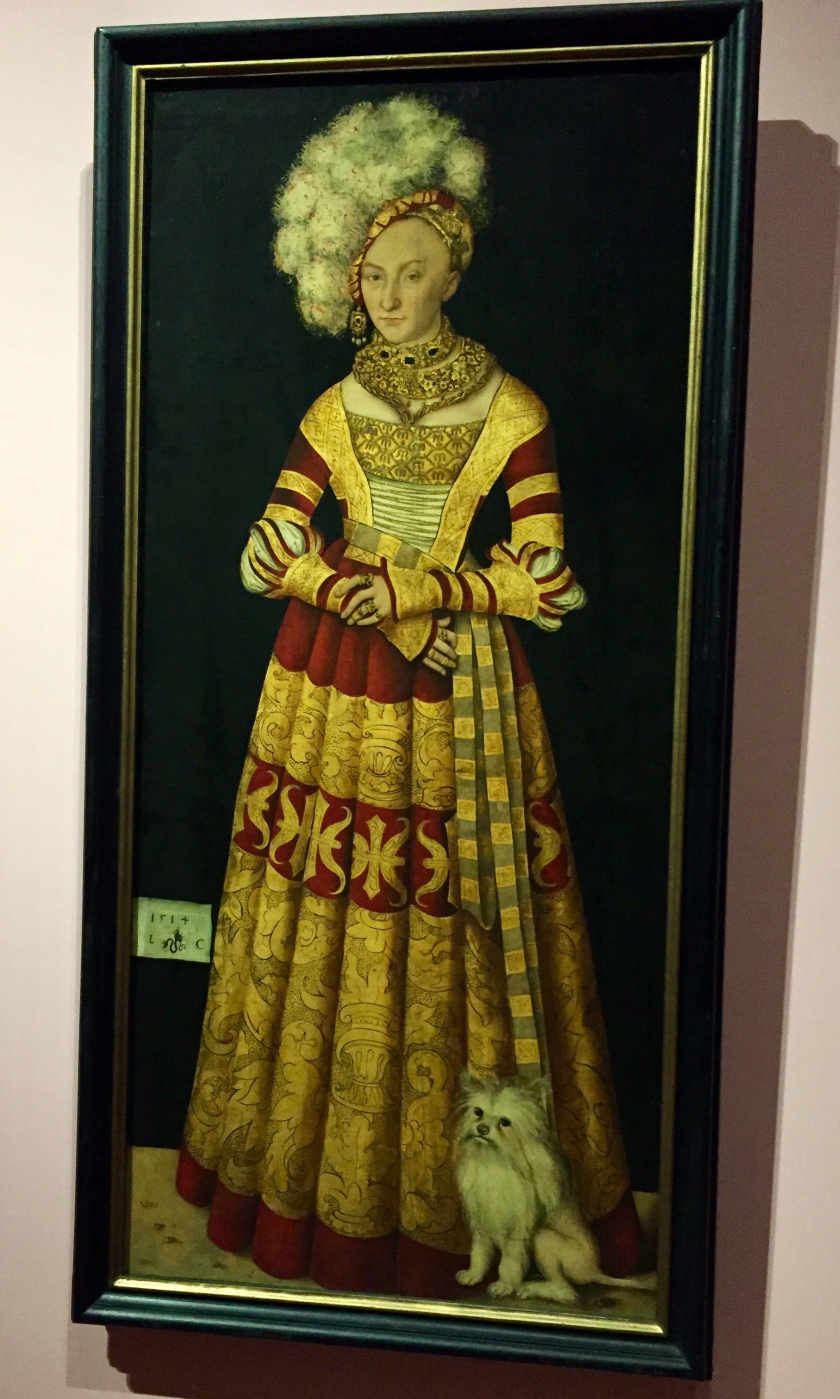
It is also a timeless, fascinating, international fashion show, since people dressed in their best finery for the occasion. The paintings are full of symbols of the subjects’ wealth and power. Cloth of gold, lace, embroidery, large and intricate jewelry. There are also lots of accessories and plenty of dogs—lap dogs to show pampered luxury, fierce hunting dogs as symbols of strength.


See, above and below, how the painter Lucas Cranach (c.1472-1553) portrayed, for the first time in Northern Europe, a couple standing, life-size, and full length. They were Catherine of Mecklenburg (1487-1561) and Henri the Pious, Duke of Saxony (1473-1541), and the painting was commissioned in honor of their marriage in 1512.


He wears a wreath of red and white carnations to show he is a groom and, surprisingly, he’s neither clean-shaven nor bearded, but sports a very modern stubble.

Then there are Rembrandt’s wedding portraits of Marten Soolmans and Oopjen Coppit – his only life-size, standing, full-length portraits. Painted in 1634, they were a joint 2016 purchase by the Kingdom of the Netherlands and the Republic of France from the Rothschild collection, and they have just been restored. They are not as handsome as the previous couple, but their wedding black is accessorized with the most intricate lace collars and matching flower belt buckles.


Source: Google

It must be noted that, at the time, the wearing of black showed ostentation, not restraint: black was the most expensive material, had to be laboriously dyed and was difficult to upkeep. It was therefore a symbol of status which could, moreover, show off silver buckles and lacework to advantage.


The most powerful man of Europe, Charles V, Holy Roman Emperor, (1500-1558), had himself painted life-size by Jacob Seisenegger (1505-1567), showing just how important this type of portrait had become. Note the very wide shoulders, another symbol of strength, and the hunting dog.


An austere and powerful portrait, of Don Pedro di Barberana y Aparregui (1579-1649) by Velázquez (1599-1660). Don Pedro moved in powerful circles in 17th-century Spain, was comptroller of the royal treasury and sat on the King’s secret council. Note the plain background, contrasting with others that are richly decorated, and the tip of the sword lifting his coat at the back.


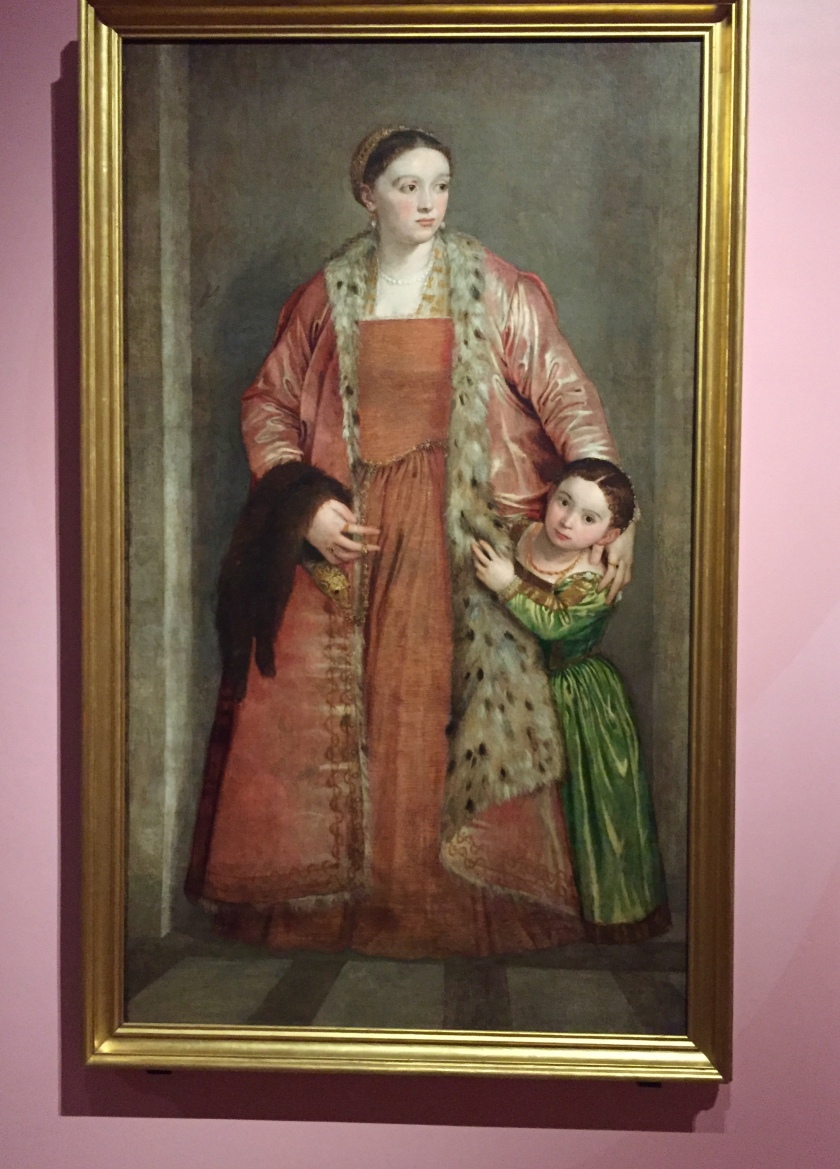
In a looser mode, the enchanting portraits, by Veronese, of Count Iseppo da Porto (c.1500-1580) with his son Leonida. The Count was one of the most influential figures in the town of Vicenza in the 16th century.


And that of his wife, Countess Livia da Porto Thiene, also descended from a noble family, and her daughter, Deidamia.

They are portrayed in ‘everyday’ clothes, which, although luxurious, are not too showy. It is rare these portraits can be seen together, since, sadly, his is in the Uffizi Gallery, while hers is in the Art Museum in Baltimore. A great shame, since being displayed next to each other greatly enhances the emotional import.


Moving on to more recent times, the portrait, by the English artist Gainsborough (1727-1788) of the beautiful Mary, Countess Howe dressed in what would have been the height of fashion in the mid-1700s. Her pale complexion is enhanced by the black ribbon on her wrist and her arsenal of expensive accessories also attest to her aristocratic status. Gainsborough only yearned to paint landscapes, but these would not earn him a living, so he was obliged to paint the local gentry, moving to another town with all his family in search of more clients, once he had finished one lot.


This portrait by John Singer Sargent (1856-1925) was a rare treat, as it is domiciled in Los Angeles, where women are said to swoon before it. It depicts the exceedingly handsome Dr. Samuel-Jean Pozzi (1846-1918), who was the founder of modern French gynaecology and an incorrigible womanizer. Sargent, an American artist who moved to Europe, appropriately painted him in a scarlet dressing gown and embroidered satin slippers. Pozzi was killed by one of his clients, a man whose impotence he had failed to cure. He nevertheless had a long and distinguished medical career, and consorted with many creative people, such as Sara Bernhardt, who was briefly his lover and remained a lifelong friend, and Marcel Proust.


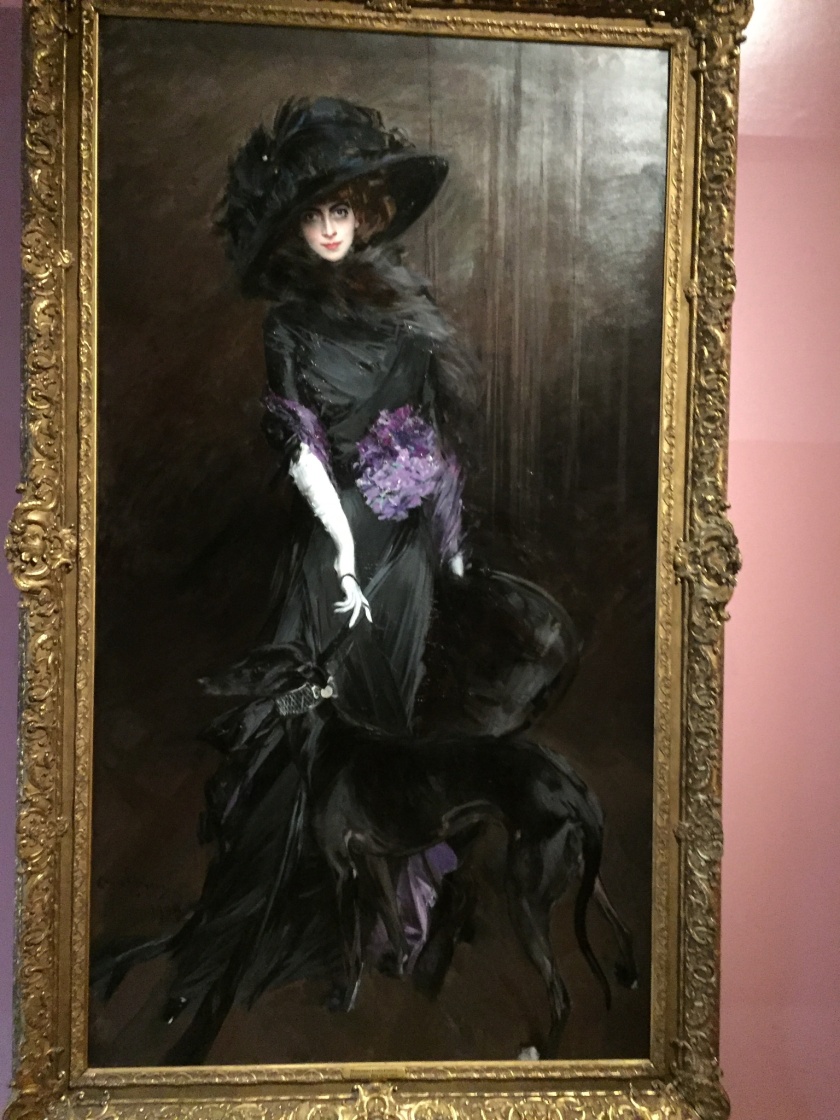
Giovanni Baldini’s Marchesa Luisa Casati with a Greyhound (1908) catches its subject in what is, for Casati, a relatively understated outfit: she once wore a dress of lightbulbs wired up to a generator. She was once described as the Lady Gaga of her day.
The card next to the painting says: Six feet tall and thin as a rake, and with bleached skin, heavily made up eyes and hair dyed either a fiery red or emerald green, Luisa Casati’s appearance was unforgettable. At the many legendary parties thrown by the flamboyant and eccentric marchesa the champagne flowed freely and there was no shortage of cocaine and opium. Boldini painted Casati wearing haute couture and accompanied by her favourite greyhound with his characteristic, ‘slashing’ brushstrokes.


A last highlight was the portrait, by Kees van Dongen (1877-1968), of Anna, Comtesse de Noailles (1876-1933), a writer and leading figure of Parisian society. The portrait was considered shocking, if not offensive, at the time, because of the plunging neckline revealing a hint of nipple, and the fact that she irreverently wears the ribbon of the Legion d’Honneur (a great honor conferred by the state) as a choker around her neck.


It was a rare treat to see these portraits assembled in one place—and fascinating to compare the mores and fashion of each era. To finish, I wanted to share a video of the Museum’s wonderful  Shylights, a light installation created, out of silk, by Studio Drift. 

If you click on the video, it will magically right itself, for some mysterious reason.

Minoan Tastes

I’m still working on my next post—but, meanwhile, I thought any foodies or cooks amongst you might be interested in this post on one of my favorite blogs, Evolving Life. Sampling the food of the Minoans—some of you may have read my post on the ancient Palace of Knossos in Crete.

Debi @ An Evolving Life's avatarAn Evolving Life

Recently we were invited to attend a demonstration on Minoan Cuisine – appropriately held near the Palace of Knossos on the island of Crete. Jerolyn Morrison, a trained archaeologist and one of the creators of Minoan Tastes, reenacted cooking techniques from ancient times. Minoan Tastes organises cooking events for people to (as she prints on her card) “experience the flavors of the land, sea, and sky of ancient Crete”.

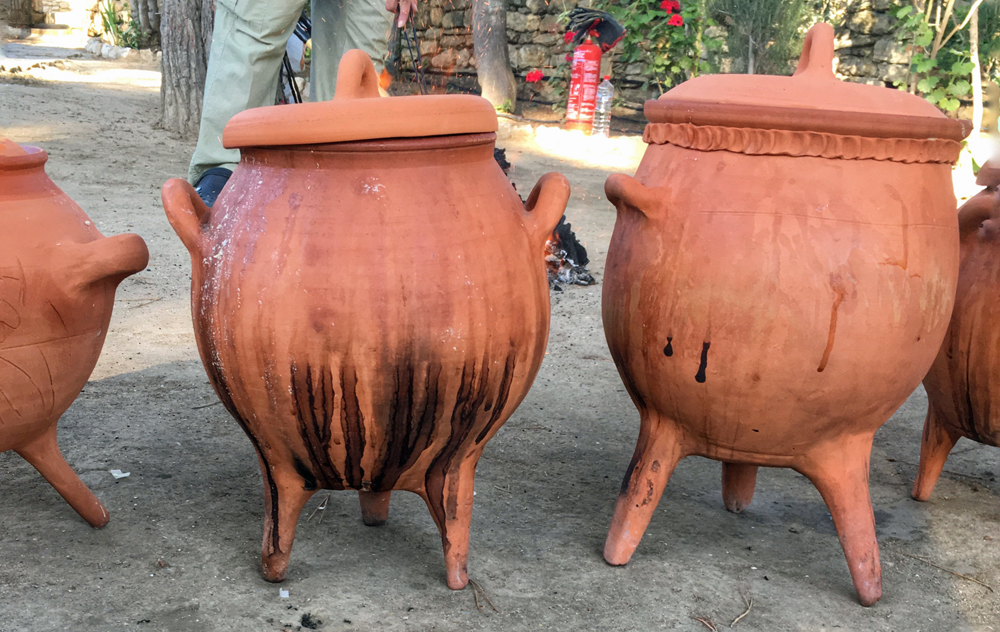
The cooking pots she uses are custom made on Crete, based on pot shapes and ceramic fabric found in archaeological contexts – including the iconic tripod cook pot of the Minoans.

Before cooking, the unglazed pots are prepped by soaking in water, and charcoal is heated to the white heat stage.

The pots are then surrounded with the hot charcoal and diligently monitored, adding more coals when required to sustain the long, slow cooking process.

The food is also carefully…

View original post 360 more words

The first of May

On this day, I would like to celebrate springtime, with flowers as a symbol of peace. My wish is for an end to warmongering.
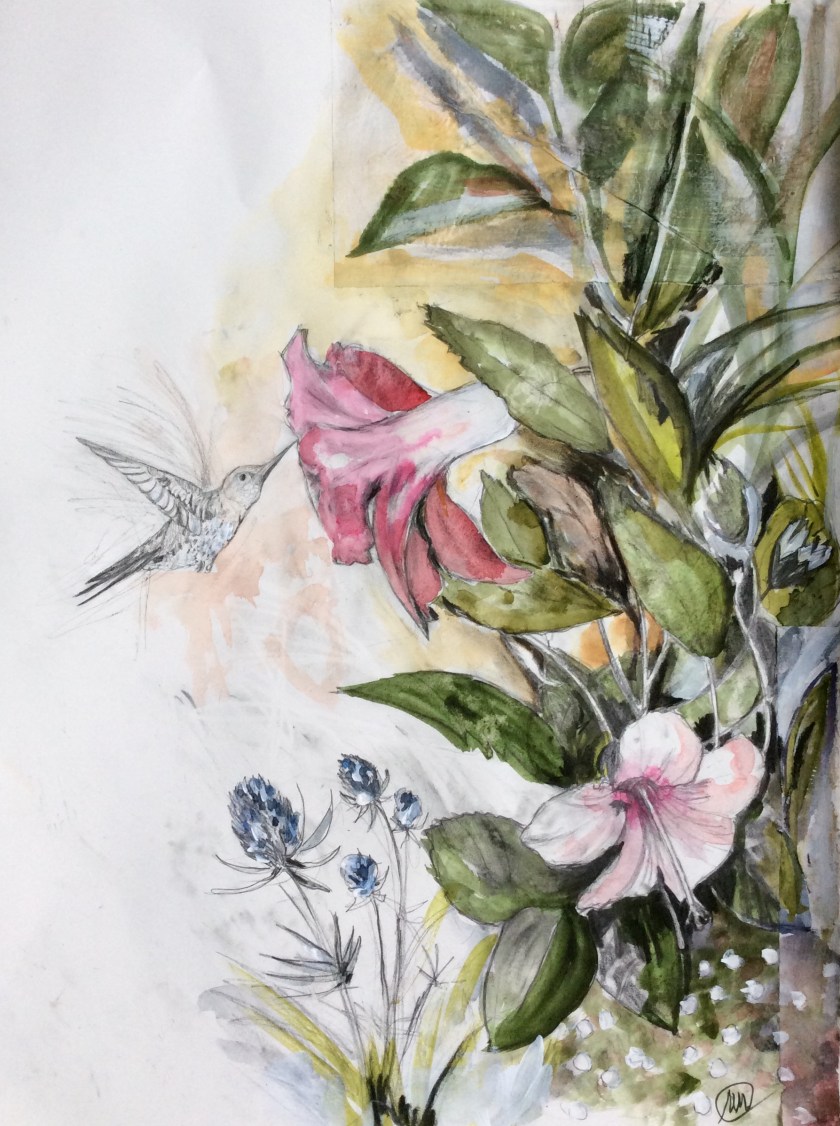
Below find the two parts of a floral diptych – it is still a work in progress, but it is my offering for May first.


Also I wanted to share the latest remake of Bob Dylan’s Masters of War – no comments added.


As we say in Greece: Καλή Πρωτομαγιά!

Yayoi Kusama and Joseph Cornell

Some of you might remember a post about Japanese artist Yayoi Kusama (here for those who’ve missed it). This artist fascinates me both because of her work, which dislays a very original vision of life, and her history, about which I will say more later. I was therefore interested to come upon an article which described her relationship with another artist, Joseph Cornell, a man almost as strange as herself. Cornell, a reclusive who made the most exquisite collages and boxes, has also been an old favorite of mine, but I had no idea these two were connected in any way.


Kusama with Pumpkin, 2010Courtesy of Ota Fine Arts, Tokyo/ Singapore and Victoria Miro Gallery. Source: Google


Yayoi Kusama was born in Tokyo in 1929, the daughter of a horrendously abusive mother who used to tear up her paintings. She suffered from hallucinations since she was a child and, although these developed into the mental illness that led to her spending her life in an asylum, drawing upon these experiences also served as a basis for her art.

Nurturing a fierce determination to move to New York, Kusama wrote to Georgia O’Keefe and, having received a reply, showed up in the city with no money and little English. In the beginning she was beset by loneliness and poverty, but eventually she became involved in an artistic community which included Georgia O’Keefe, Donald Judd, Andy Warhol, Claes Oldenburg, and Eva Hesse. She became an advocate of free love in 1960 New York, leading nude happenings for which she was reviled as a national disgrace in her homeland.
She became renowned as painter, pop artist, cultural activist, and experimented in various mediums including sculpture, painting, collage, film, performance, happenings, fashion design, and publishing.


She gained recognition for her sexually charged public performances in Central Park protesting the Vietnam War, her large-scale infinity net paintings, psychedelic mirror room installations, and the ‘Narcissus Garden’ which was shown at the 1966 Venice Biennale.


Yayoi Kusama, Horse Play in Woodstock, a happening, 1967. Source:Google


Despite presiding over orgies, Kusama had a fear of sex, perhaps because she had suffered from her father’s philandering, and remained abstinent throughout her life. So it was that when she met Joseph Cornell, an odd-duck loner 26 years her senior, who lived with his domineering mother in Flushing, Queens, the two struck up an intense, albeit platonic relationship.

In the basement of his mother’s house, Cornell spent his days dreaming and making delicately detailed glass-covered boxes. These are small imagined worlds made up of found objects where a ping pong ball becomes the moon, or wooden animals and cutout birds are suspended over a landscape of newspaper clippings and little stamps. He often used star maps, small machine parts, pebbles and corks,  along with text from old newspapers and magazines, to create collages. Into these he channeled all his longings and dreams of romance, vanished European cities, and travel to faraway places.


Habitat Group for a Shooting Gallery, 1943. Photograph: Mark Gulezian
Source:Google


Cornell hated selling these precious objects, frequently changing galleries and dealers so that no one could gain too much control over his work. But he loved to give them away, especially to women. A deeply romantic man, he adored women but was crippled by physical reserve, accentuated by the behavior and influence of his jealous and possessive mother.


A Parrot for Juan Gris, 1953-54. Courtesy of Quicksilver/The Joseph and Robert Cornell Memorial Foundation/Vaga, NY/Dacs.
Source:Google


Cornell became besotted by Kusama, flooding her mailbox with letters and personalized collages, and calling her on the phone constantly.

They became close, often spending time at Cornell’s mother’s home in Queens, passing the day sketching each other in the nude. Of course his mother deeply disapproved of this, and apparently once poured a bucket of water over them as they sat kissing beneath the backyard quince tree.


Yayoi Kusama with Joseph Cornell in New York, 1970
Courtesy Yayoi Kusama Studio, Inc. Source:Google
 

After some time Kusama took a step back, feeling the situation had got claustrophobic, but the two isolated, driven, visionary misfits remained close until his death in 1972.


Box by Joseph Cornell. Source:Google


Kusama was deeply affected by Cornell’s death. She returned to Japan, and in 1977 checked herself into the Seiwa Hospital for the Mentally Ill, where she eventually took up permanent residence. She has been living at the hospital ever since, going to work in her studio only a short distance away. Cornell’s influence did not end with his death, however, since he had given her boxes of magazine cuttings and other materials which she subsequently used to make a series of luminous collages. These feature elements of his style including surrealist cutouts, layered with her signature pattern of polka dots and infinity nets.


Yayoi Kusama
“Self Portrait,” 1972. Source:Google


As I mentioned before, Kusama was also involved in publishing a number of works; and while I’m not about to pick up a book entitled ‘Love suicide at Sakuragazuka’, I remain entranced by her unique, delightful weirdness.


These days Yayoi Kusama is rarely seen without her trademark red wig and dotty clothing. Source:Google