Fast(ing) Food

To a lot of people Lent means giving up something they love, such as meat, or chocolate, or cigarettes. It’s all about self-denial. In the Greek Orthodox religion there are strict rules that govern fasting around religious holidays. For example, the week before Clean Monday and the beginning of Lent is called the Cheese-eater (Τυροφάγου – Tyrofagou): in order to start cleansing the body and preparing it for Lent, you give up meat but are still allowed dairy products. Then during the 40 days of Lent there are some days when olive oil is allowed and others not, culminating in Agia Evdomada (Αγία Εβδομάδα – Holy Week) which is the week before Easter and the strictest of all.


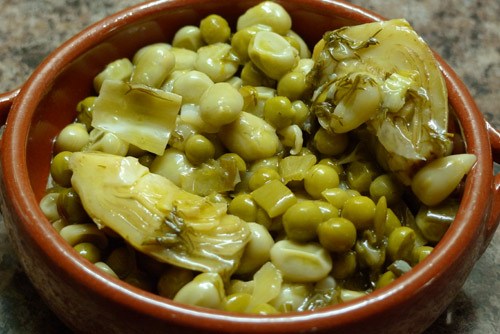
One of my favourite Lent dishes, artichokes with broad beans


People follow these rules more or less strictly, depending on their upbringing, personality and circumstances. Some believe in self-denial and make do with a couple of boiled potatoes or lentils boiled in water. But the human spirit tends to find ways to make the best of things; and so a whole cuisine has blossomed around the Lent fast. These foods are called Nistisima (νηστίσιμα) in Greek.

On Clean Monday only, bakers make lagana, a special unleavened flat bread, light and crusty, sprinkled with sesame seeds. The origins of the bread and its name are lost in the depths of time, but it goes great with the ubiquitous taramosalata , a dip made of salted and cured cod’s roe, whipped with breadcrumbs or boiled potato, olive oil and lemon juice.


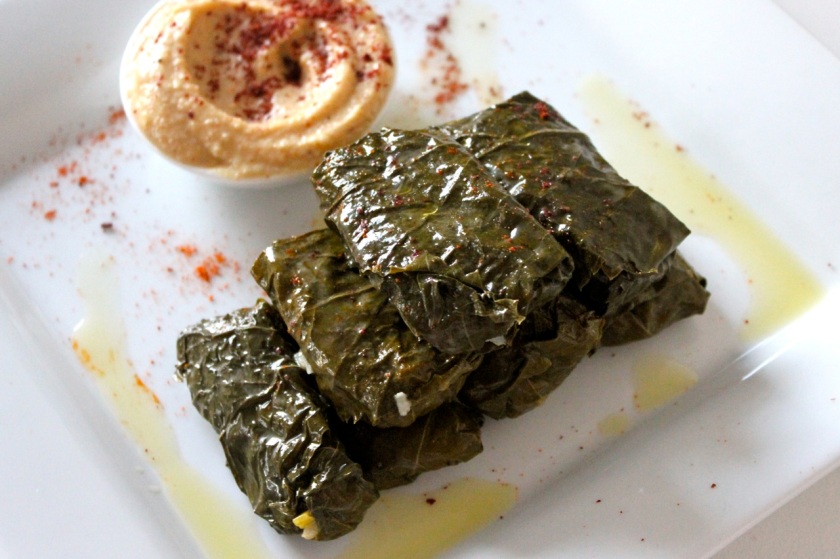
Delicious rice balls wrapped in vine leaves
Dolma – Delicious rice balls wrapped in vine leaves, and a bowl of taramosalata.

The menu also comprises seafood like cuttlefish, octopus, shrimp and mussels, which can be simply grilled and served with oil and lemon, or braised with tomatoes and mixed with rice or pasta. There are black-eyed beans, spicy giant beans baked with tomato, and dolma, rice wrapped in vine leaves; loads of vegetable dishes in various combinations, and lovely fresh salads.

As for dessert, again we have developed many recipes for cakes and cookies that conform to the rules (no dairy). And there is always χαλβάς (halvas) similar to the Arabic “halwa”, which is made of tahini, sesame paste, and sugar, to which are sometimes added pistachio nuts or cocoa. This you buy ready-made at the baker’s or supermarket and it is served sliced thinly, sometimes accompanied by slices of apple sprinkled with cinnamon. It is extremely sweet, and so nourishing it could sustain polar explorers on their journeys!


image
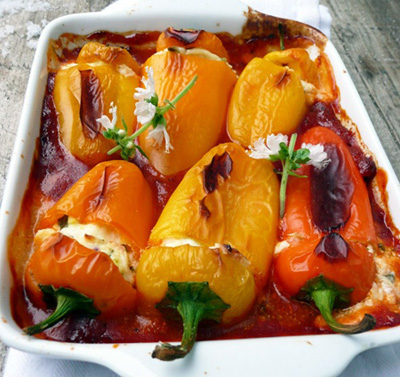
Peppers stuffed with vegetables and rice


The monastic life entails many days of fasting (the monks never eat meat), and so it is not surprising that monks are adept at this cuisine. Monks can make as brilliant cooks as anyone, and I’ve heard plenty of stories of memorable meals eaten by people visiting Mount Athos in particular. Mount Athos is an autonomous monastic state within the Hellenic Republic, where 20 Eastern Orthodox monasteries are home to over 2,000 monks from Greece and other countries.

They live an ascetic life, isolated from the world, but they get a lot of visitors: some are on a religious pilgrimage, others come because of the extraordinary beauty of the monasteries and the nature surrounding them. Many are interested in the rich collections of well-preserved artifacts, rare books, ancient documents, and artworks of immense historical value. Finally there are people who want to sample what they see as the simple life, even for a short while.
Unfortunately no women are allowed within the borders of Agion Oros (the Holy Mountain), as it is called. But I looked up their fascinating site and found a whole recipe book of Nistisima in both Greek and Englishwith accompanying photographs.


This image can be used for personal use only. No commercial use allowed.
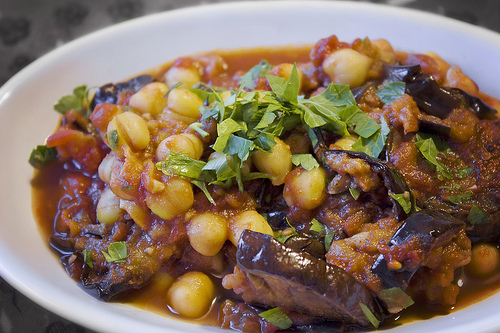
Chickpeas with aubergines


There is a huge selection and most recipes are quite simple to prepare, although the translation can be slightly excentric (but use your imagination, people!)  I encourage everyone to browse, (click here), but I have copied a couple of the recipes as a sampler.


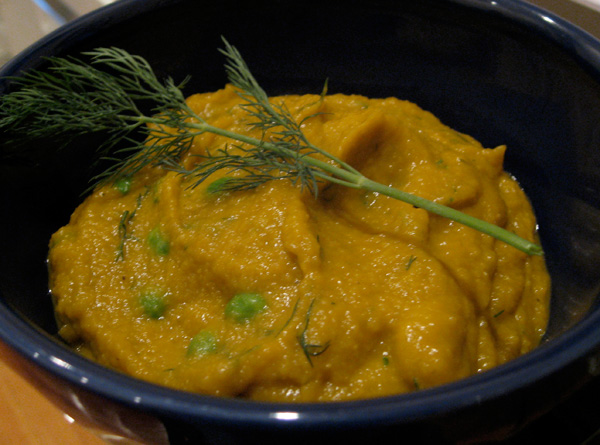
Fava

Fava

Ingredients:

500 gr. of split yellow peas
1/5 litre of water
1 onion
2 potatoes
2 peppers
salt
1 tea cup of olive oil
4-5 fresh chopped onions
1 bunch of chopped dill or oregano
some lemon juice

Put the split peas, the water, the chopped onion, the potatoes, the chopped peppers and half of the oil in a pressure cooker.
When they have softened, blend. Put in a serving plate and sprinkle with the fresh chopped onions and the dill or oregano. Pour over a little oil and lemon. Serve warm or cold, with bread.


image
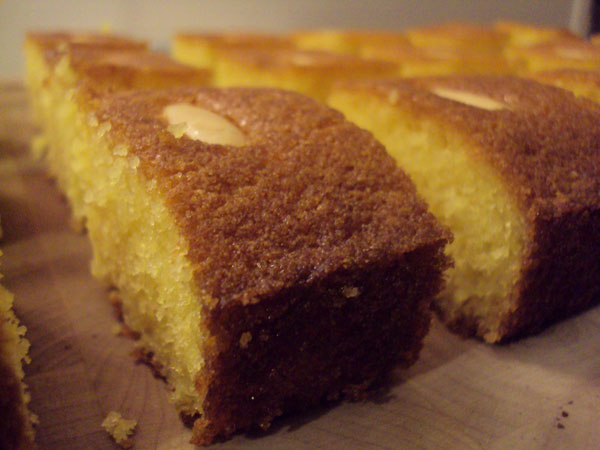
Semolina Cake
Ingredients: ½ cup tahini –  ¾ cup water – ¼ cup lemon juice – 2 cups sugar – 1 cup orange juice – 1 cup water – 1 teaspoon cinnamon – ½ teaspoon carnation (they mean powdered cloves!) –  3 ½ cups semolina – 1 cup blanched almonds.

For the syrup: 3 cups sugar – 2 ½ cups of water – 1 tablespoon lemon juice – 2 cinnamon sticks.  Preparation: Beat tahini and ¾ cup water with the lemon juice until it turns white. Successively add sugar, orange juice, water, cinnamon, carnation (cloves) and mixing the semolina mixture. Pour into pan (40×35 cm) and sprinkle almonds over the surface. Bake at 180 degrees for 45 minutes. Meanwhile, prepare the syrup by boiling all the ingredients together until thickened. Let cool and as soon as the semolina pie comes out of the oven, pour over immediately.

The monks even have an e-shop selling various products. Their recipes are full of good ideas for vegetarians, but also for everyone else. All the photographs are from their site.

Clean Monday: a sky full of kites

The pall of smoke hanging over Greek towns due to the Tsiknopempti meat orgy has hardly dispersed and people are already thinking about the next feast, on Clean Monday (Καθαρά ΔευτέραKathara Deftera). It is a moveable feast, which this year falls on March 14. Ironically, it marks the beginning of the 40-day fast for Lent, Σαρακοστή (Sarakosti). However, the need to avoid a wide range of foods (meat, fish, all dairy products and eggs) has spurred gourmets and cooks over the centuries into developing delicious recipes called nistisima (fasting foods) of which more details in another post.


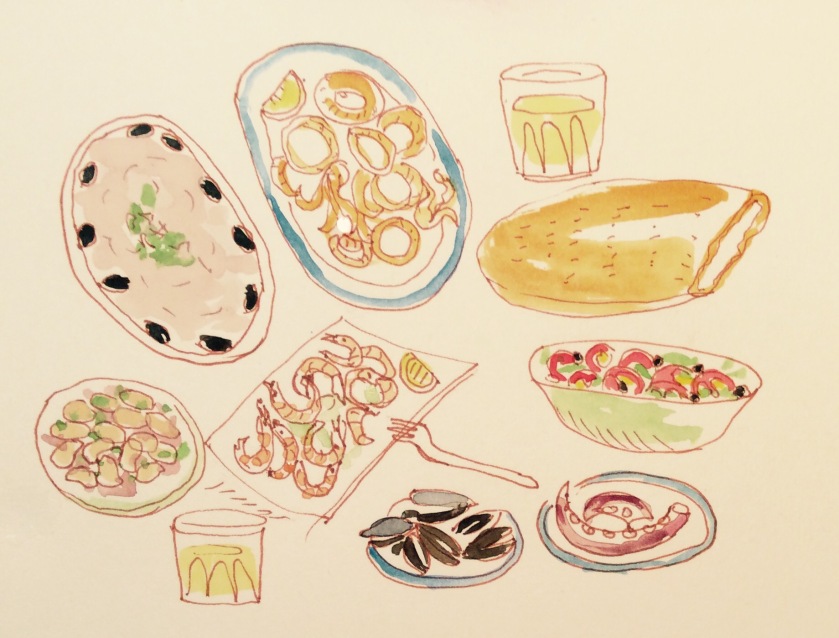
A feast of lagana bread, octopus, calamari, shrimp, mussels, beans, olives, tarama and wine


For the devout, Clean Monday—and thus Lent itself—begins on Sunday night, at a special service called Forgiveness Vespers, which culminates with the Ceremony of Mutual Forgiveness. Everyone present will bow down before one another and ask forgiveness, so they can begin Lent with a clean conscience and renewed Christian love. The entire first week of Great Lent is often referred to as “Clean Week”, and it is customary to go to confession during this week, and also to springclean the house – after all, Clean Monday also marks the beginning of spring.

Clean Monday is a public holiday in Greece and Cyprus, where it it is celebrated with outdoor excursions, and family gatherings whose main purpose is the consumption of elaborate dishes mainly based on seafood and vegetables.

imageHowever, the day is not only associated with eating, but also features many traditional celebrations held all over Greece. Municipalities organize concerts and other festivities with free food on offer. In the Borough of Athens, Clean Monday is traditionally celebrated on Philopappos, a hill situated southwest of the Acropolis. A beautiful 173-acre park, it is home to many indigenous birds and small animals, and open to all at all times of day or night.
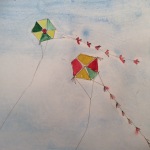
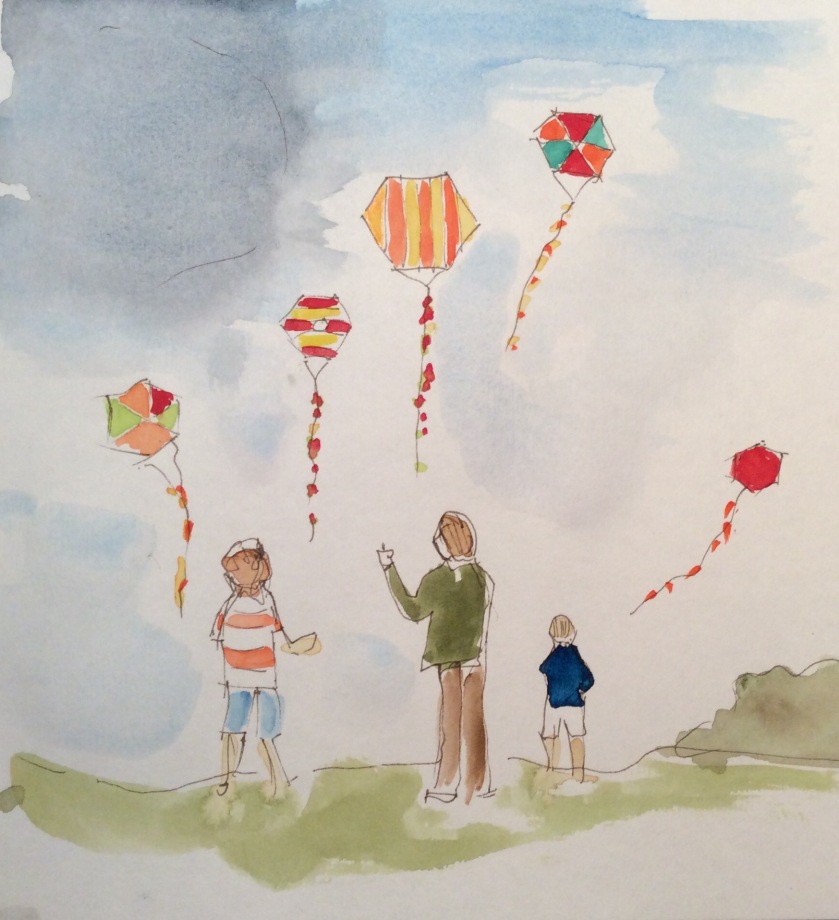
Different municipalities have their own local customs, but there is one tradition that is followed all over the country: kite flying. Young people and adults flock to open areas, so as to fill the skies with their kites. Many traditional workshops have been involved in making kites for over 70 years, although in many instances the wooden kites have sadly been replaced by plastic ones. Every kiosk, supermarket  and toy shop stocks kites for Clean Monday – there are even roadside stalls selling them.

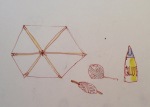
imageIn my childhood, making your own kite was considered a very manly pursuit in some households. Fathers and uncles would carefully choose and cut their own bamboo sticks, split them lengthwise with their penknives and fashion them into a hexagonal frame with string. Over this would go glacé paper in bright colours (often in the colours of the maker’s favourite team), and then ‘ears’ and a tail made out of strips of paper. The trick was for the kite to have good equilibrium so that it would fly straight and true. A few balls of sturdy string would be carefully wound in a figure eight over a stout stick and the kite would be ready to go.
 

image


Since Clean Monday is a communal affair, fierce competition ensues over the flying of the kites. Depending on the assembled company, I remember times when us kids would not be allowed near the kites. No, this was a man’s job, involving much drinking and banter, as well as practical jokes. There were – and still are – air battles where people try to get other kites entangled in their string in order to bring them down – some even resort to sending razor blades up the string to try and cut the competitors’ kites loose!

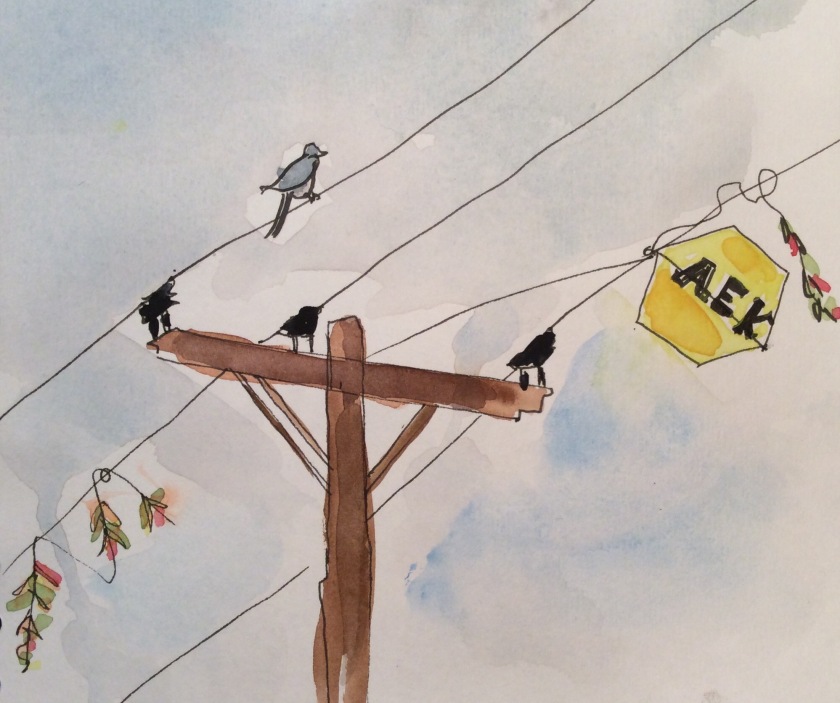
Despite yearly warnings by the Electricity Company, a number of kites always end up on the cables, where they remain for weeks, looking increasingly forlorn.


image

Sunday Blues

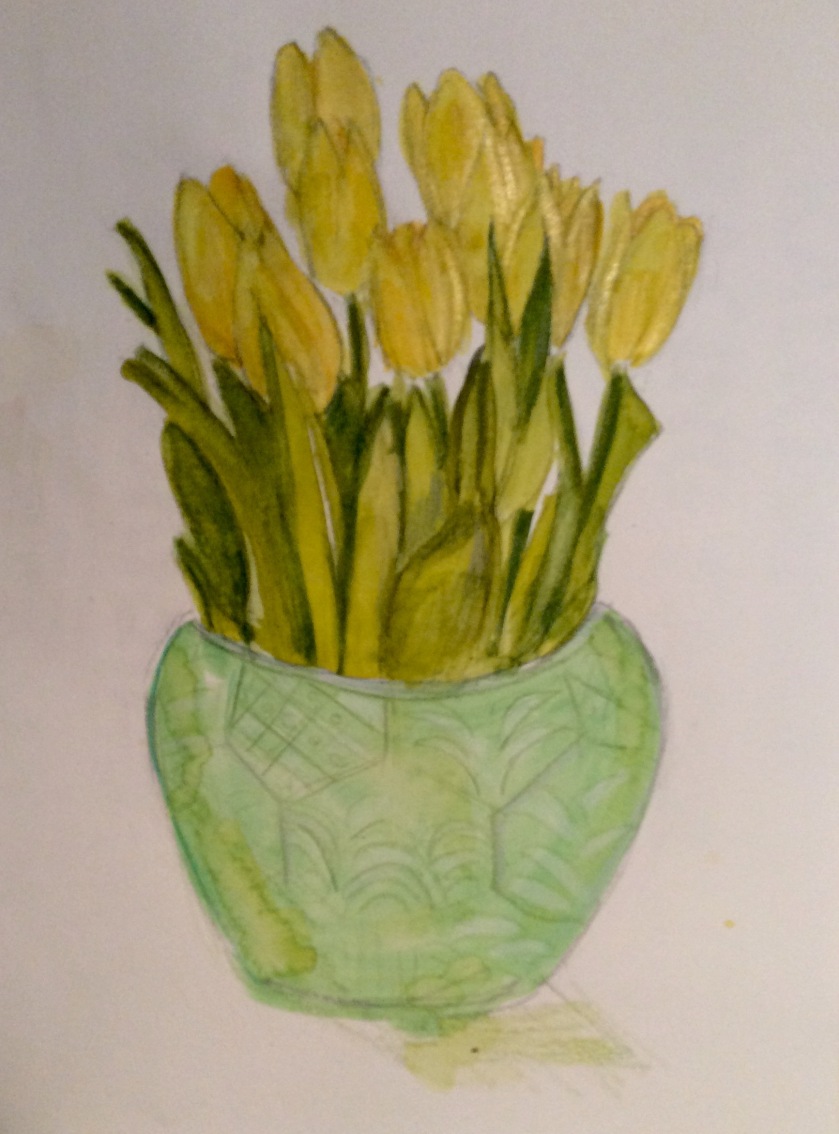
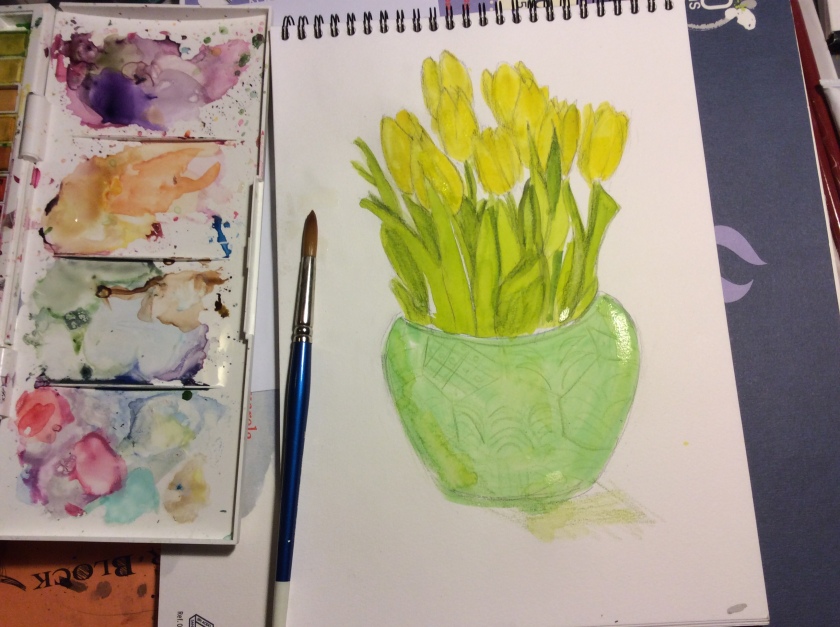
I bought the tulips at the supermarket and stuck them in a vase. They were so yellow and cheerful, I was inspired to make this quick sketch, which somewhat improved my mood after the perusal of the Sunday papers.


image
Front page article – Greece’s place in some world rankings. We suck almost everywhere.
Competitivity? 81st place, after Uruguay (No. 1 is Switzerland).
Government effectiveness? 66th, after the Seychelles.
Functioning of institutions and development of the private sector? 74th after Panama.
Dealing with corruption? 102nd after Serbia.
Student performance? 43rd after Israel (China is top here.)

Even more pitiful is that our highest place (6th) is for child poverty percentages. So sad.

Meanwhile the ugly battle around the refugee crisis continues. With the closing of the borders, traffickers have been emboldened again – some even advertise on Facebook. There is also a thriving market in fake passports and identity papers. Alongside the stories of assistance from the Greek people (invitations to meals, taxi drivers who refuse to be paid, offers of hospitality in people’s homes) there are as many stories of exploitation (the government has had to impose a basic price for necessities such as bottled water and bread, with big fines for those who disobey) and instances of racism and anger against the refugees.
Criminality is bound to rise, and there are already instances of fights and robbery amongst the refugees themselves.

There was an article about the Turks who are accused of not doing enough; but they are swamped as well. There have been 150.000 births from Syrian parents in the last four years on Turkish soil. The government lacks the resources to provide for even the basic needs of these people, who are obliged to fend for themselves as best they can.

Both Greece and Turkey keep insisting that it’s an impossible task to close their borders. Turkey’s border with Syria and Iraq is more than 1.500 km long, and Greece’s borders are either islands with miles of coastline or very mountainous and difficult to guard.
As long as the message that is filtering down is ‘Keep coming, you will find a way,’ the flow will not stop. And, looking at photograph of whole streets of totally bombed out apartment buildings in Syria, I fail to see how it possibly can.
Countries, starting with Turkey, are negotiating systems of checks and balances and asking for returns for every measure they take; however, the only possible solution is if everyone works towards a common goal. But even that has yet to be defined.

Other news included the Brexit, the American election campaign, the corruption scandal at FIFA, the terrible crisis in dry cargo shipping, the government’s negotiations with the ‘Troika’ regarding our debt, and the further increase in taxes.


image

I’ve a good mind to confine myself to fiction in the future…

A carnivore’s feast day

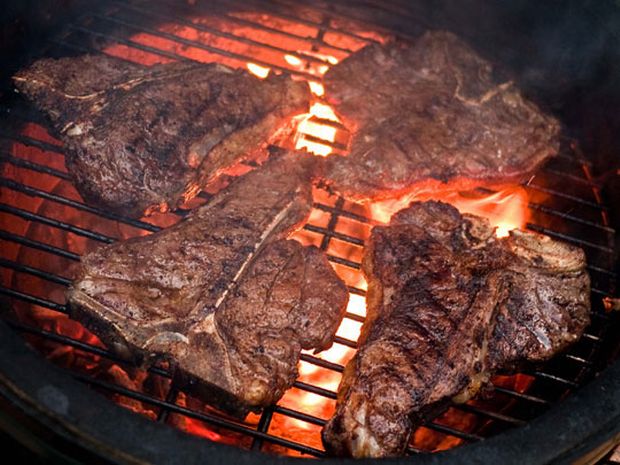
The word tsikna (τσίκνα) means ‘pungent smoke from grilled meats’ – it’s what your clothes smell like when you return from a taverna or barbecue. Today is Tsiknopempti (Τσικνοπέμπτη) – literally the ‘Thursday of grilled meat smoke’, a Greek tradition beloved by all carnivores, since it entails an orgy of grilled meats.

We are now in the middle of the three weeks of Apokries (Απόκριες – Carnival) preceding Lent and a fast of 40 days before Easter. Little kids in fancy dress can be seen walking in the streets, on their way to various parties. Tonight people will either descend upon tavernas – better reserve, since even your local is bound to be overbooked – or congregate in homes around someone (usually a man) priding himself on his barbecuing skills.
Every full-blooded Greek considers the Tsiknopempti feast his unalienable right, not to be spoilt by any vegetarian, cardiologist or fish-eater.


image


The menu on offer usually comprises the following:

*Burgers, kebabs, sausages, lamb and pork cutlets, and steaks. Maybe chicken pieces.
The meat has to be top class and seasoned with salt, pepper and oregano. It will be accompanied by: Cut lemons to be squeezed over according to taste. Tzatziki – a yogurt and garlic sauce. Mustard, ketchup and mayo.

*Fries. They have to be home cut and cooked in olive oil.


image


*Salads. A xoriatiki  (Greek salad) with tomato, cucumber, plenty of onions, and tons of feta cheese. A green salad for freshness. A shredded cabbage and carrot salad dressed with olive oil and lemon.

*Bread – pita and slices of country loaf, brushed with olive oil, grilled and sprinkled with oregano.

*Plenty to drink. Beer, of course; wine, red and white (some like retsina, a white whine flavored with pine resin – a strong, old-fashioned, acquired taste); ouzo, raki and other spirits.

*A selection of desserts, the sweeter the better. Baklava full of nuts and drenched in honey syrup, something chocolate.


image


All of this engenders a lot of discussion and theory:

-I see you didn’t go to the butcher I told you about.
-Do we have enough coal?
-Have you lit the coal? We don’t want to eat at midnight.
-If the meat is good enough, it doesn’t need marinating.
-No, no, pancetta should be marinated in beer.
-Don’t be stingy with the salt and pepper.
-Or with the garlic in the tzatziki.
-The sausages have to be eaten first.
-Someone has to be in charge of the fries.
-Someone has to keep the cook supplied with drink.
-Someone has to praise the cook.

Suggestion: Better lay in a supply of antacids for after dinner and/or plan a week’s detox.

But, meanwhile, Kali Orexi! (Καλή Όρεξη – Bon Appetit)

The images are from the oneman.gr blog which has a very amusing article on Tsiknopempti, for those who speak Greek. 

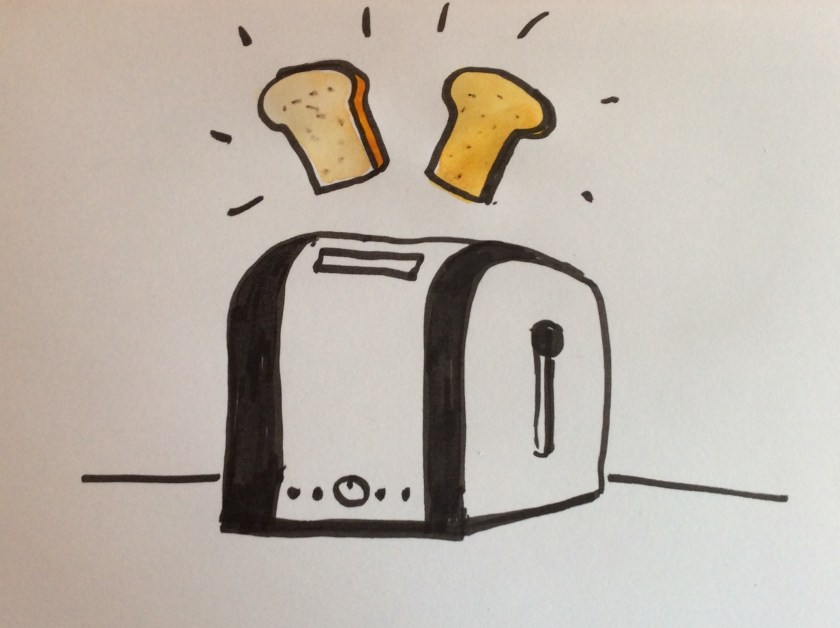
A ban on high-powered kettles – seriously?

This morning I came upon the following text in one of the papers:

BRUSSELS is temporarily abandoning plans to ban high-powered kettles and toasters to avoid giving anti-EU campaigners fresh ammunition in Britain’s “Brexit” referendum, it has emerged.
The decision to shelve the plans until after the vote on June 23 comes as Brussels tries to minimise its reputation for meddling in voters’ lives.”

There followed someone’s description of the new, Eco-friendly toasters: “I think I must have bought a Euro-toaster, I have to put the bread in five times and it’s still pale and pasty. Perhaps it’s powered by windmills. And the kettle? Watching a kettle boil has never been so boring.”


image


People of Brussels, it’s time to get your priorities straight. Europe is crumbling, splitting at the seams. There are huge issues requiring immediate solutions if catastrophe is to be averted. Schengen ? The refugee crisis? The euro? The whole fiscal/legal framework ? There’s plenty to choose from.

And yet, instead of working flat out on those, they are wasting time banning local cheeses for not being pasteurized enough, or forbidding Italian farmers from putting (natural) chlorophyll in those delicious huge green olives (I was told this by the man in the local deli – he also cannot get his customers’ favorite anchovy paste any more, because it had some ‘forbidden’ ingredient – which people have been consuming for umpteen years, meanwhile.)

No wonder the Brits are thinking of getting out. I will not debate the merits of this, I’m not informed enough to have an opinion; but OK, people, get your priorities right. European taxpayers are paying fat salaries to endure nitpicking and PC meddling in their affairs,  while serious issues are left unsolved.

Landscapes

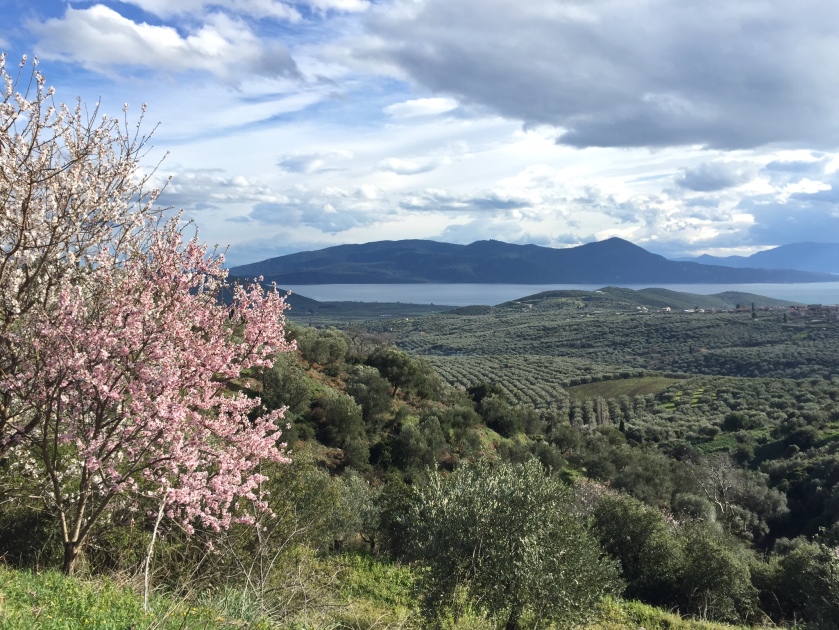
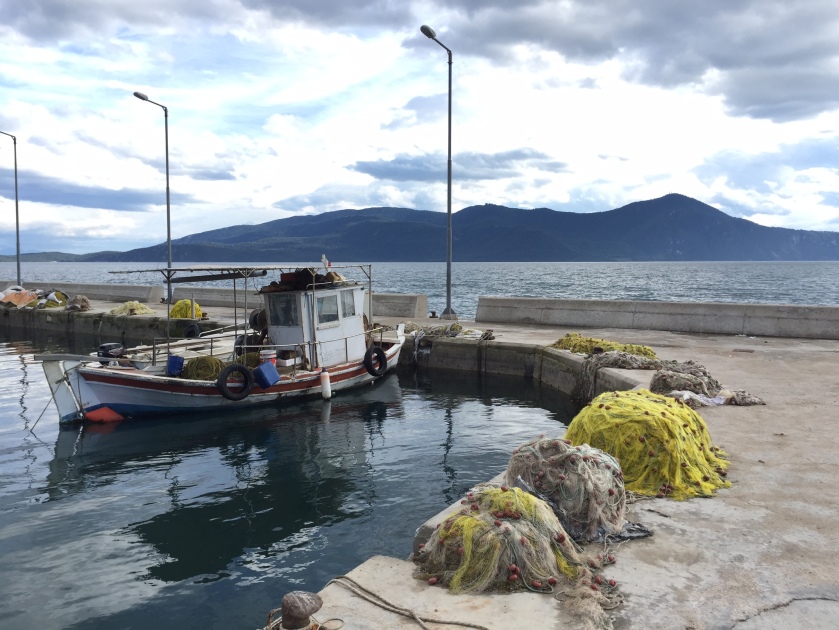
Is this the country that is crumbling about our ears?
imageLooking at this prosperous, well-ordered landscape, it seems hard to believe.
And yet. Tractors are blocking the main roads at great cost to our stricken economy. Farmers are in endless dispute with the government who are finding it hard to negotiate with them, seeing as they were the ones who encouraged them in the first place.

As for the refugee situation, what is there to say? Everyone has seen the news. Our European ‘allies’ are in panic mode – the order of the day is sauve qui peut.  Countries are looking to their own interests and repeated conferences and summits fail to come to any sort of agreement. Even measures that were supposedly ratified have not been implemented. Greece is making huge efforts but, unfortunately, it is too little, too late.


image

My friend Christina took these photographs on a road trip to Pelasgia, in Central Greece.

The view through Harold’s lens

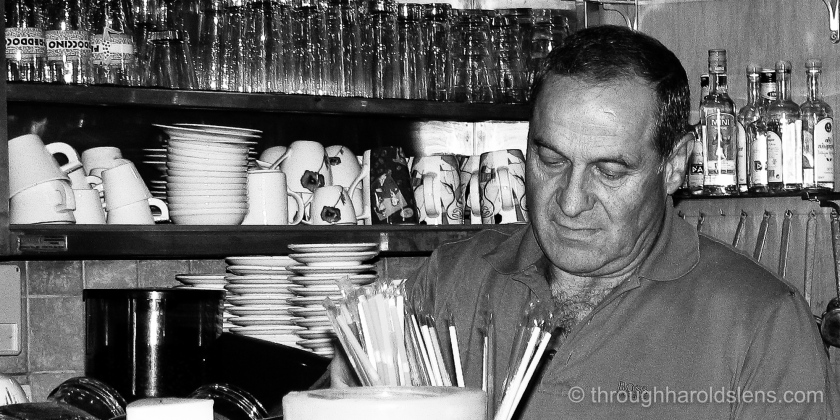
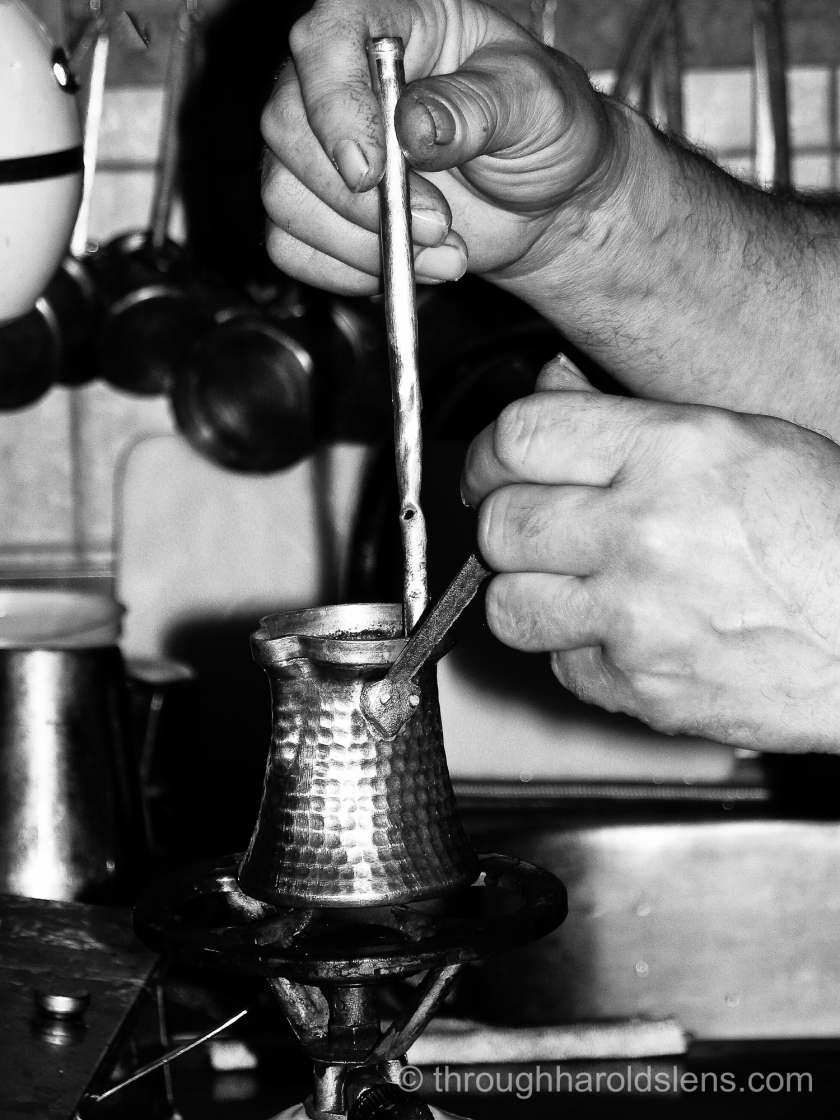
In my last post, Greece – through Harold’s lens, I showcased some of the wonderful photographs he took of Greece. Today I will post the remaining ones he sent me, since I found it impossible to leave any out.

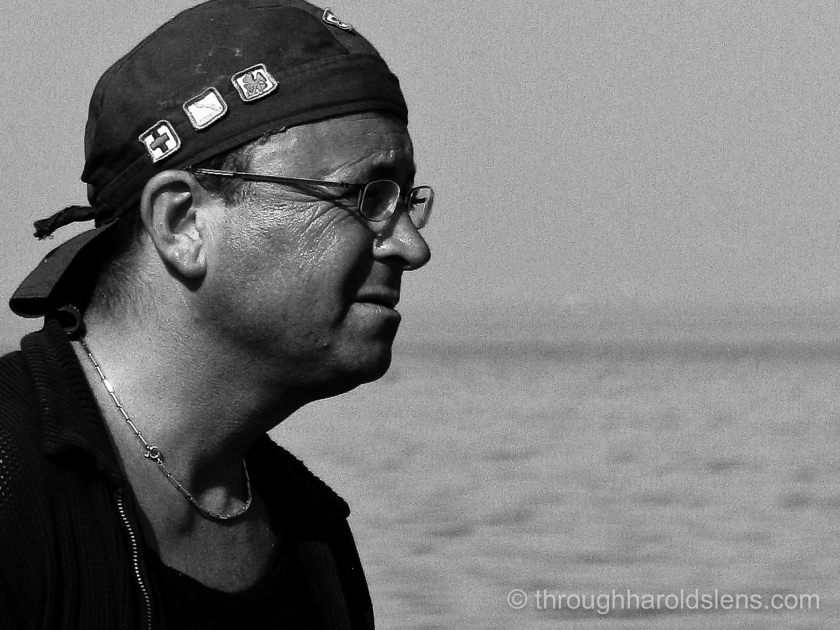
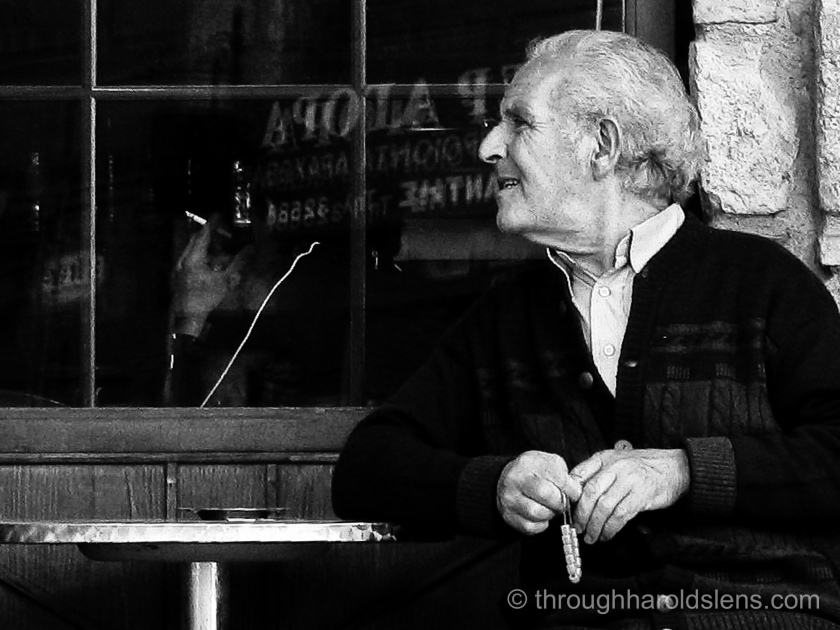
I urge everyone to check out his blog, Through Harold’s lens. Harold travels widely, and has a very personal take on things. I especially love his portraits. Sometimes he even writes poetry to go with them.


IMG_3884


IMG_3866


IMG_3867


IMG_3887


IMG_4341


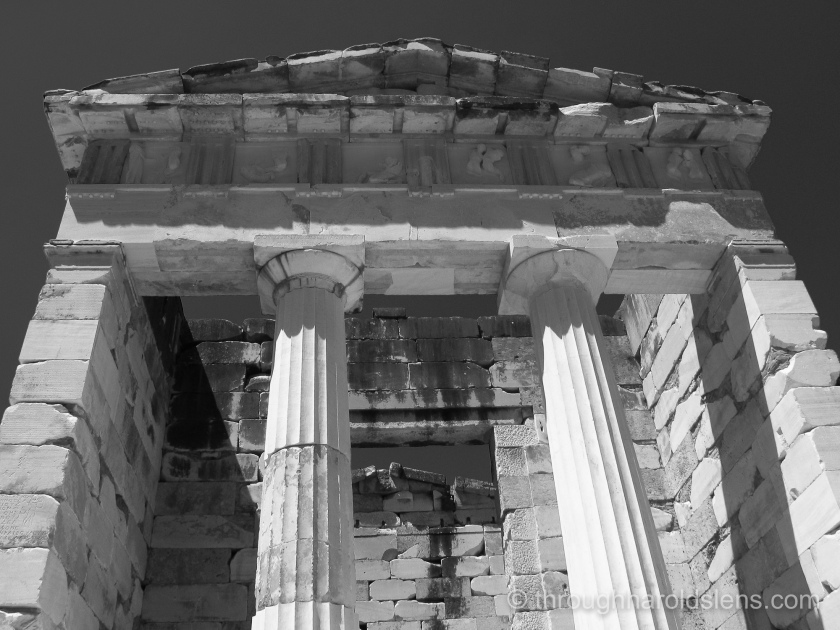
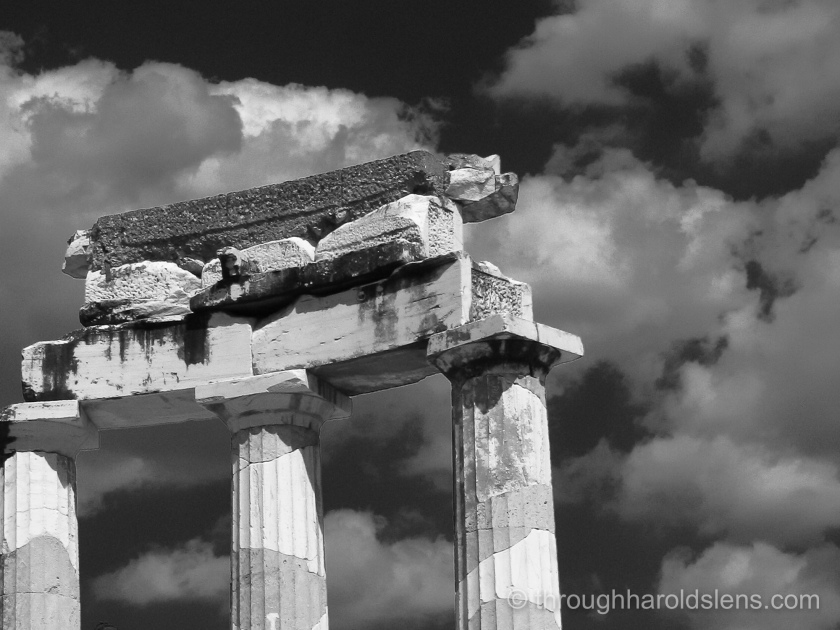
These pictures of Greece remind me of an earlier, simpler time – Greece in the 50s and 60s. A more remote, more romantic country. This Greece still exists today, alongside the modern country with street art, cutting-edge technology and European problems. It exists in the countryside, in the villages, in the poorer neighbourhoods of cities. And of course the temples and monuments are timeless.


IMG_3936
IMG_3974


IMG_3368


IMG_3951

I discovered, by chance, an interview Harold gave in the blog Global From Home. A must for anyone interested in his methods – I especially liked his explanations of how he approaches strangers in order to take their photograph. (Click on the name to read the interview.) 


Greece – through Harold’s lens

Harold is a photojournalist and a great traveller. I always think it interesting to look at places through different sets of eyes, and I loved the photographs of Greece he often posts on his blog, Through Harold’s Lens. He very kindly agreed to be a guest host when I asked him, never imagining the amount of work this entailed! In his own words: ‘What a fun project this has been. Going through and selecting from 1,500 photographs from Greece was a challenge.’

He has been more than generous in sharing his photographs, and since I found it quite hard to choose from this bounty, I will divide them between a couple or more posts.

Harold goes on to say:

As a recent visitor to Greece, I was alive with excitement strolling through this historical cradle of Western Civilization.

IMG_3940.jpg HL


To journey through Greece’s UNESCO World Heritage Sites and experience the numerous gods of the ancient Greek religion as well as the mythical heroes.


IMG_3466


IMG_3504


To feel the faith of the country.

IMG_4500


IMG_4607


IMG_4497


To embrace the warmth, joys and sorrows of the Greek people.

DSC03465


IMG_4688

IMG_4633IMG_3888IMG_3291


IMG_4373


With my sidekick Mr. SLR Nikon, we have tried to capture some of the riches and beauty of your country. We hope you enjoy.


IMG_3504


IMG_4666


To thank M.L., Through Harold’s Lens is celebrating “Greek Week” on our blog www.throughharoldslens.com. You are invited along on our journey.


IMG_3956(to be continued…)

The trouble with the school canteen

Running a school canteen is not the world’s most profitable business at the best of times. But now it’s slowly becoming a recipe for disaster.

The crisis has affected pocket money – for a lot of kids, the freshly-baked tyropita is now above their means.
Canteen owners are in despair. They say sales have fallen by 70% during the last six years. Meanwhile, they feel obliged to let kids have food on credit, something which had not been the case before. Many run up tabs their parents are unable to pay from one year to the next.
Only about half the students in any school purchase things from the canteen, and they choose the least expensive items, since they only have one euro on average to spend. This is enough for one tyropita (cheese pie) or a koulouri (round bread stick) and a small bottle of water.


image


Often the canteens, together with the teachers and the parents’ committee, are called upon to subsidize snacks for needy students. A lot of canteens give out leftover food at the end of each day.
But canteen owners are not rich. Many have already closed up shop, and some schools are having problems replacing them. The increase in taxation to 23% is not helping.
In some areas, a lot of kids don’t bring anything to eat from home, even when they have to stay at school until 4.15 pm. In many cases the Church has stepped in, offering a large number of school snacks. Also the  Prolepsis Institute is implementing a program of Food Aid and Promotion of Healthy Nutrition for the 3rd year running, with a grant from the Stavros Niarchos Foundation. In  2016 it serves food to 148 schools (11.617 children) in different areas. However, the number of students who have applied to join the program are more than 260.000.
Since 2012 more than 11,5 million meals have been distributed to 480 schools and 80.000 students.


image


The daily menu includes a breadstick or a sandwich, a piece of fruit, milk and yoghurt with honey. There is an effort to make the meals as healthy as possible, with wholewheat bread, vegetables in the sandwiches, as well as traditional cheese or spinach pies. There is also a program for educating the children in healthy nutrition as Prolepsis feel this is important for the prevention of obesity.
Finally, Prolepsis has set up a campaign to get companies to sponsor individual schools, so that not a single child has to go without a snack.


image


The first signs of spring

We haven’t had much of a winter this year – it’s been mostly mild. A little snow on the mountains. Central and Northern Greece had a few bad days, with lots of snow, and roads shut.
I hope we get more rain before the hot summer months set in, but the first signs of spring are here, and they are hard to resist.


imageThe almond trees are in bloom.


imageAnemones come in all shades of pink and mauve, from almost white to fuschia, from palest lavender to purple. They can even be bright red, like poppies. They’re lovely in bowls around the house.


image


imageDaisies and other wild flowers are popping up.


imageThe first kumquat. It’s in a pot outside the kitchen door.


imageAnd buds on the camellia!