I’d like to thank all of you who sent me words of commiseration and encouragement over the last two days. I was touched by all the positive energy, sometimes from people I hadn’t spoken to in years.
I’m finding it difficult at this moment to answer each and every one separately, while the news are still full of updates, tragic stories and horribly depressing photos. Even worse, there are still a lot of people missing—I can’t imagine what their families and friends are going through.
I’m so sad Greece has again made the front pages for such a dreadful reason—it seems our troubles are never ending.
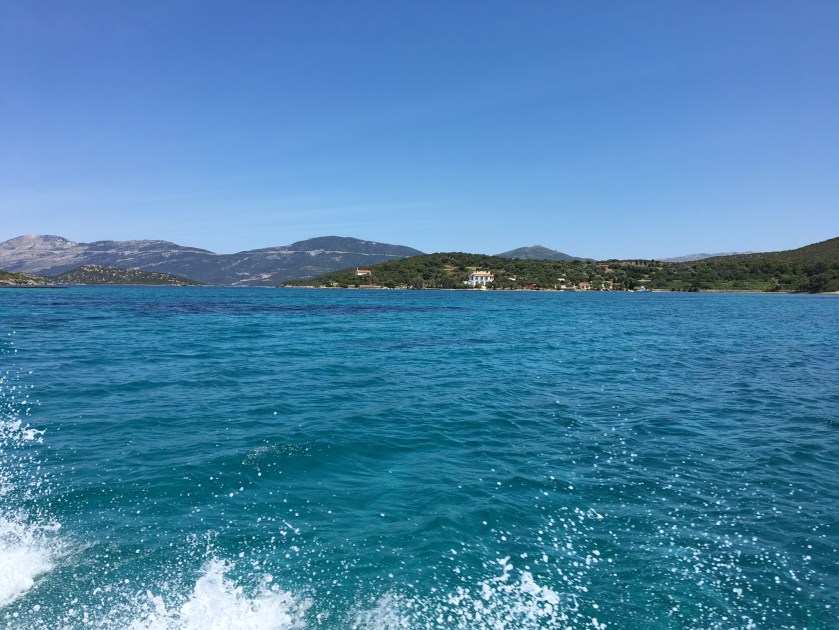
The beach below is Kokkino Limanaki (the little red port) where we often go to swim. It had beautiful pine trees above a red cliff and a lovely view of the island of Euboea. Many people tried to escape from there.
When the wind is blowing, fire changes direction with the speed of lightning. Sometimes there are only a few meters between hell and safety.
In 2015, I wrote about the summer fires in Greece (here). Sadly, this is a recurring theme, which I could post about every year. Forest fires can occur everywhere when it’s dry and windy. And pine trees, which comprise most of the bits of forest around Athens, burn with more intensity than other woods because they’re resinous.
I’ve already experienced two very bad fires in previous years, when both times our garden was burnt and the house barely saved. However, this one is the worst by far. Since yesterday the situation has been catastrophic. Not only much of the remaining vegetation has been destroyed and scores of houses damaged, but, even more tragically, there have been a large number of casualties. Many people were trapped on the beaches and had to be rescued by sea. Others were trapped in their cars, some died when the taverna they were eating in burned to the ground.
Can these fires be prevented, or controlled faster? A very strong wind was blowing, spreading the flames at a terrifying rate. The usual blame game is going on, but in California and Australia, where the equipment must be superior, they seem to face the same sort of problems.
Meanwhile, superhuman efforts are being made by firefighters and volunteers on the ground, along with the heroic pilots who skim the waves to fill up their tanks and then fly through the smoke to drop the water on their chosen target.
For any of you headed to Mykonos, you could take a break from swimming or partying to see this fascinating exhibition. From one of my favorite art blogs, Art Scene Athens.
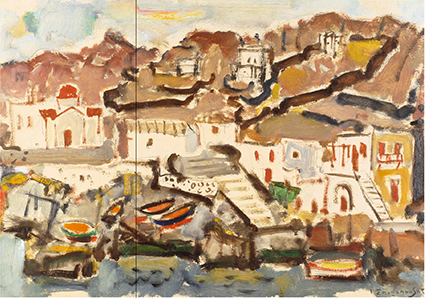
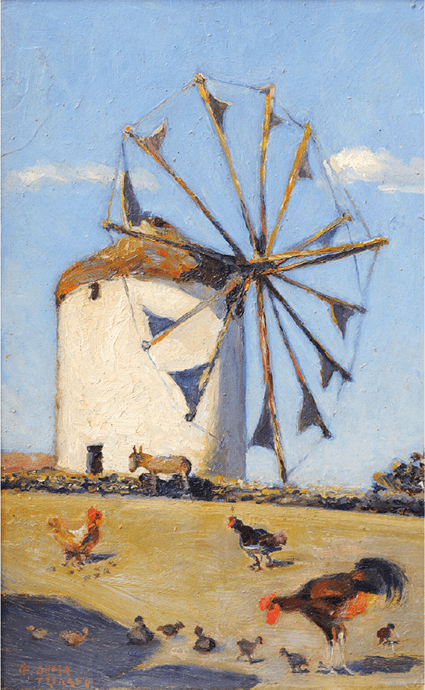
“MY SOUL is often a back street on Mykonos when night begins to fall”, wrote Surrealist artist/poet Nikos Engonopoulos back in 1939. I imagine those back streets were pretty quiet in those days, and nothing like they are today, since Mykonos became Greece’s party island par excellence. But this island does have an arty side to it too, for it is here that the Athens School of Fine Arts had set up its first annex, back in 1932. The ‘island of the winds’ had already been pulling a cultured crowd from the early 20th century, due to its close proximity to Delos, and the antiquities there, excavated by the French School of Athens (between the years of 1873-1913).
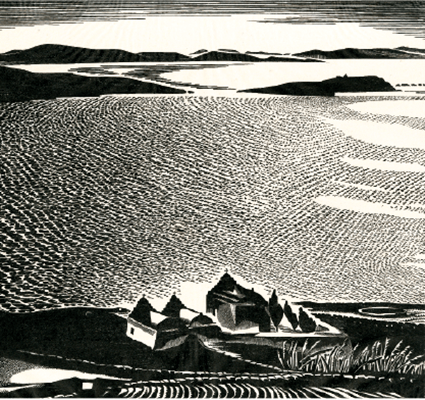
The current exhibition at the Municipal Gallery of Mykonos (runs till July 31), entitled ‘Mykonos through the Gaze of the Artists. From the Interwar years to 1960’, sheds light on the unique…
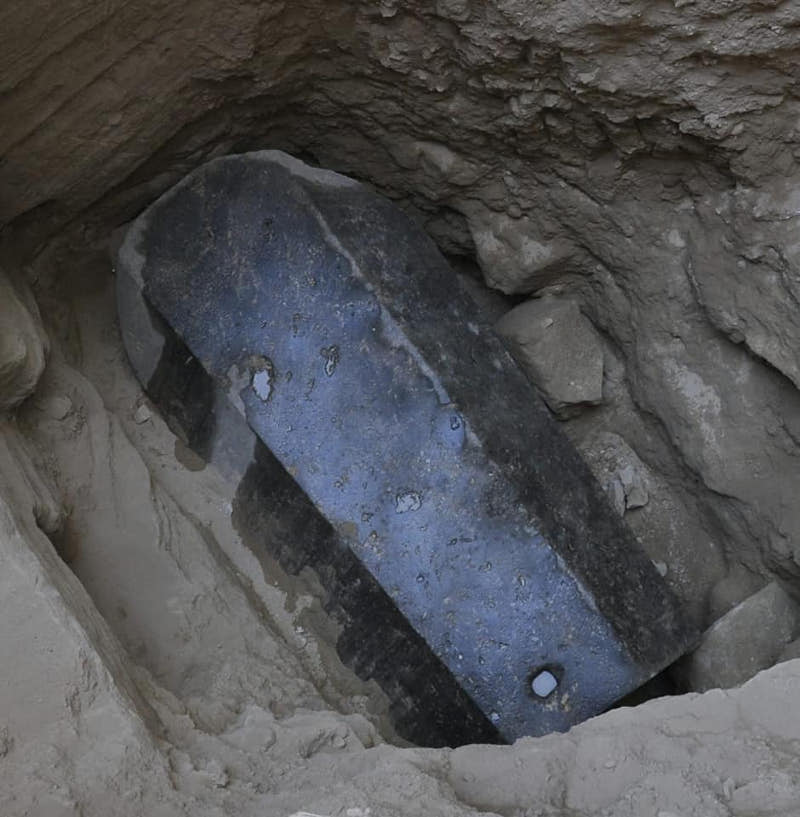
The Egyptian Ministry of Antiquities has announced that an unusually large, untouched sarcophagus has been discovered in the Sidi Gaber district of the city of Alexandria. The tomb was uncovered during work on the foundations of a new building and is believed to belong to the Ptolemaic era, more than 2000 years ago.
Source: Google
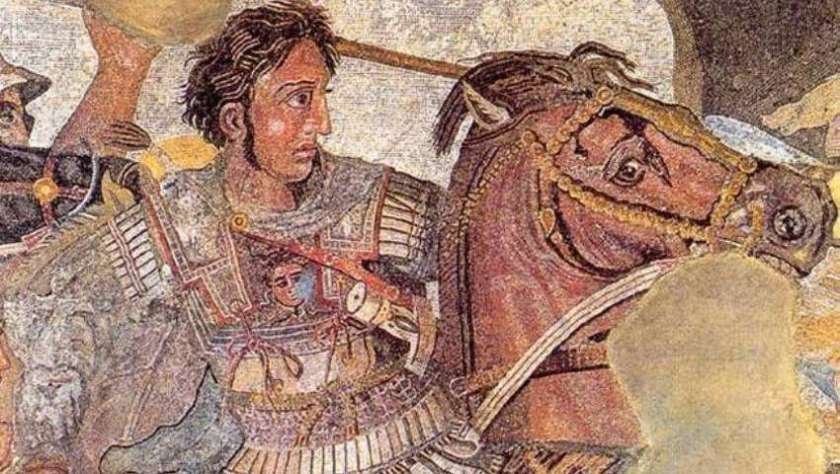
Alexandria was founded by Alexander the Great in 332 BC, one of around twenty cities bearing his name. Alexander the Great succeeded his father on the throne of Macedonia at the age of twenty. He died in Babylon at the age of 33, having in this short time created an empire that stretched from Greece to northwestern India. He was undefeated in battle and is widely considered one of history’s most successful military commanders. His reign, while being undoubtedly bloody and violent, nevertheless resulted in the spread of Greek culture in the east. This led to a new Hellenistic civilization, aspects of which were still evident in the traditions of the Byzantine Empire in the mid-15th century AD. It is amazing that people spoke Greek in central and far eastern Anatolia until the 1920s! Alexander became legendary as a classical hero in the mold of Achilles, and is often ranked amongst the most influential people in history.
Source:Google
Alexander’s tomb has never been found, but it is widely believed to be in Alexandria. The reasons for this are multiple:
Ancient sources often mention Alexander’s tomb, all placing it in Alexandria. Amongst the people who are thought to have visited are Julius Caesar, Octavian, Caligula and others, according to ancient texts. There is no definite proof, but there is however a strong probability, given that after his death Alexander’s body remained in Babylon for two years, before starting on the long journey home in order to be buried in Macedonia. It is said that Ptolemy, the governor of Egypt, waylaid the mission and kept the body in Alexandria until at least the 4th century AD. Possibly it was destroyed there during the persecution of Christians. The fact that the royal necropolis was never found could also be due to the ravages of natural catastrophes such as earthquakes and tsunamis, or the later destruction of pagan temples by Christians.
Finally, Alexandria has progressively grown into a thriving modern city of five million inhabitants, making it difficult for archaeologists to conduct digs there.
This new discovery is a rare specimen sculpted out of black granite. It is exceptionally large, measuring 2.65m in length, 1.65m in width, and 1.85m in height. The lid is sealed with mortar, which is an indication that it probably has never been opened, and that in itself is unusual, given that most ancient graves have been desecrated by robbers.
Given that it weighs around 30 tons, it will probably need to be opened on site.
Source: Google
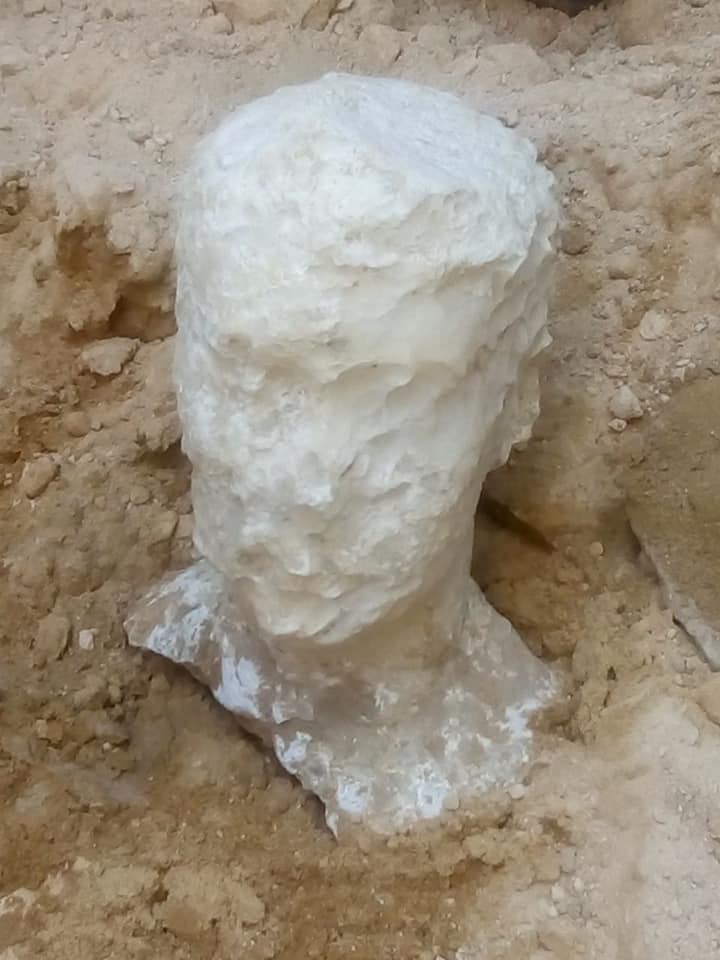
Could this be the sepulchre of Alexander the Great? Doubtful, although it probably belonged to a prominent, wealthy man. However, it not luxurious enough for a king, especially one of Alexander’s radiance. An alabaster bust was found in the grave, believed to be that of its owner, but unfortunately its features are quite eroded.
Archaeologists are now all agog to open the sarcophagus, hoping to find clues to its owner inside.
For anyone planning to visit the beautiful island of Crete, here is a book that could be of use. From the blog of Kritsa, who has written a book about Crete herself, a novel called Kritsopoula, girl of Kritsa.
One of my favourite travel writers, Richard Clark has a new book out focusing on my favourite region of Crete. Well, I live there so I cheerfully admit my bias. Richard has a knack of taking you on a journey through his eyes that either makes you nod in appreciation with a ‘Yep, that’s what I thought/saw about that place’ or ‘Mmm, I must visit there.’
Many guidebooks about Crete are unfortunately out of date and only skim the places they mention. Richard brings a fresh approach, and gives more detail while encouraging your own exploration. I’m proud to say I was able to make a small contribution to the book and thoroughly recommend it.
The photo on the book cover was taken in Elounda and I’m looking forward to standing right there to soak in the view. Congratulations, Richard for capturing…
The one thing still working in crisis-stricken Greece is tourism. Thus many Greeks, looking for ways to supplement their income, have started setting up their houses and flats as Airbnb accommodation. Whether in Athens, in the countryside or on the islands, this is good news for travelers, since they get to experience a side of Greek life not visible in a hotel. Strolling in an unknown neighborhood, buying a bottle of milk in the corner shop, having coffee or an ice cream in a local café. And this at a very reasonable price and, if one choses well, accompanied by a warm welcome.
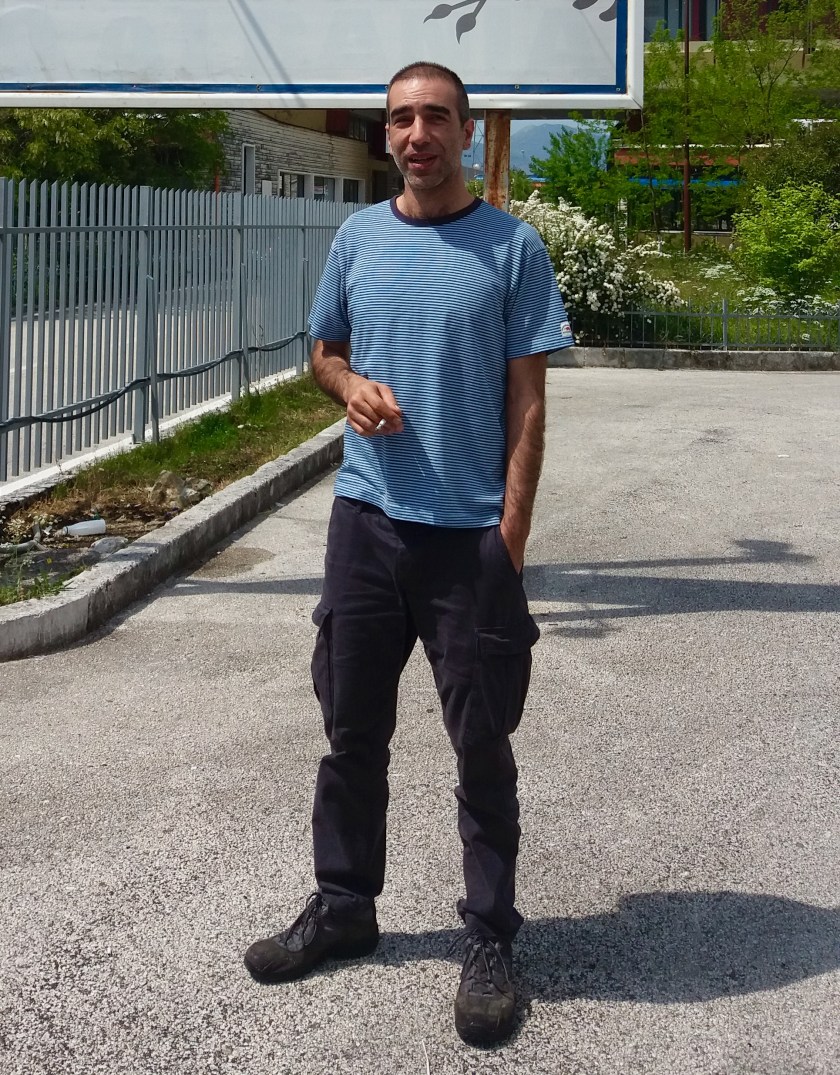
Meet Ioannis Vasileiou, proud owner of an apartment in one of the cooler neighborhoods of Athens.
Tell us a little about yourself
I was born in Athens but after a while my family moved to my father’s birthplace, Eleousa, a village a few km outside the city of Ioannina in North West Greece, very close to the borders with Albania. In 1999 after finishing high school I went to Mytilini (the capital of Lesvos Island) to study Social Anthropology & History at the University of the Aegean. After I took my degree I spent one year in the army (there is no choice in Greece, you either go to the army or you leave the country until you reach your 40s or you must have a physical or mental health issue in order to avoid it) and then went back to Ioannina. I spent around 10 more years in Ioannina in various jobs (that were never related to my degree) ranging from the chicken industry to bookstores. For the last 3 years I’ve lived in Athens. Throughout my life (well, after the age of 9) what I mostly loved was to discover new music and collect it in every possible way (tapes, vinyls, CDs, CDrs, MP3s)—I never stopped buying music even after MP3. MP3s only helped me to discover even more music.
Since last summer I own an apartment in the center of Athens that I offer for rent to travellers through Airbnb.
What were the major difficulties you’ve faced in the last five years?
I thought a lot before answering this question. I could easily write several pages to answer. If I had to answer with just one word, this word would be Depression. Not just my depression but the whole country’s depression. How would you feel if suddenly you were not able to do all the things you loved and enjoyed doing and especially if this was not caused by your choices but other people’s choices? I loved to wake up every day and go to my work and meet my colleagues, I loved to go to a record store and browse for hours until I bought something, I loved to go out with my friends for a drink, I loved to plan my holidays. After a few years of the crisis I was not able to feel the same. I started to hate my work, because my boss was not paying me on time, and when he was paying it was always less than it should be. I could not make jokes with my colleagues, they were all uncertain about their future, and the future of their kids. I remember one specific colleague saying everyday, ‘What will I do? I have two kids to take care of.’ I could no longer go to record stores and buy music, instead of that I had started selling (piece by piece) my collection in order to pay my bills and my rent. I had friends I wanted to call to have a coffee with them, but sometimes I wouldn’t because I knew they had no money in their pocket, not even for a coffee. Holidays?
Did anyone in particular inspire you or help you?
I get inspiration from everyone and everything that can “touch” me. It can be a behaviour, a book, a song, an artist, a friend, a teacher, a family member etc. But if I need to answer in particular no one has inspired me and helped me as much as my parents did. Thanks to them I learned to be frugal. Thanks to them I always had money in my pocket (even in the most difficult times) not just for my coffee but for my friend’s coffee too. Thanks to them I now own a flat that offers me a monthly income good enough so that I will not have to work for a boss or a company that treats its employees like slaves.
What are your hopes/plans for the future?
My only hope is that I will continue to be able to maintain my personality. That I will be able to resist to anything I find not fair. I don’t have plans for the future. Greece is still a place where uncertainty is the only thing you can be certain of.
What are your hopes for Greece? What changes do you hope to see happen?
Greece since the very first moment that it became a nation is a country where corruption rules. I don’t mean that Greeks are corrupted. The only people who are corrupted in Greece are those who are in to politics and critical positions. Corruption is not something in our DNA, all the corrupted Greeks became corrupted by forces outside of the country. If anyone wants to discuss this further with me it will be my pleasure. This is what I hope and wish will change to the better. Some tiny changes have already started to happen but this is a very long road…
Have you considered leaving? If so, where would you like to go, and why?
Thankfully I never seriously considered leaving Greece. Even though I could and even had a job offer from abroad (my brother is living abroad, he did not leave Greece because of the crisis, but because of the crisis he is not thinking to return. When I visited him in the early years of crisis, his boss offered to take me in his company too.)
The fact that I do not have a family of my own yet, saved me from this thought. All the friends I have that started a family and are now outside of Greece are not considering coming back and I can understand why.
If you have already decided to leave what would make you stay?
“There’s nothing like the Sun,” would be my answer to this question.
Are you actively doing anything to help with the situation? Is there something you would like to do?
Am I? I don’t know. One of the things that the depression I mentioned above did to all Greeks was to make them inactive. Can you imagine that there were (some still are) people working in jobs without getting paid at all for a whole year? Do you know what the majority of them did about it? Nothing! Because they were all afraid that they would lose their job and they would not be able to find a new one. Do you remember my colleague with the 2 kids? We were also friends, I was trying to convince him and my other colleagues to demand our money when our boss started not paying us properly. His answer was always the same “I have 2 kids…”. A few months later our boss started to ask us to put our signature for monthly payments that we had never taken. I refused to sign and I was fired. After one year and a half I managed to get paid in full the 3 month’s salary that he owed me. My colleague continued to work on the same job for a few more years until he was fired too. Our terrible boss owes him now the salaries for almost a year. I saw my colleague a few months ago in his new job, he has no hope at all that he will ever get these payments. He was such a good employee, anyone would give him a job, but the uncertainty and the fear he had could not let him understand it and take a risk for his own good. If I am doing something actively it is that I try to respect not just my rights but everyone’s rights. If I see something that looks to me unfair, I will point at it instead of looking the other way.
How do you see Greece in 5, 10 years?
I really can not look that much forward. Greece has the finest tourist product to offer, but tourism as much as it can help a country to recover from a financial crisis, can also bring disaster. So I think that in 10 years we will know the answer. I only hope that we will not become the poor local servants of the wealthy foreigners.
How do you cope with obstacles and frustrations in your everyday life ?
I think that we Greeks and maybe Mediterraneans in general know how to cope with all the obstacles and difficulties. We can have patience with them, but we can also put them aside for a while and have a nice time. To give you an example, I used to go out in bars like most of the people… when I could not afford it anymore I did not stay in depression in my house, I went out with friends having a nice time on a pedestrian street or a square, with a beer in our hand bought from the mini market.
What are the positive sides of living in Greece? Have you had any good experiences lately?
One good result of the financial crisis, was that all the independent and underground culture was raised to a new era. A lot of people stopped consuming whatever the TV was advertising and started to support DIY actions. Some of the best live music I have ever heard was free of charge or pay what you feel/can, the best theatrical performance I ever saw in my life was not in a theater but in a squat with the actors leaving a hat after the performance for the people to support them if they were able.
The view from the terrace
To finish off, since we are on such an interesting subject, can you tell us something about the Airbnb phenomenon?
Like everything else, it has its positive and negative sides. It’s a new proposition for travelers that has an impact both on society and on the economy. In many tourist destinations the locals are complaining because it has created a shortage of available rentals—for example, in the city of Chania in Crete, students found it really hard to find accommodation at the start of the school year. On the other hand, the Airbnb sector has helped to prevent a catastrophic downslide of property prices. Of course this has not stopped foreign investors from acquiring real estate in order to exploit it in this way.
In my own case—and in those of many others—it has been a life-saver, because it has allowed us to make a decent living without being at the mercy of unscrupulous employers.
And here I have a piece of advice for prospective travelers: to opt for places such as mine, homes with character and a warm welcome. Investors offer a standardized product, not much different from being in a hotel. In some ways worse, since these properties are totally impersonal, and many are now applying the concept of self check-in, where you never even get to meet your host.
Whereas nothing gives me more pleasure than to welcome my guests, and advise them about local shops, open air cinemas and even their next destination.
Choosing such a host is easy if you look at their profiles online.
Here would be a good spot to insert the link to Ioannis’ appartement, in case anyone is planning to travel to Greece and is looking for a place to stay, a warm welcome and some decent music.
We frequent our local fish shack all winter, too, when the interior is cosy and your clothes end up smelling of fried fish, and sometimes salt spray hits the windows. But now they’ve put their tables out, by the rocks.
Its name is Xypolitos, meaning ‘barefoot’.
Fishbones and wine. When darkness falls, they switch on the lights.
A blue evening. Around fifteen minutes away from where we live. Worth the drive?
I love this season, and can’t resist posting about it each year. The swallows have arrived, geckos are running up the walls. As everything is drying up, colors burst all around .
My agapanthus is out.
Oleander bushes are the best things to plant in Greece, since they don’t need water once they’ve had a good start in life. They can grow to be huge, and flower all summer long.
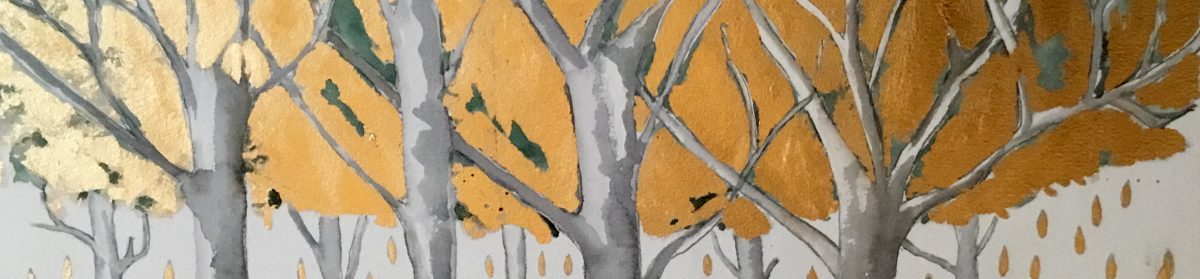
I tried eco printing some time ago, having seen some interesting posts on Instagram. Eco printing consists in creating marks on paper or cloth, using vegetable material. As you can imagine, depending on the type of paper or cloth, the results vary widely. Cotton will dye differently from silk, and watercolor paper differently from rice paper. Various plants and flowers also leave more or less color, in more or less distinct patterns. Apparently red cabbage makes bright blue marks, something I have yet to try.
It is necessary to use a mordant such as alum powder or rusty metal to help the color adhere to the material better. After that, the plants are placed upon the paper, tied in bundles, and either left in the sun for a day or more, boiled, or steamed. Some people place paper sheets flat between boards, others roll them up in a bundle tied with string. The whole thing is a lot of fun since you can never be sure of the result—only perhaps if you have done this for years? But even then, I saw on Instagram that people are always getting surprises. The idea is to experiment as far as your fancy takes you.
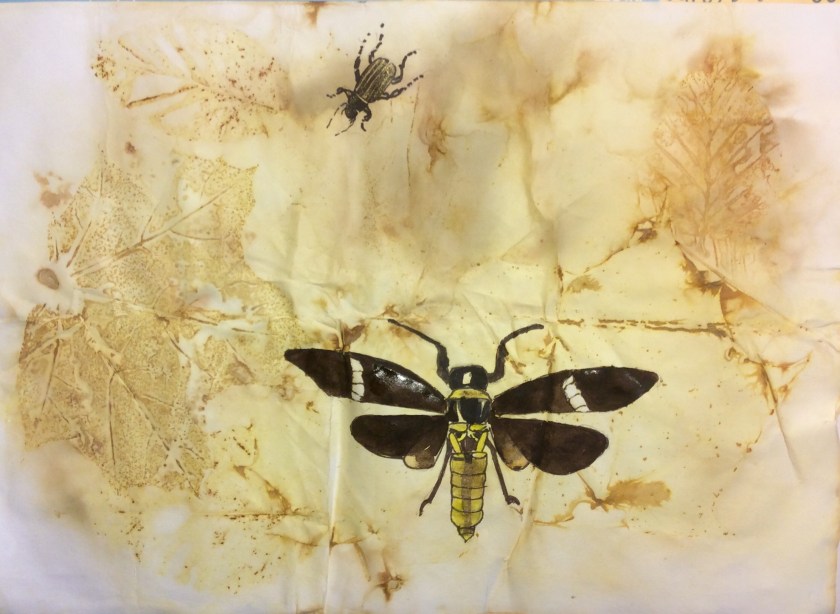
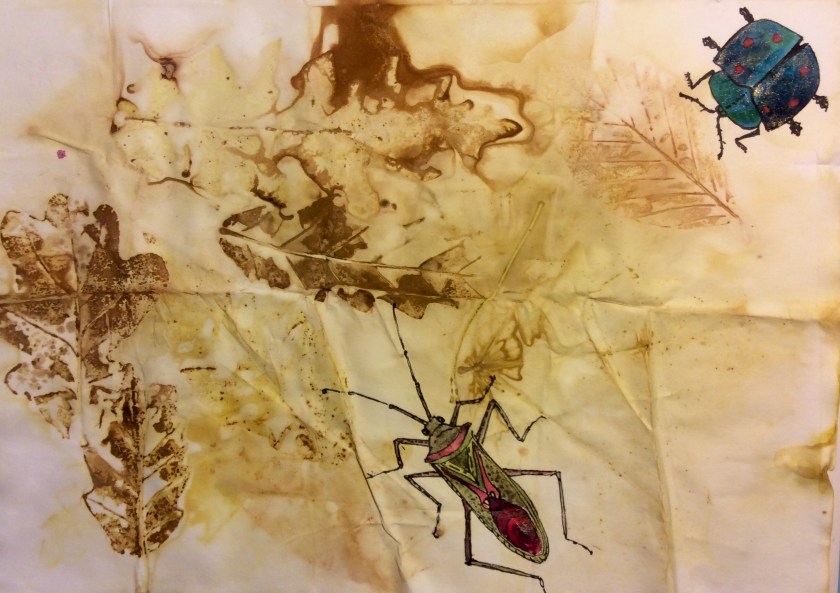
The first time I tried it, I soaked the paper in water with alum and used dead leaves, mostly maple and oak, since it was the autumn. The results were quite satisfying, and I painted moths and insects on top, and even a lizard.
This time I wanted to created material I could use for collage, in a series of paintings I’m planning about Greek nature. As some of you might know, I’m very into layers and textures at the moment, so I thought this would provide an extra dimension. I wanted to try rice paper, because of the transparency, so I used some of that, plus normal watercolor paper I had left over from last time and kadhi paper, which is made from cotton rag. At the last minute, I threw in some tissue paper too.
For the plant material I gathered a collection of fresh green leaves and flowers: bougainvillea, oleander, lavender, along with fig, olive and plane tree leaves. And some sprigs of rosemary.
As I wanted to get quite a subtle effect, I used vinegar and rusty metal as a mordant instead of alum. The results were full of surprises, as always.
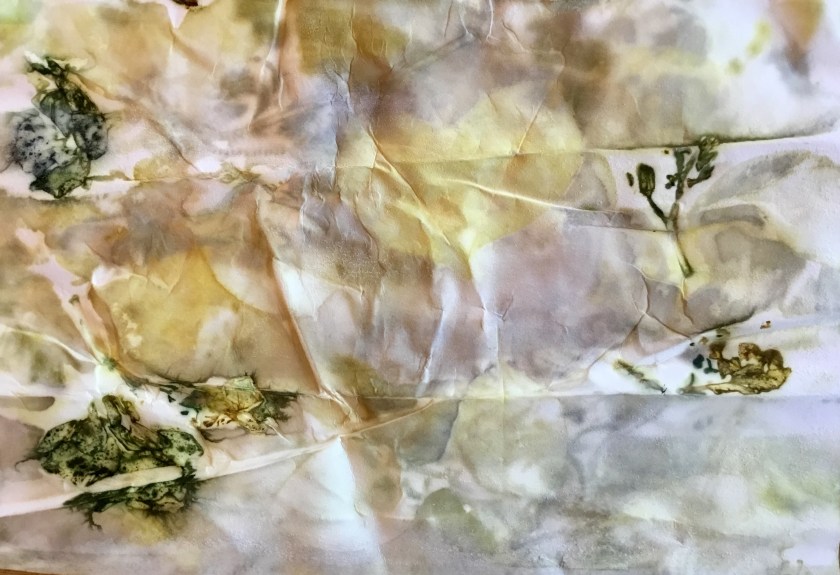
Strangely, the bougainvillea flowers left almost no marks on the paper, despite their bright coloring. Generally colors were a lot less bright than on the paper which had been soaked in the alum solution, and marks a lot more distinct on watercolor paper than on the rice paper.
The rice paper sheets stuck to each other and tended to tear when I tried to separate them. Of course, I did so while they were still damp, so maybe I should have been more patient and let them dry first. The tissue paper came out like a wad of used Kleenex, and I only managed to salvage a few scraps.
As seen above, the results look rather a sorry lot. However, they will still do my job, since I will be tearing pieces off, glueing them to my paper and painting or drawing on top. So I have ended up with a large pile of very interesting material to experiment with, and can’t wait to get started!
I have not here included instructions for making eco prints, as these vary wildly and there are many to be found easily by googling. However, I will recommend two Instagram sites: Fallowflora and book.and.paper.arts have some great examples and are worth taking a look at.
If anyone has done or does this and has some tips or remarks for me, I would be very pleased to have them!
Summertime living makes things seem less grim, especially if one can get away for a day or two. For Greeks, though, life continues to be a struggle, with ever-rising taxation, constantly changing rules and laws, and a failing infrastructure. A quick glance at the papers reveals the following:
– The dramatic worsening of the Italian economic crisis has put a damper on the government’s hopes to stage a smooth exit from the bailout program in August. The political earthquake in Italy has caused shivers in the whole of Europe, given that its economy is the third largest in Europe, and nearly ten times larger than that of Greece.
Consolation
– In Lesvos, refugee arrivals from Turkey have not abated, resulting in the hotspot of Moria being inundated by 7.300 people (for 3.000 places). There have been clashes between migrants from Arab countries and Kurdish residents over religious differences, and hundreds of people have dispersed over the island, sleeping rough in parks and woods. Fearing for their safety, they are refusing to return to state-run camps. Plans have been made for the creation of more reception facilities, but the local authorities have reacted forcefully against these. It is true the islanders have borne more than their fair share of this burden, but nevertheless immediate solutions must be found.
More consolation
-Meanwhile, the leader of the opposition Kyriakos Mitsotakis presented his business model for the country. His message was: No to more taxes and social contributions, yes to investments and new jobs, but also to healthy entrepreneurship. Amen to that? Well, I’m not getting my hopes up, we’ve heard this before. Many times, by all sides.
To end on a better note, there is something we can be proud of:
In its annual report, the European Environmental Agency has said that 95.9 per cent of all coastal bathing waters in Greece are of excellent quality. Off to the beach, then, to drown our sorrows in the crystal clear waters.




 One of my favourite travel writers, Richard Clark has a new book out focusing on my favourite region of Crete. Well, I live there so I cheerfully admit my bias. Richard has a knack of taking you on a journey through his eyes that either makes you nod in appreciation with a ‘Yep, that’s what I thought/saw about that place’ or ‘Mmm, I must visit there.’