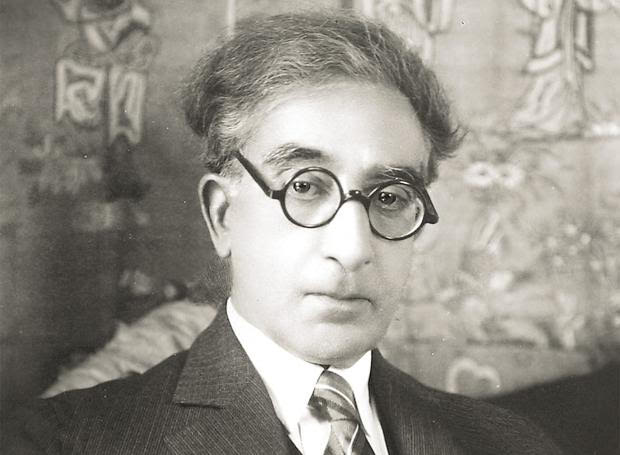
Camille de Fleurville is running a poetry series on her fascinating blog, Sketches and Vignettes from La Dordogne. She very kindly asked me to contribute and I chose a poem by one of the greatest Greek poets, Constantine Cavafy. Do pop over to take a look.
I follow it with the utmost assiduity: politics, economy, society, refugees, literature, Ancient Greece, Grecian Islands, myths, history, traditions -her blog is always full of information. Its full name is “Letters from Athens – A blog about life and times in Greece”.
Today, she invites us to read or re-read a poem by Constantin Cavafy, which sounds oddly relevant to our times.
C.P. Cavafy is widely considered the most distinguished Greek poet of the twentieth century. He was born in 1863 in Alexandria, Egypt, where his Greek parents had settled in the mid-1850s.
During his lifetime Cavafy was an obscure poet, living in relative seclusion and publishing little of his work. A short collection of his poetry was privately printed in the early 1900s and reprinted with new verse a few years…
Last night I found the first gecko of this summer in my bathroom. I was so happy to see him (her? it?) that I took a picture on my phone – but he was so small, it did not come out well under electric light. So I decided to make a drawing – in this case, a lot larger that life-size, as he was only 3cm long. The ones we get here are very small, and a lot more elegant than in my drawing. The babies are translucent!
House geckos are considered good luck by most people, and they’re useful to have around, since they feed on mosquitos and other insects. In the winter they hibernate, and when summer comes, they show up on the walls or on the ceiling, sometimes emitting a high-pitched squeak, almost like the faint chirping of a bird.
Geckos have adhesive toe pads enabling them to scurry with ease along walls and ceilings. Looking at this little fella’s toes reminded me of Gollum – Tolkien must have been inspired by some similar creature.
The borders are shut and tensions are running high in the refugee camps, as people become increasingly desperate about their future. A few days ago, in Souda on the island of Chios, refugees set fire to the rubbish skips as a protest. The fire spread and was only put out after a couple of hours by the fire brigade with the help of the police and the locals whose houses it threatened – but not before severely damaging two large tents used by NGOs and the UN High Comissioner for Refugees, some offices and a load of equipment. One of the firemen was injured.
In the sprawling border camp of Idomeni, in Northern Greece, police had to use tear gas to break up clashes between rival groups of rock-throwing Pakistani and Afghan migrants; incidents of violence along ethnic lines have become a daily reality. At Elliniko camp in Athens, hundreds of people, mostly Afghans, refused to eat because of the quality of the food and because of their belief that Syrians are receiving preferential treatment at their expense.
There are still nearly 60,000 refugees stranded in Greece, although the flow from Turkey has abated since the deal in March between Brussels and Ankara. However, it has not lessened as much as shifted – they have now gone back to trying to reach Italy from Libya, and hundreds have drowned in the Mediterranean in the last few weeks (this route is longer and more dangerous). In total there have been 10,000 deaths in the Mediterranean since January of 2014.
Meanwhile, tireless and feisty volunteers are continuing to give their all to help their fellow man. The Dirty Girls of Lesvos (see previous post, here) have saved more than 10,000 blankets from ending up in a landfill. Hearing the Idomeni camp was to be emptied, they came over and collected around 15 tons of bedding, to clean and re-distribute to other camps. Alison Terry-Evans says: ‘A clean blanket is a small way for people to have a little dignity in an underserved situation.’
Other volunteers are bringing water to camps where there is none; some deal with vulnerable groups; some with cleanliness; some with training and education of the refugees. Some set up WiFi in the camps (like Ilias Papadopoulos or Ben Ridge) or lay wooden floors in the tents, paid for out their own pocket.
Take a look at the video below, and you will see why Iokasti Nikolaidi spent three months cooking, together with up to 15 of her friends, on the island of Samos. Her husband, a fireman, was upset with the deaths he was witnessing. Iokasti was on maternity leave, having just given birth to her fourth child, and had not been out and about. When she went with him to see the hundreds of desperate, dispossessed, exhausted people, and especially the crying kids, she wanted to help. ‘Why don’t you cook something?’ said her husband.
Iokasti called her friends; they started with 30 portions, and slowly built up, with the help of other women, to their record – 4,380 portions one day! Spurred on by a photo of her holding a sick baby – she was initially angry with the photographer for taking it – volunteers from England and the rest of Europe came to help, and people sent money and supplies. Her worst nightmare: when the food finished, and the last people in the endless lines got none, after having waited for hours. This was her last thought when falling into bed at night: ‘If we don’t cook tomorrow, these people won’t eat.’
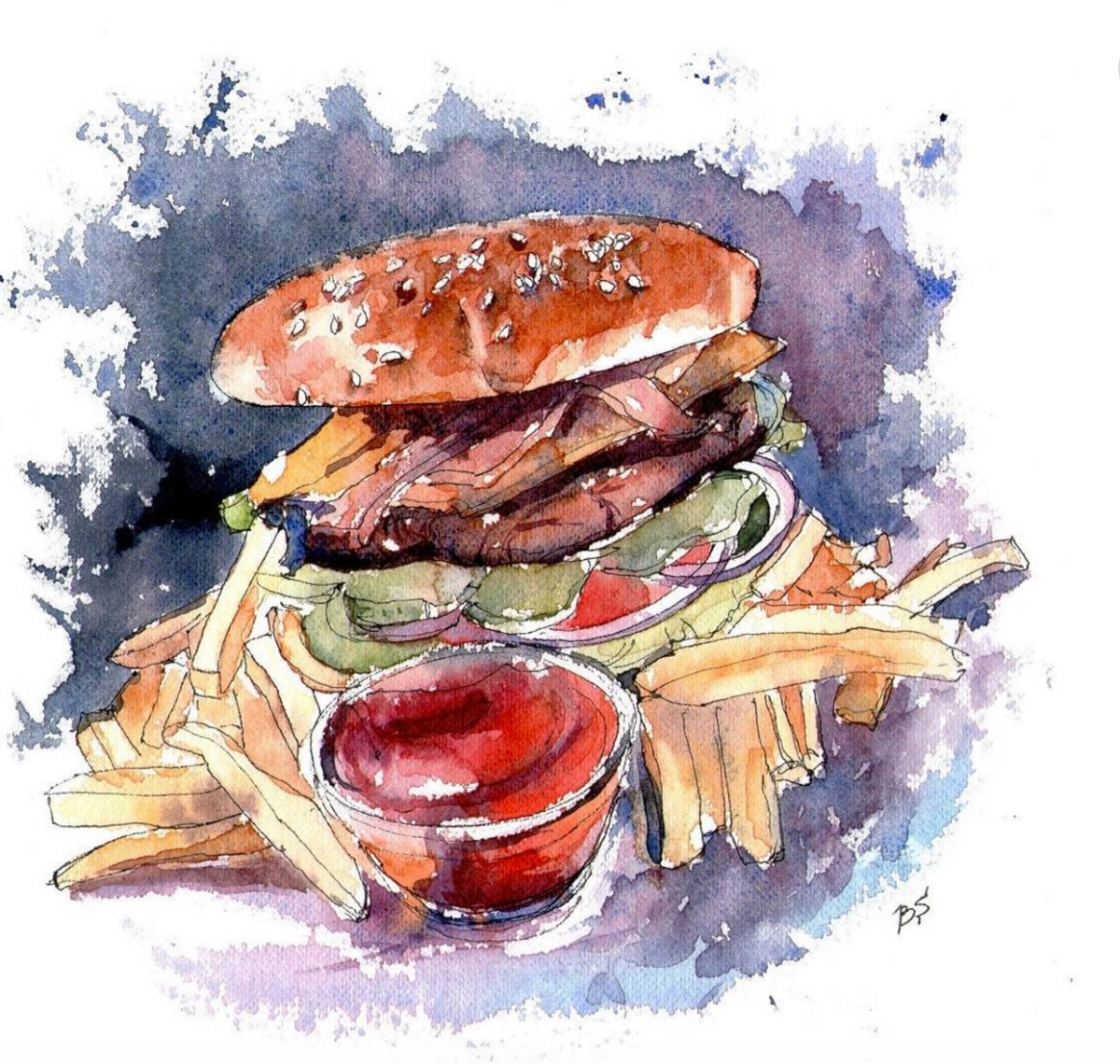
Head over to Charlie’s DOODLEWASH blog, to see the fantastic food a whole bunch of artists made for his dinner party! There’s something for all tastes.
This month’s adventure was a truly fabulous event, as artists from around the globe came together for a very unique gathering called a #DoodlewashDinner Party! Over 60 talented doodlewashers showed up with their culinary creations! And we were even visited by some intriguing surprise guests (thanks Jill!) and treated to a fabulous food painting video (thanks Bogdan!).
Check out the Featured Culinary Artists’ images below and click any one to scroll through the gallery of artists. If you see someone new at the party you’d love to keep up with, just click the follow link under their art! It was truly an amazing gathering, so thanks to everyone who participated! (I was only able to select a single dish per artist for this gallery, but you’ll find many more on Instagram and on WordPress!) If I missed your hashtag and failed to include you in the gallery below, or misspelled your name…
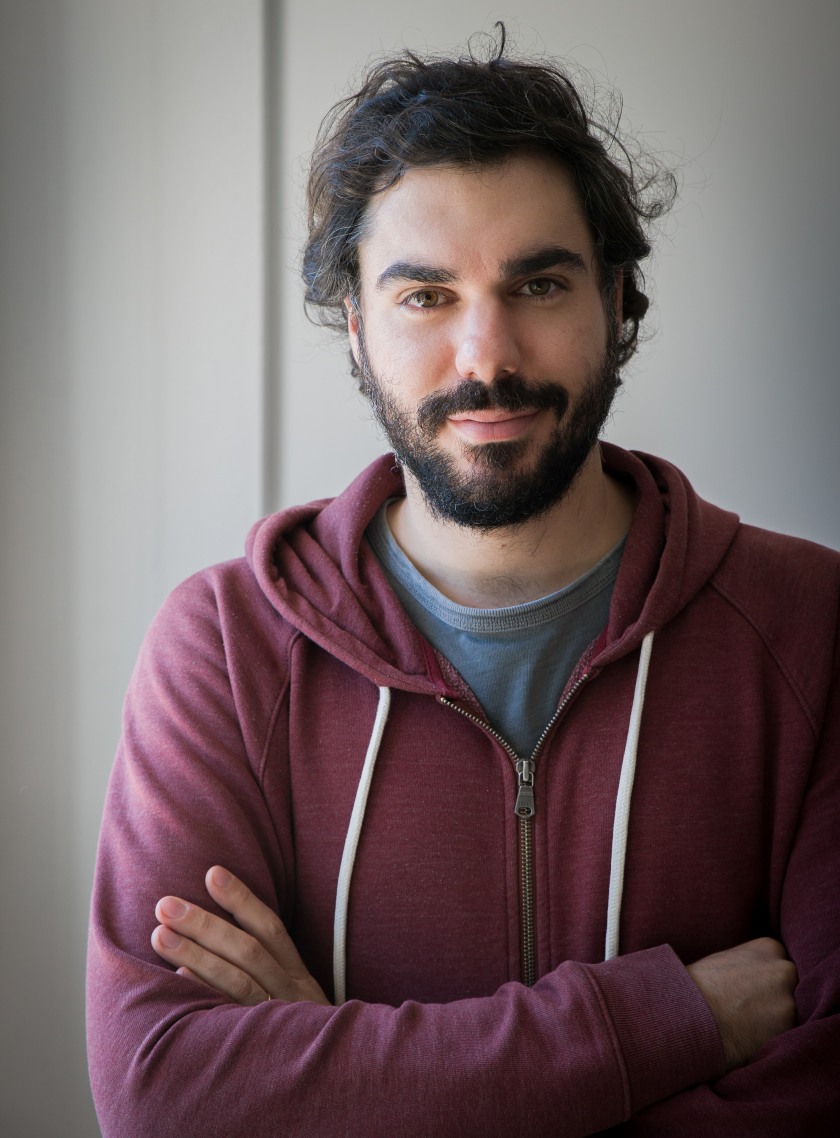
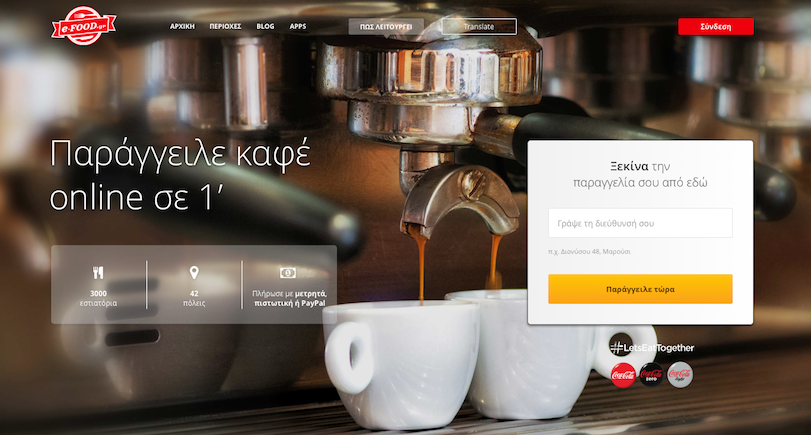
Feeling hungry? At the office and in need of coffee? Nothing in the fridge? Bored of cooking on the weekend? Paminos Kyrkinis and his brother Constantinos have addressed these questions by creating e-FOOD.gr, an online delivery service that lets you order food (in five languages!) in 1’ without extra charge. You can select your meal from 4300 restaurants and shops in 50 Greek cities.
Tell us a little about yourself
Born and raised in Greece, studied Economics and Business at the University of Cambridge and the University of Warwick. Entrepreneurial by nature, I started my first online business at 24 and have since co-founded five different companies, e-FOOD being the largest and most successful.
What were the major difficulties you’ve faced in the last five years?
Over the past five years I’ve been actively involved with e-FOOD as founder – together with my brother – and CEO. We have been lucky enough to have experienced significant growth so managing a team that has grown from 3 to 120 people in 4 years has been quite a challenge!
Did anyone in particular inspire you or help you?
Immanuel Kant who said: Strive for the impossible to achieve the best of what is possible.
What are your hopes/plans for the future?
At the moment I am 100% focused on e-FOOD and my goal is to change the way people order delivery in Greece. We want to offer the best possible experience to our users and make this the fastest and easiest way to order your favorite food. Online delivery in Greece is growing fast and there is a lot of potential for further growth.
What are your hopes for Greece? What changes do you hope to see happen?
I want the positive forces in Greece that are being overshadowed by mediocrity to prevail. Greeks excel all over the world. There is no reason not to do this at home. e-FOOD is now part of one of the largest food delivery companies in the world with presence in 38 countries and I am proud to say that we are one of the best performers in the group and we started right here in Greece!
Have you considered leaving? If so, where would you like to go, and why?
I have never felt compelled to leave Greece but in my industry San Francisco would be the obvious choice and it is something that I have of course considered and may reconsider in the future. It was after all an informed decision of mine to return to Greece in 2011. There are opportunities in Greece and e-FOOD is proof of that. In 4 years we have created a company with 120 employees and this started in my living room. e-FOOD is now part of Rocket Internet andDelivery Hero – Rocket Internet is one of the largest internet groups in the world – and all this started in Greece in 2012 during the peak of the crisis. There are other companies in the Greek starutup industry that have enjoyed similar success or are on track to achieve it.
If you have already decided to leave what would make you stay?
I have not decided to leave but if I had I would keep in mind that the grass always seems greener on the other side. We have to be the change we want to see in Greece.
Are you actively doing anything to help with the situation? Is there something you would like to do?
I feel I have made a small contribution through e-FOOD and the 120 jobs (and counting) created. I hope to do more. Meanwhile, our cooperation with Boroume* (www.boroume.gr) and other non-profit organizations have allowed us to help our fellow citizens by providing free meals.
How do you see Greece in 5, 10 years?
At the moment there is a trend for certain situations to persist although they have already been overtaken by reality. I believe we will experience the total collapse of mediocrity, and through this a new Greece will emerge.
How do you cope with obstacles and frustrations in your everyday life?
I don’t believe that obstacles and frustrations are unique to Greece. I am aware of tons of obstacles and frustrations even in the most sophisticated countries. Problem solving is part of everyone’s personal and business life so I am certain one will find ways to cope no matter how unnecessary or annoying these obstacles and frustrations may be.
What are the positive sides of living in Greece? Have you had any good experiences lately?
Its people. From time to time we might encounter someone who doesn’t stop at a crossing to let pedestrians pass, or give their place in line to a pregnant woman or their seat to an elderly person on the bus. But these people exist everywhere. I’ve found that people’s honesty, kindness and gratitude as well as the directness of human relations in Greece are unequalled, and I’ve lived abroad for years!
*BOROUME is a non-profit organization that helps combat food wastage.
In the Iliad, Homer described Mycenae as ‘a city rich in gold.’ It was the legendary home of King Agamemnon, leader of the Greeks who went to Troy to fight the Trojan War. The Greeks of classical antiquity idealized the Mycenaean period as a glorious period of heroes, closeness of the gods and material wealth, as described in the Trojan Epic cycle.
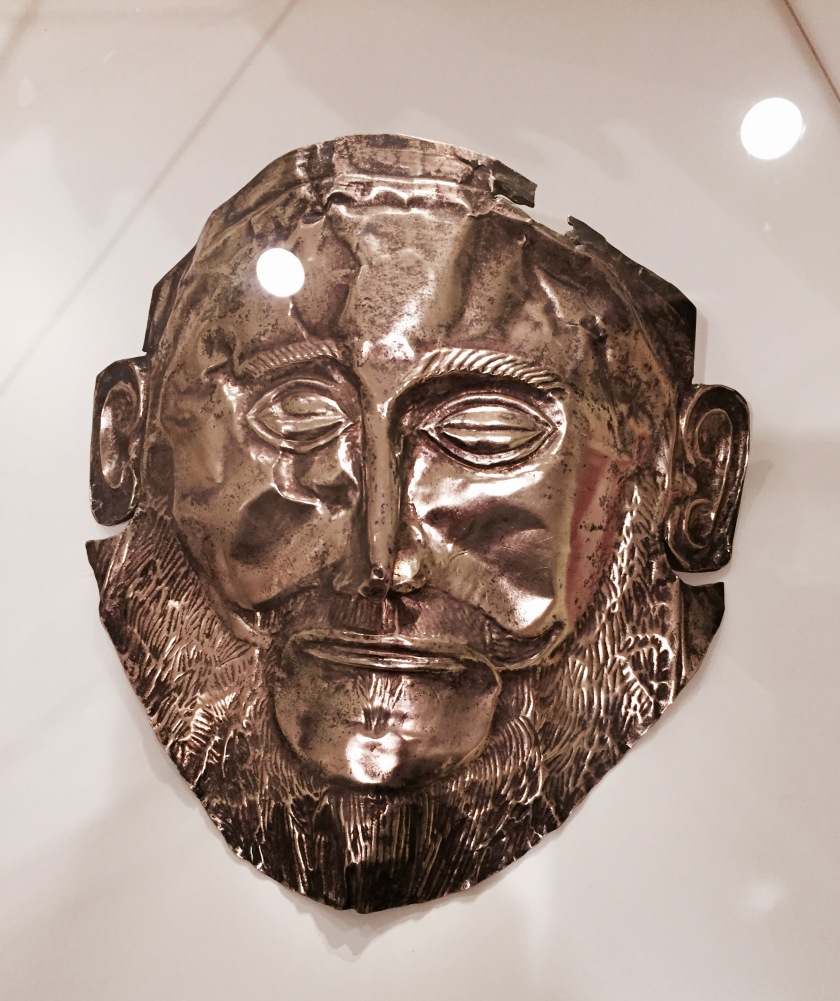
In 1876, amateur archaeologist Heinrich Schliemann set out to prove the historical accuracy of the Iliad by identifying the places described by Homer. Using the text of Pausanias, the second-century A.D. traveller, as his guide, he excavated the site at Mycenae, discovering the deep shaft graves where bodies were buried dressed in lavishly decorated shrouds adorned with gold items and diadems and with their faces covered by masks of gold or electrum (such as the Mask of Agamemnon, below).
Copy of the mask of Agamemenon
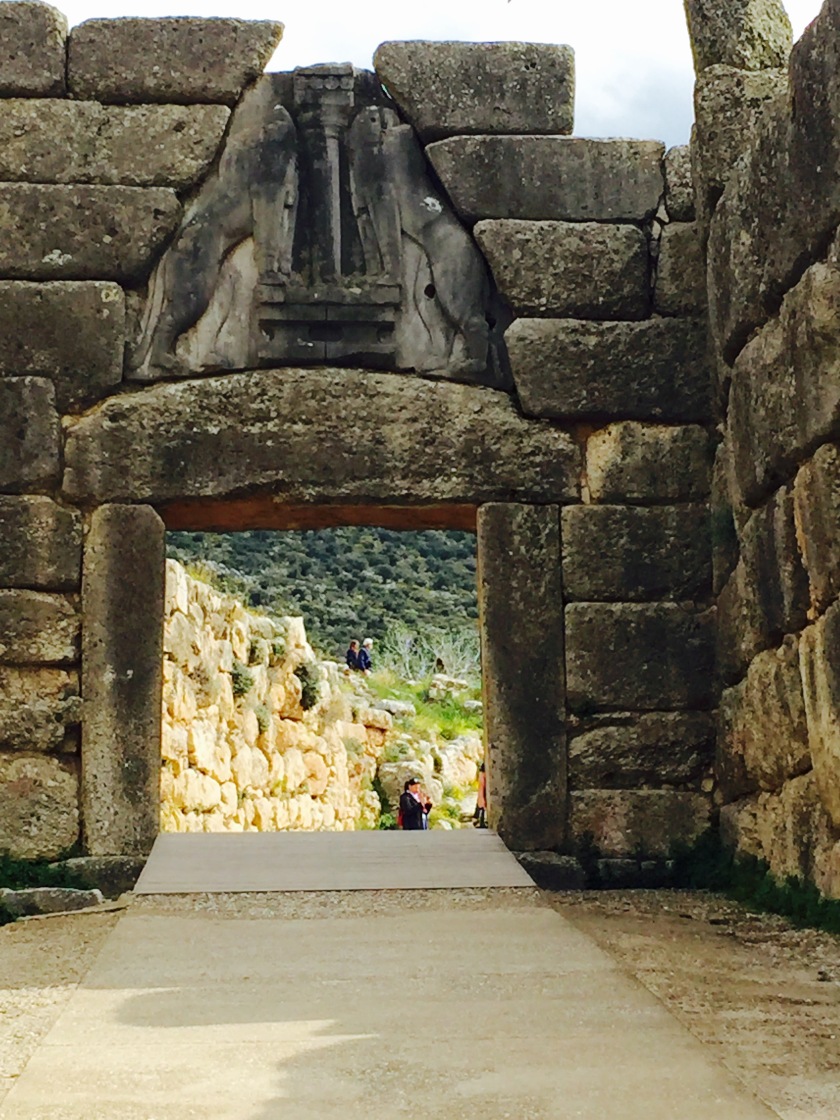
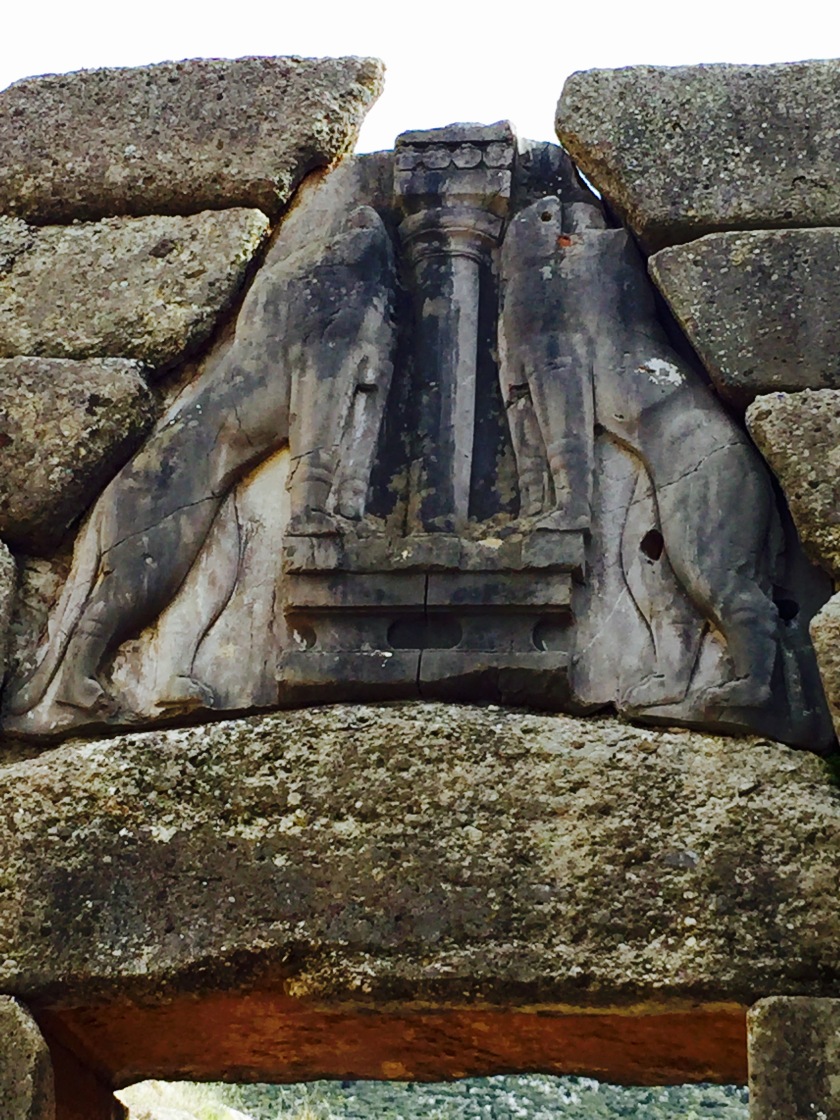
However, the very first excavations at Mycenae were carried out in 1841 by Greek archaeologist Kyriakos Pittakis, who found and restored the impressive Lion Gate, at the entrance to the acropolis.
The gate of lions
The Minoan civilization (see post, here) was brought to an abrupt end in c. 1500 BC. Historians surmise the palaces were destroyed by fire, earthquake and a tsunami caused by the eruption of the Santorini volcano.
Meanwhile, another brilliant civilization was emerging, that of the Mycenaeans, who set up a number of centers of power in southern mainland Greece. They were a warrior elite society, as is witnessed by their palaces which, contrary to those of the Minoans, featured impressive fortifications.
The Myceneans were much influenced by Minoan Crete, and, after its decline, took control of Crete including Knossos, and colonized several other Aegean islands, reaching as far as Rhodes.
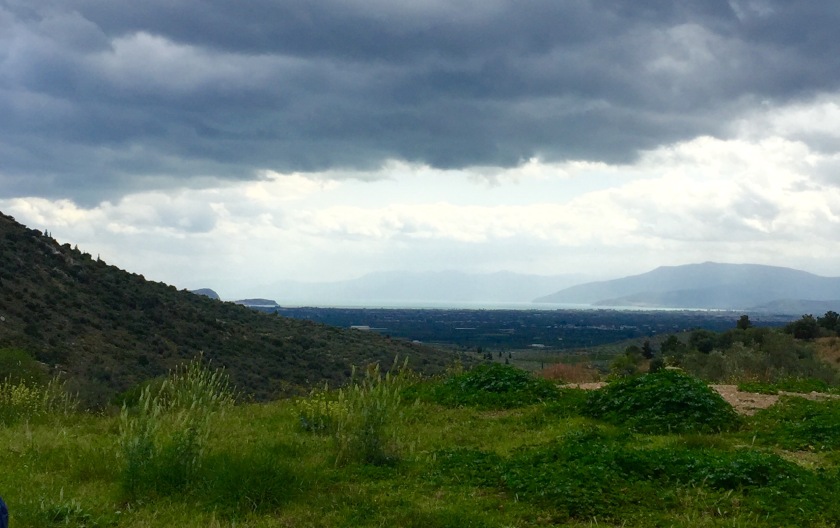
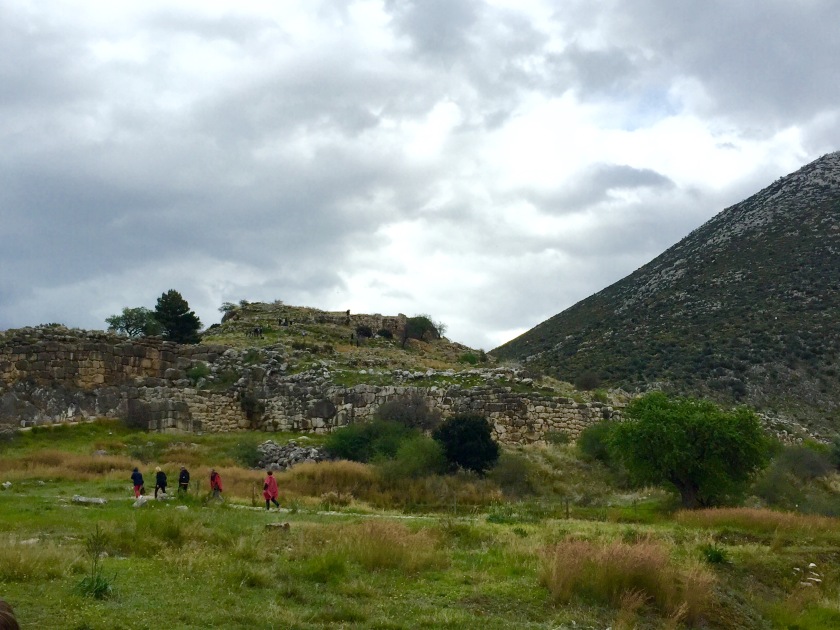
The principal Mycenaean centers were well fortified and usually situated on an elevated terrain. One of their most impressive cities, just 90km from Athens, was Mycenae, or Mykines, as we call it. Built on a tall hill overlooking a fertile plain and the gulf of Argolis and beneath towering peaks, it is the reminder of their glorious civilization.
The view from the acropolisThe ruined city of Mycenae
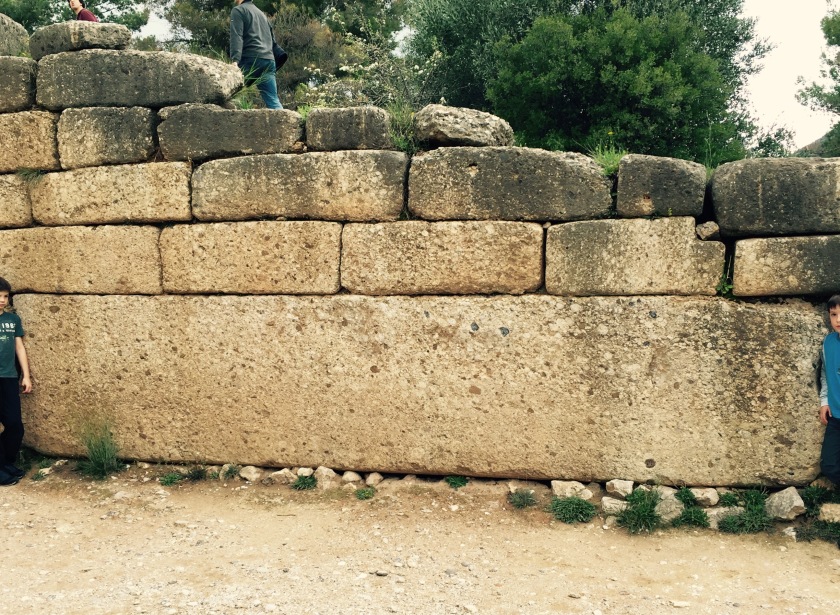
On a recent day trip, we enjoyed the amazing view of the plain stretching beneath the city ruins to the sea. The famous fortifications, know as Cyclopean walls, are built of large, unworked boulders more than 8 m (26 ft) thick and weighing several metric tonnes. They were roughly fitted together without the use of mortar or clay to bind them, though smaller hunks of limestone fill the interstices.
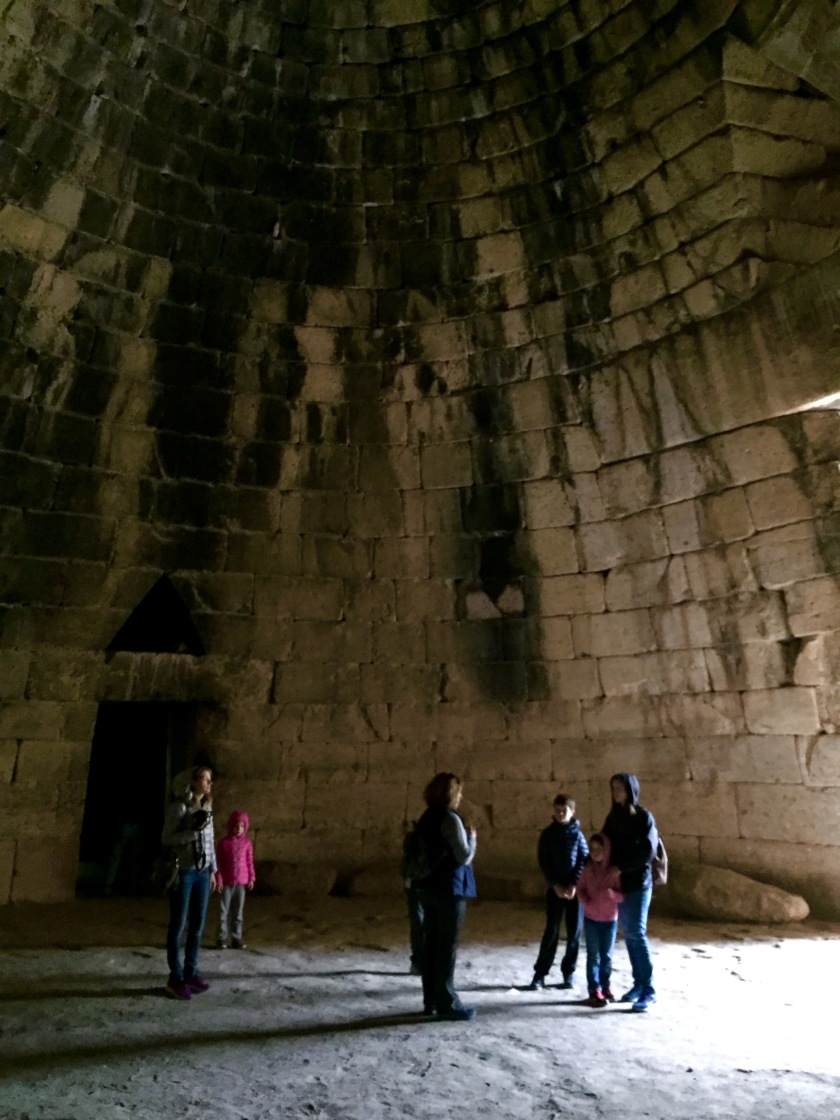
Following the Shaft Grave era, a new and more imposing type of elite burial emerged, resulting in a characteristic feature of the Mycenaean civilization, the Tholos: large circular burial chambers with high vaulted roofs and a straight entry passage lined with stone.
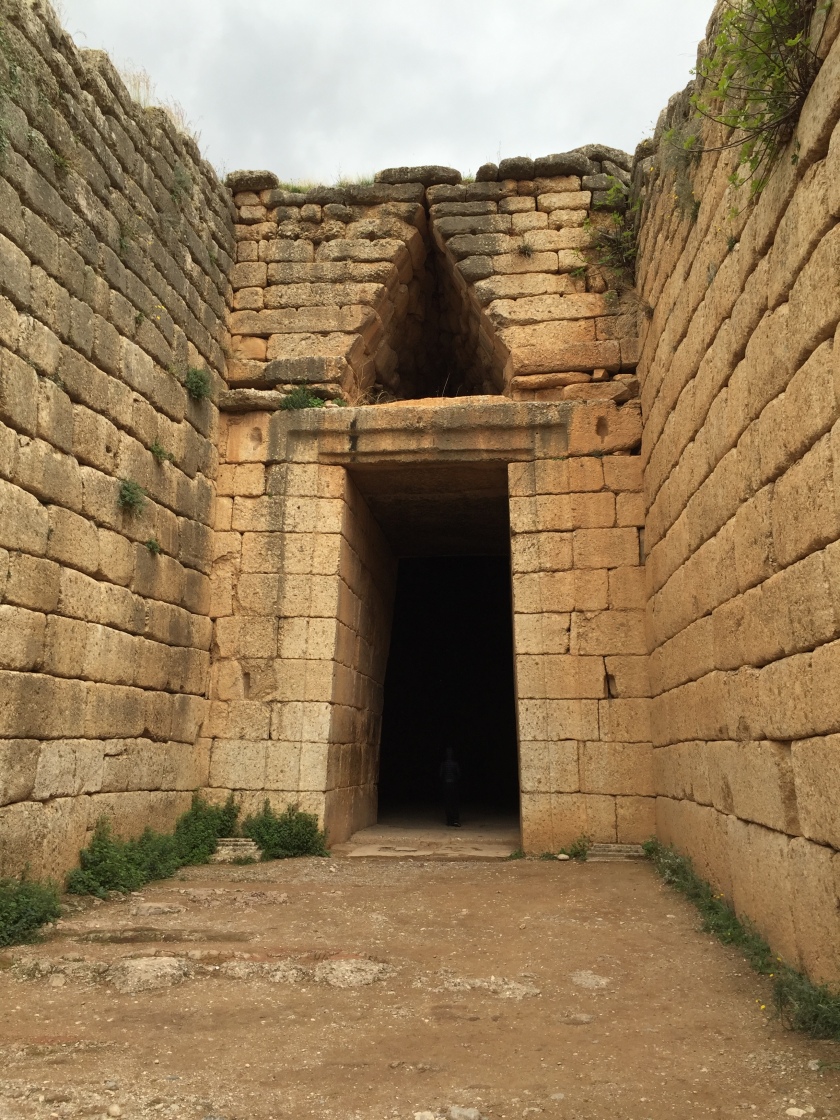
The most impressive of these is the Treasure of Atreas, which might have been the tomb of Agamemnon, or his father, Atreas.
Entrance to the tomb. Above is the ‘relieving triangle’. The stone beneath is the largest and most heavy found on the site.
Above the entrance we can see one of Mycenaens’ architectural innovations,the relievingtriangle. The Mycenaean Greeks were pioneers in the field of engineering, launching large-scale projects unmatched in Europe until the Roman period, such as fortifications, bridges, culverts, aqueducts, dams and roads suitable for wheeled traffic.
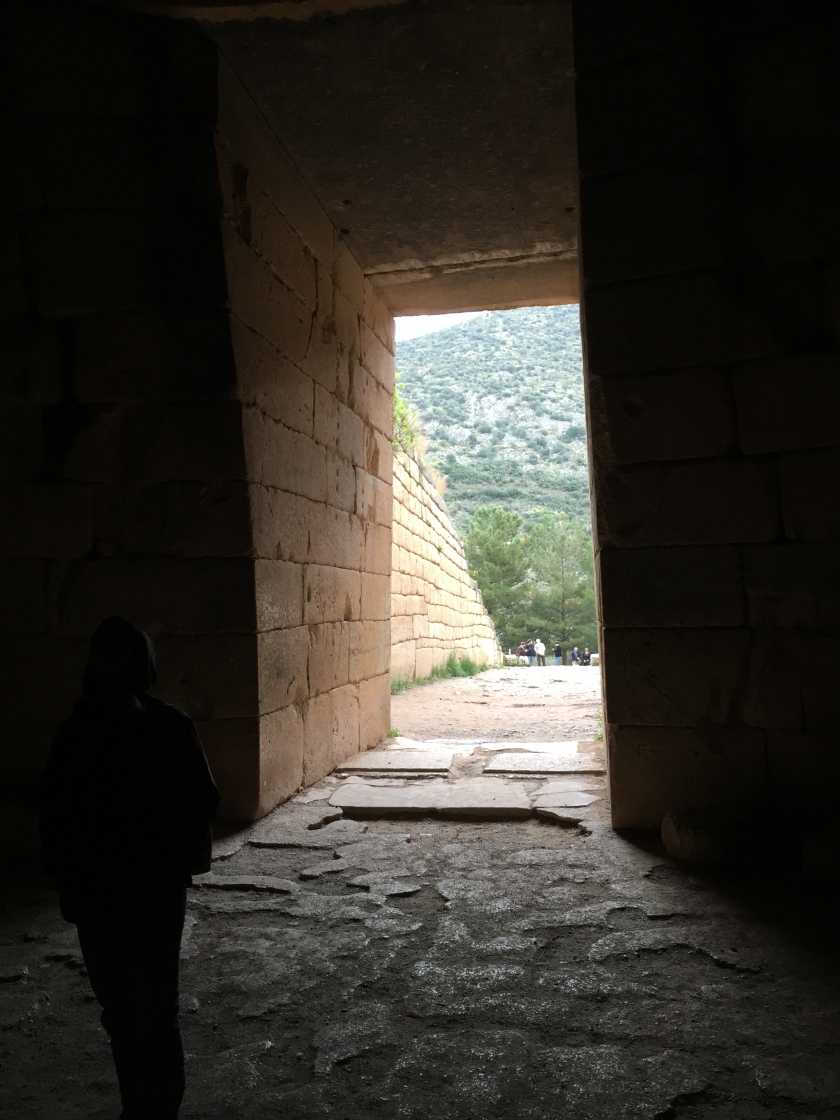
Inside the tomb
In an amusing footnote, today the Treassure of Atreas is being squatted by a swarm of bees, which obviously appreciate ancient culture as well as the tomb’s resemblance to a giant beehive. These bees are apparently a rare species, so the authorities are unwilling to spray them and are trying to find a way to eject them humanely. The bees are also different in that they don’t sting; when we were there, they were buzzing happily about and did not interfere with our visit in the least. However, it was still April. Apparently in the height of the season, when thousands of tourists are visiting, their numbers are such that most people are scared to enter the tomb. Also, the lure of honey attracts numerous birds and bats, whose droppings result in a filthy floor and an unbearable smell. It will be interesting to see what solution will be found to this problem.
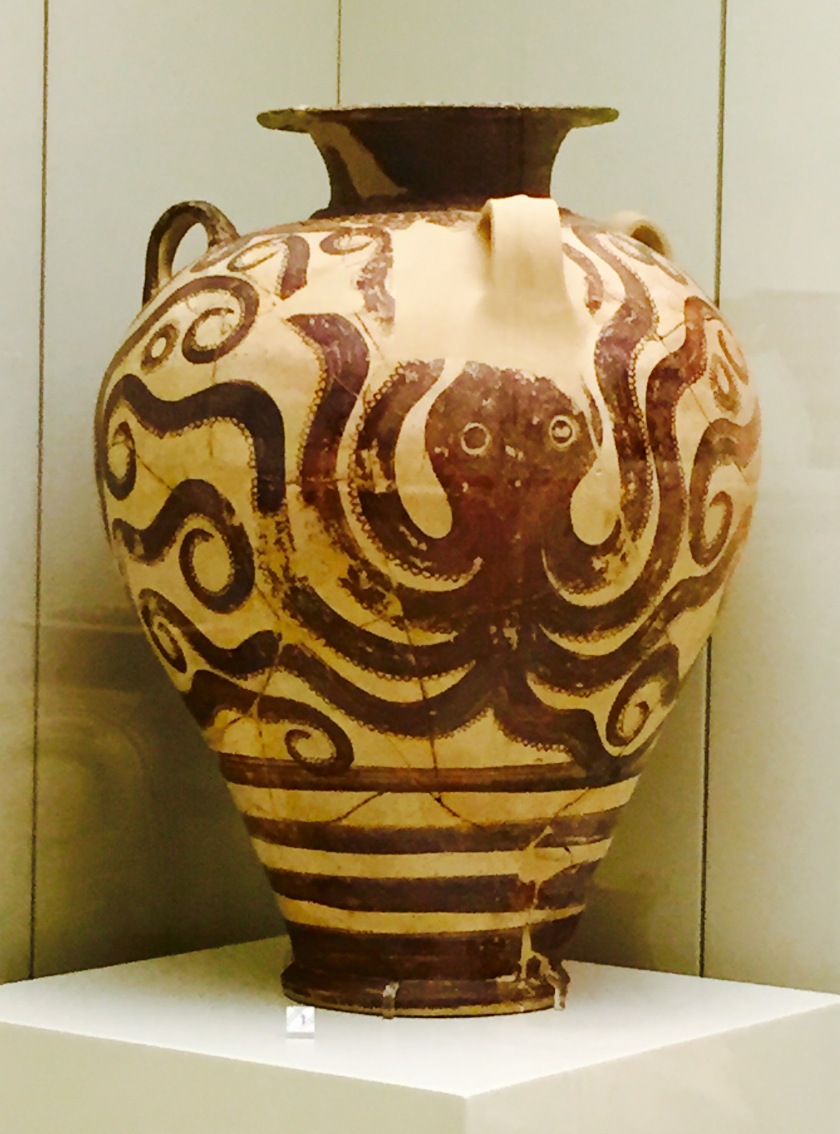
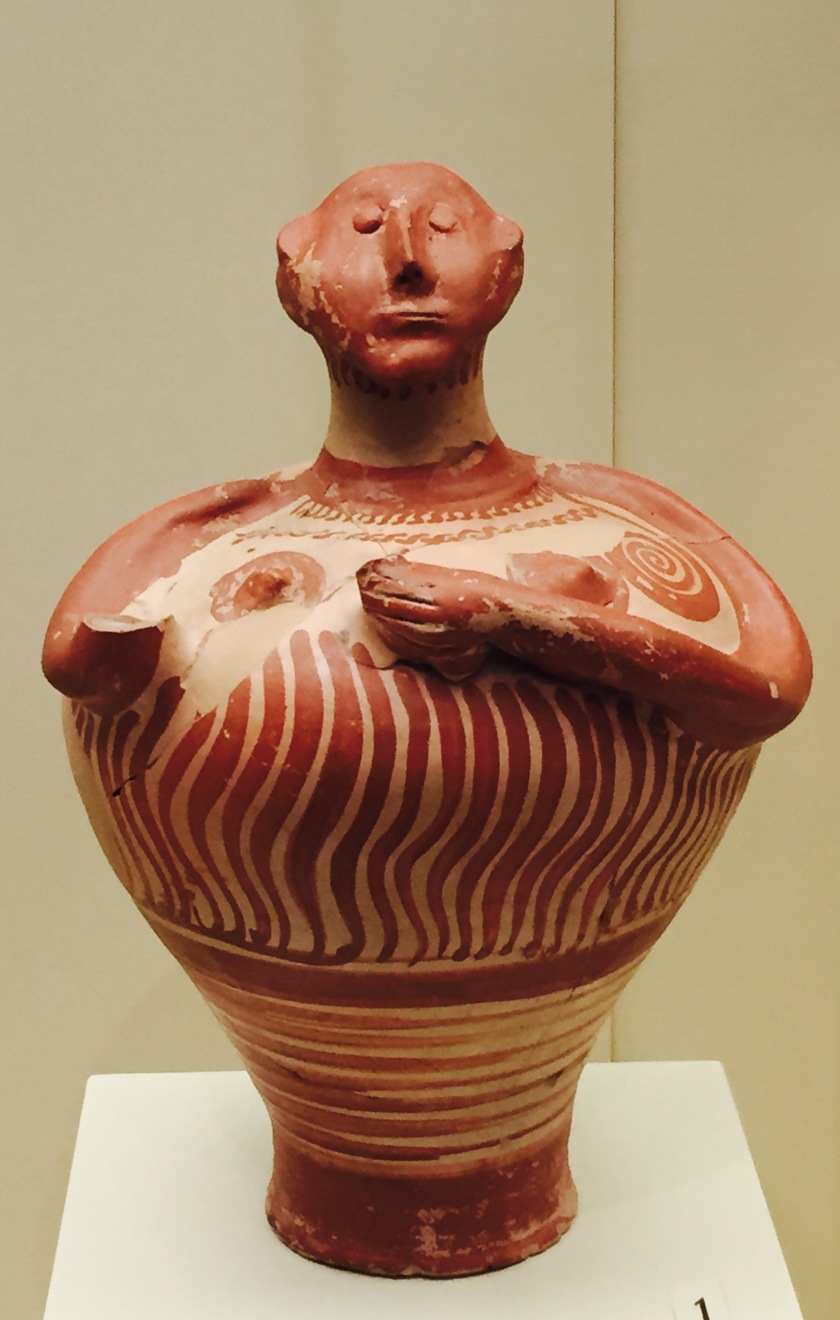
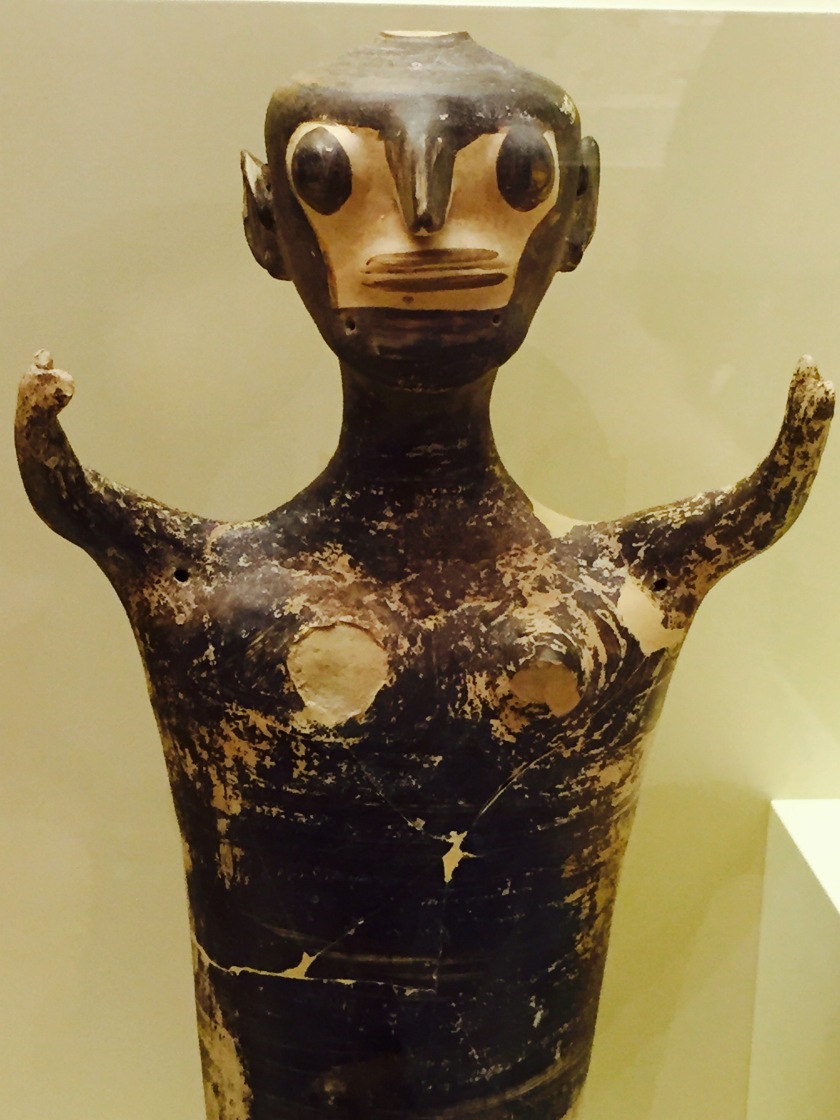
The on-site museum is small but full of treasures.
The octopus was supposed to care for the souls of the drownedAnthropomorphic ceramic figurinesThis one almost looks like an alien!
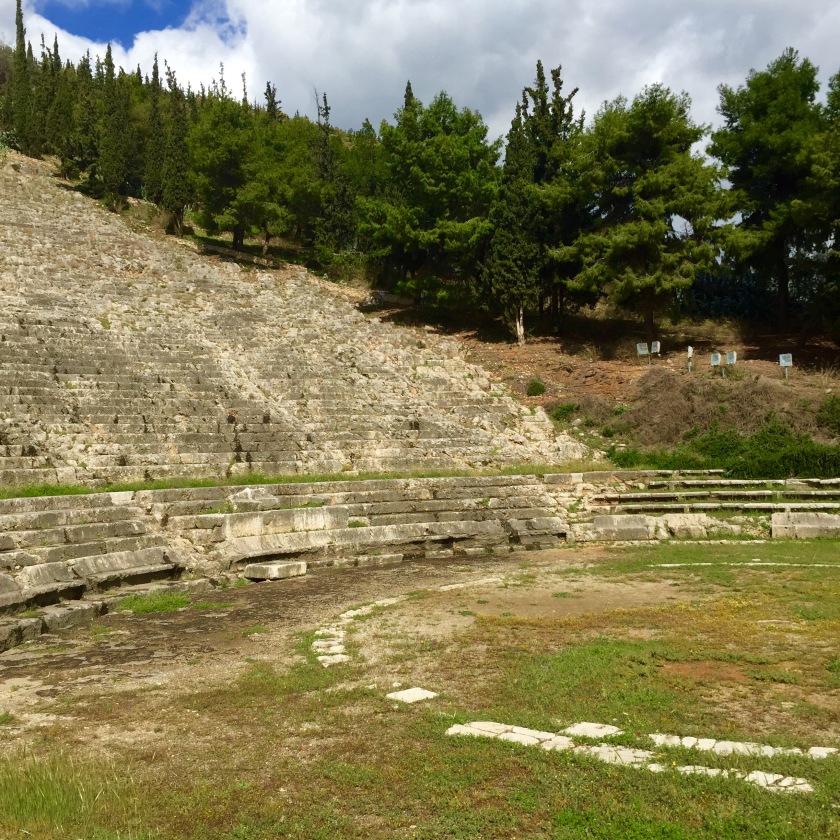
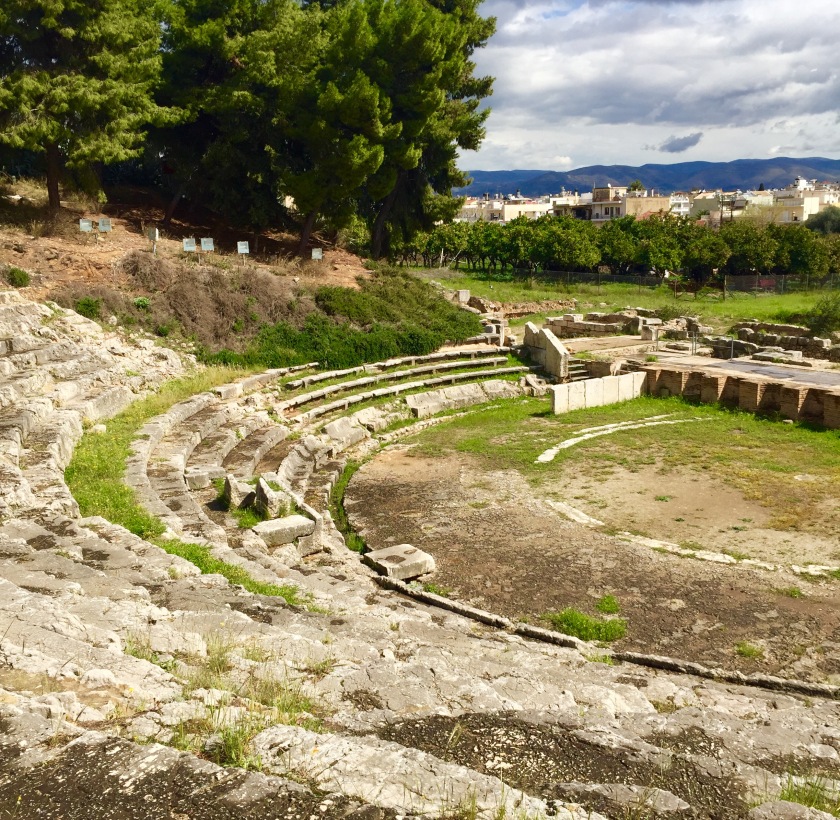
On the way back to Athens, we stopped at the Ancient Theater of Argos, nestled in the hill above the city. The theater was built in the Hellenistic period (third century BC) and had a seating capacity of 20,000. It was remodeled during the Roman period (second century AD) and even today, a number of cultural events are held there.
Now that the meat-eating revel of Easter is over, people’s thoughts are turning towards showing up on the beach in a swimsuit. New season tomatoes are making their appearance, so what better than a traditional horiatiki salad, made with tomatoes, cucumber, thinly sliced onions and peppers, and cubes of feta cheese. A bit of olive oil and a sprinkling of oregano, and you’ve got a light, nutritious lunch.
And for something more substantial, many turn to fish.
Fried white bait or little red mullet are delicious, but not particularly slimming – the best is a whole fish, simply grilled and accompanied by olive oil beaten with plenty of aromatic lemon juice.
When fish is fresh, sauces disguise its flavor, so unless you are in some fancy restaurant, you will usually get your fish plain. And yes, cooked with the head on, seeing as the best bits are the cheeks and the nape of the neck. A lot of non-Greeks find this gross, but it’s not as gross as another delicacy, the head of the Easter spit-roasted lamb! (from which I, personally, refrain.)
Having said that Greeks mostly eat their fish without sauce, I discovered that the ancients had invented a concoction called garum, a fermented fish sauce used as a condiment in the cuisines of Ancient Greece, Rome, and Byzantium. It probably originated in Carthage, and Plato was the first to describe its disagreeable ‘rotten’ smell.
The preparation of garum is described in Roman and Byzantine texts. Small fish, left whole with their intestines, were mashed with salt and set to ferment in the sun. The mixture was occasionally stirred with a stick and finally filtered through layers of fine cloth, to make a condiment used to flavor meat and game, as well as fish and seafood.
Archaeological digs have brought to light garum production plants on the coast of North Africa, Portugal and elsewhere on the Mediterranean. These were placed far from inhabited areas because the smell was horrendous! The finished product, however, was supposed to have a pleasant, spicy odor. Garum was also known as liquamen, or hallex, and prices varied according to quality.
Apparently the nearest equivalent we have nowadays is Worcestershire sauce.
How’s that for the irrelevant information of the day?
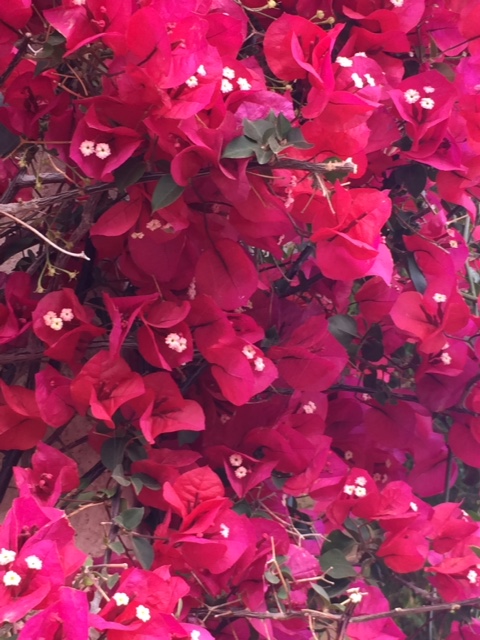
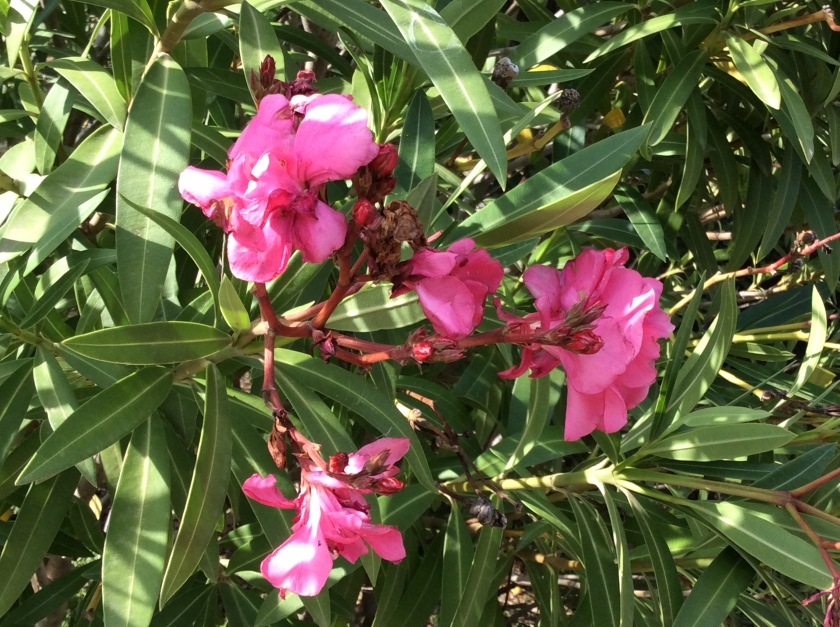
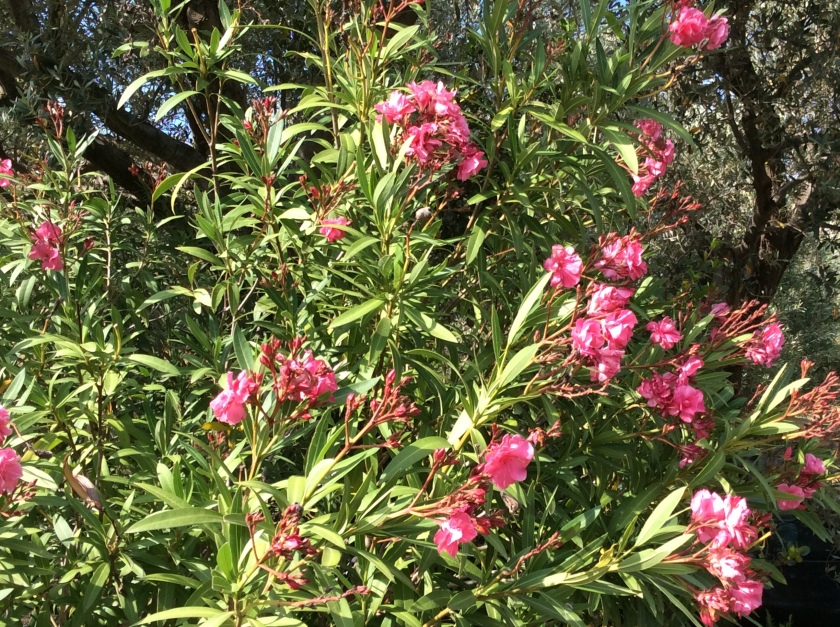
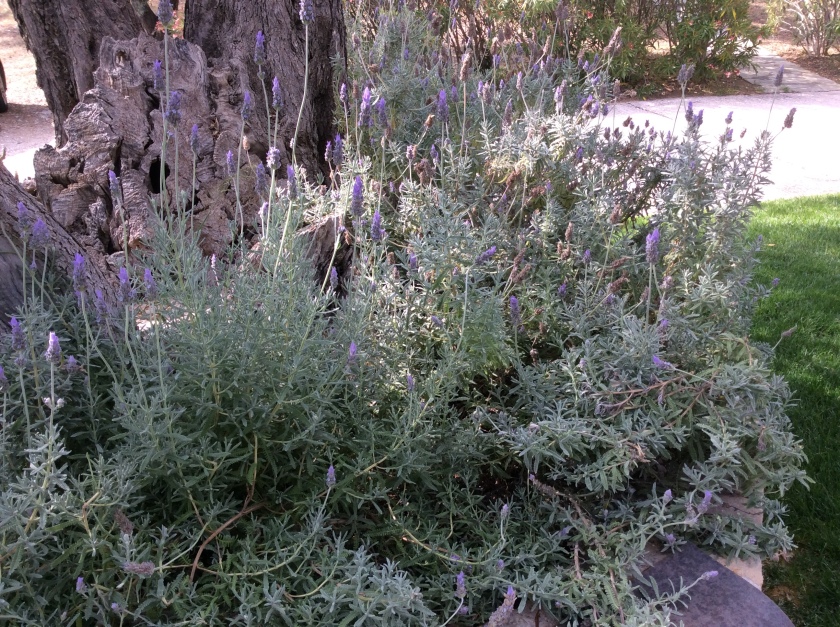
Solveig Werner very kindly asked me to take part in her ‘Discovering traditions‘ series, so I wrote a piece about the first of May, when Greeks make a flower wreath which they hang on their balcony or front door to celebrate the coming of spring.
This year May 1st coincided with Easter, so we had an abundance of celebrations. I took some photos of our wreath-making process, and I encourage everyone to visit Solveig’s blog to read my masterpiece – and, mainly, to discover all the lovely stuff she posts there!
Today, is the first of May, a day that is widely celebrated and that has various traditions attached to it. I am happy to have M. L. Kappa as my special guest for Discovering Traditions. You can find a list of all guest post that have appeared on my blog so far here, and you can find the previous guest post for Discovering Traditionshere.
May 1st and the Making of the Wreath by M.L.Kappa
May Wreath by M.L.Kappa
One of the most fun Greek traditions is the making of the May Wreath. We call it Μάης (pronounced Màïs).
May 1st is universally known as Labor Day since 1886, when the Chicago Syndicates rebelled, asking for better working conditions. But celebrating it is not actually a 19th century tradition—it has roots in Antiquity, when festivities were held in honor of Demeter, goddess of the harvest, and
Celebrated by even the most secular of Greeks, Easter is for us the biggest holiday of the year. Yes, even bigger than Christmas. Everyone joins in the church rituals and there are lots of other traditions as well. To top it all, this year Greek Easter falls on the first of May, which is, in itself, another popular holiday.
I thought I’d begin by explaining why Easter is a ‘mobile’ holiday: the determination of the date of Easter is governed by a computation based on the vernal equinox (the point at which the ecliptic and the celestial equators intersect) and the phase of the moon. According to the ruling of the First Ecumenical Synod in 325, Easter should fall on the Sunday which follows the first full moon after the vernal equinox (invariably, March 21). If the full moon happens to fall on a Sunday, Easter is observed the following Sunday.
These complicated calculations do not always end up with the same Easter Sunday for all Christian churches, for the simple reason the churches use different calendars: Greek Orthodox use the Julian Calendar and western churches the Gregorian.
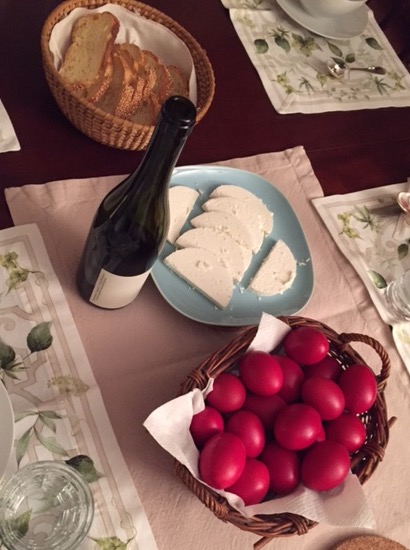
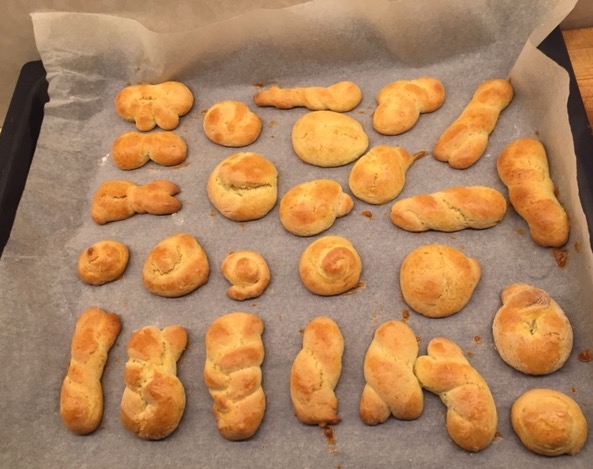
Easter preparations begin on Holy Thursday when the traditional Easter bread, τσουρέκι (tsoureki), is baked. Tsoureki is like a brioche or challah bread in the shape of a plait and is eaten all year round. Some people also bake Πασχαλινά κουλουράκια (pashalina koulourakia – Easter cookies). Eggs are dyed red, to symbolize the color of life and the blood of Christ) and sometimes they are incorporated for decoration in the tsoureki. In the evening, church services include the reading of the 12 Gospels.
Kids love shaping these
Holy Friday is a day or mourning. Traditionally, women and children take flowers to the church to decorate the symbolic bier of Christ, the Epitaphios. The Service of Lamentation mourns the death of Christ and the bier, lavishly adorned with flowers and bearing the image of Christ, is carried on the shoulders of the faithful in a procession through the community to the cemetery, and back. All the congregation follows, carrying candles and repeating the refrain of a beautiful Byzantine hymn. The candles on Holy Friday are yellow, made of natural beeswax.
On Holy Saturday, the Eternal Flame is brought to Greece by military jet from Jerusalem and is distributed to waiting priests who carry it to their local churches.
In the morning, preparations begin for next day’s Easter feast. Dishes that can be prepared in advance are made, and the traditional μαγειρίτσα (magiritsa) soup is prepared, which will be eaten after the midnight service, to break the Lenten fast.
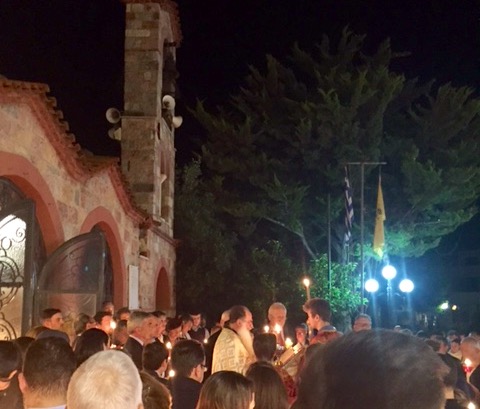
At night everyone, including children, attends the midnight Service of the Resurrection, each holding a white candle. Traditionally, children are given the candle by their godparents, and many are lavishly decorated. Churches fill to overflowing and most people gather outside where the service is broadcast by loudspeaker. Anticipation mounts; shortly before midnight, all lights are extinguished and churches are lit only by the Eternal Flame on the altar. When midnight sounds, the Priest calls out “Christos Anesti” (Christ is risen), and passes the flame, the light of the Resurrection, to those nearest him. The flame is then passed from person to person, and soon the church and courtyard are filled with flickering candlelight. The night air is filled with the singing of the Byzantine Chant “Christos Anesti,” and kisses and wishes are exchanged. The traditional exchange is ‘Χριστός Ανεστη’ (Christos Anesti – Christ is risen) answered by ‘Αληθώς Ανέστη’ (Alithos Anesti – He is truly risen). As is the custom, as soon as “Christos Anesti” is called out, church bells ring joyously non-stop, ships in ports all over Greece sound their horns, floodlights are lit on large buildings, and great and small displays of fireworks and noisemakers are set off. Cars passing by on the road also honk loudly.
People then carry the Eternal Flame home. The sight of hundreds of candle flames moving from churches to homes on that night is beautiful, indeed.
Once home, the flame from the candle is used to make the sign of the cross on the top of the door frame in smoke. The mark is left there throughout the year, to symbolize that the light of the Resurrection has blessed the home. The candles are then put on the table for the midnight meal. Everyone gathers around the table to break the fast; the feast includes magiritsa soup, tsoureki, and the red eggs. But before the eggs are eaten, there’s a traditional game to be played: ‘τσούγκρισμα’ (tsougrisma) – holding your egg, you tap the end against the end of your opponent’s egg, trying to crack it. It’s a game enjoyed by children and adults alike. Eggs are often dyed in large quantities since the game continues on the next day with more friends and family. In large gatherings, someone can usually be found cheating with a wooden egg!
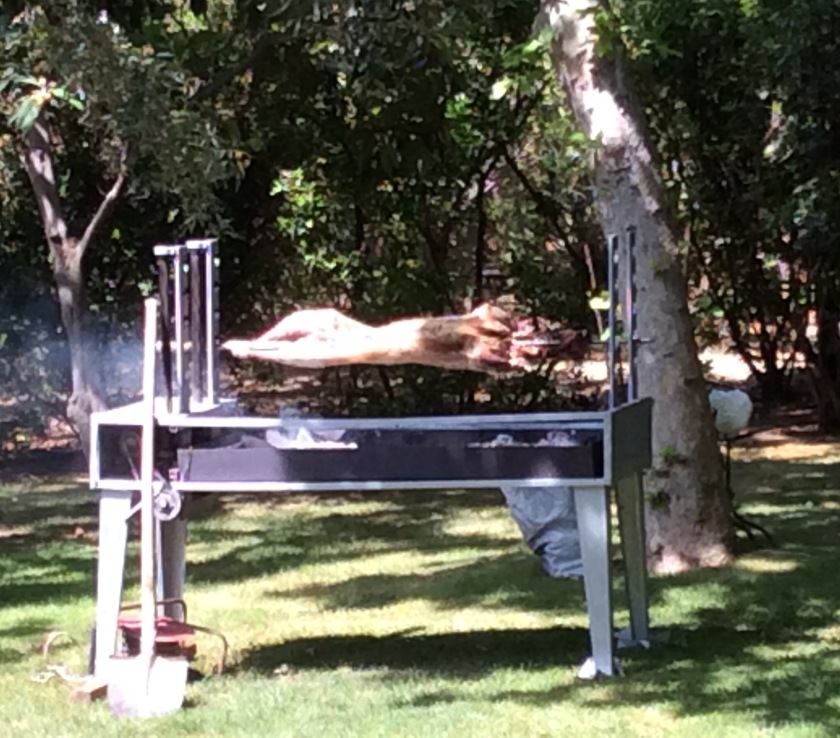
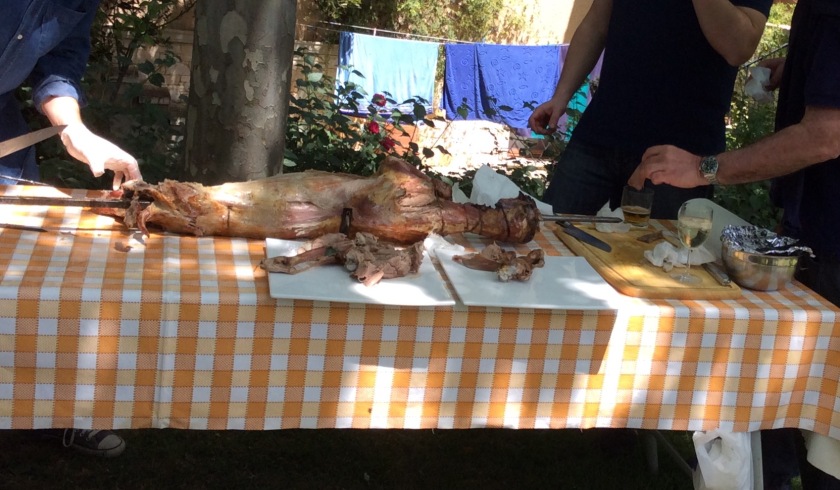
At dawn on Easter Sunday, spits are set to work, since all over the countryside, the menu of the day is whole spit-roasted lamb or kid, to represent the Lamb of God. Also on the spit is another delicacy, kokoretsi, seasoned lamb or goat organ meat, wrapped in caul fat and then in yards of cleaned intestines. This recipe originated from the need to use up all parts of the lamb that was slaughtered for Easter, and not let any go to waste (the rest being used in the magiritsa soup). Delicious to many people in the Balkans, but definitely an acquired taste…Some people prefer lamb or kid dishes grilled or baked in the oven, according to various local recipes. With these come all the trimmings, like roast potatoes and salads, with ouzo, beer and wine flowing freely. Preparations for the meal turn into festive celebrations even before the eating begins. These gatherings of family and friends often last all day and sometimes long into the night.
Many places in Greece have their own Easter traditions, such as the ‘rocket war’ of Chios, and special celebrations on Corfu, which are particularly impressive. Easter in Corfu is a huge festival, in which various components come together harmoniously: the Orthodox Christian faith, pagan traditions, the powerful presence of Saint Spiridon, the Roman Catholic community, the Venetian influence, genuine Corfiot humor, the music of the philharmonic bands and of course, the spring atmosphere.
And finally, although I doubt many of you will attempt it but – just for the fun of it – here’s a recipe on how to roast a whole lamb on the spit. Greek Easter is not ideal for vegans, nor for the faint-hearted!






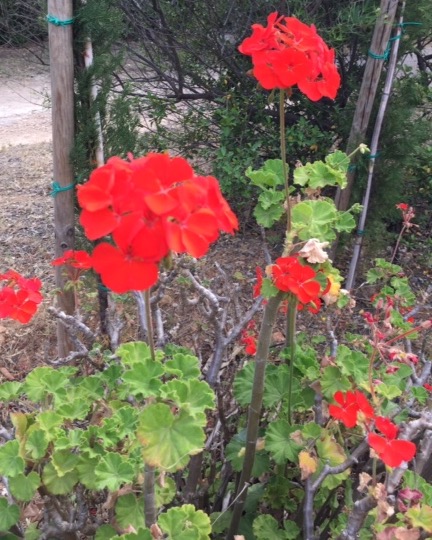
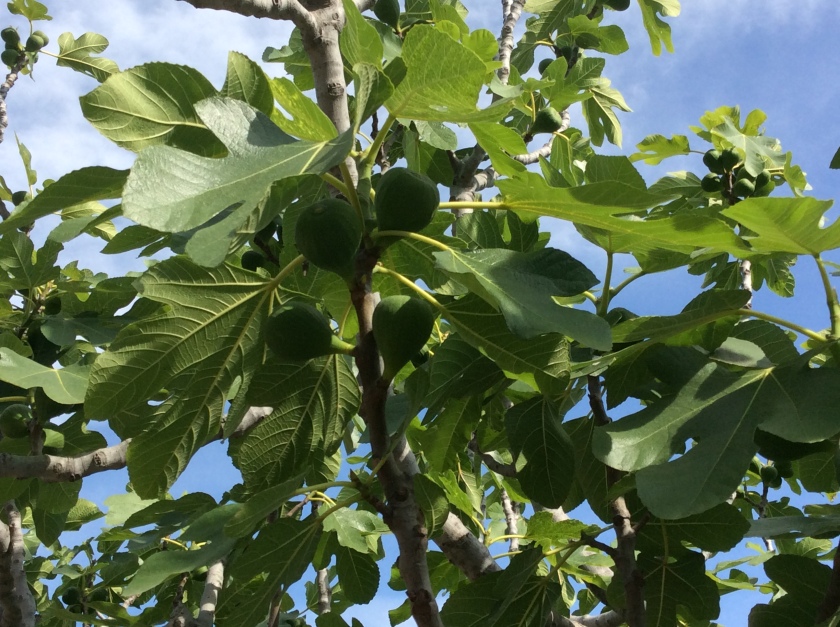
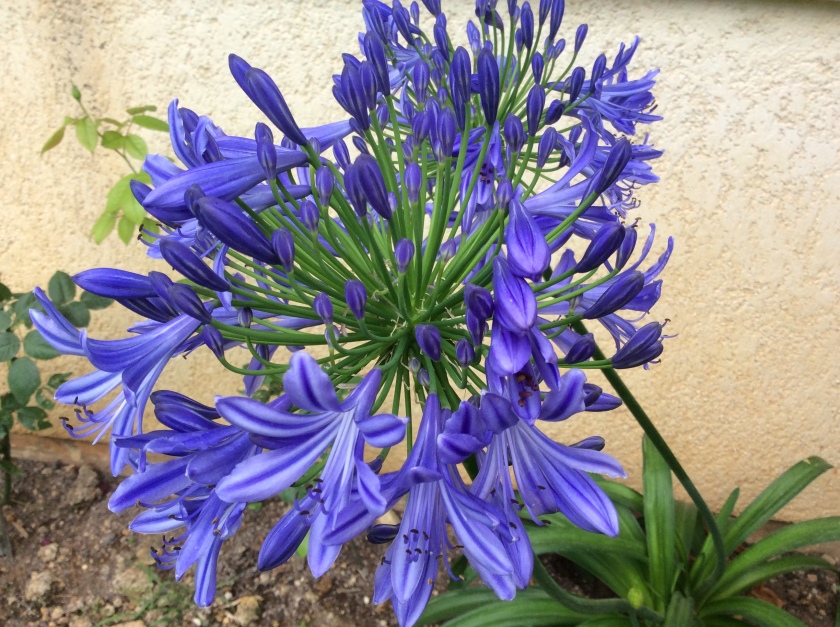




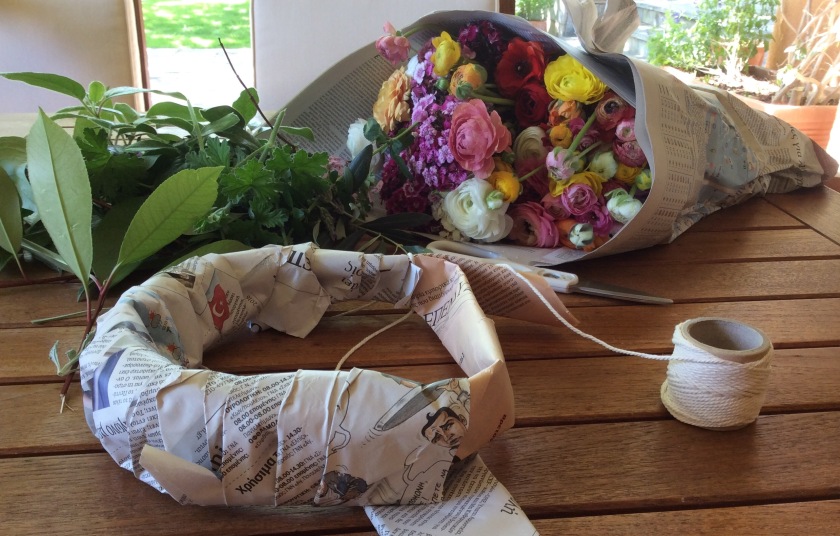
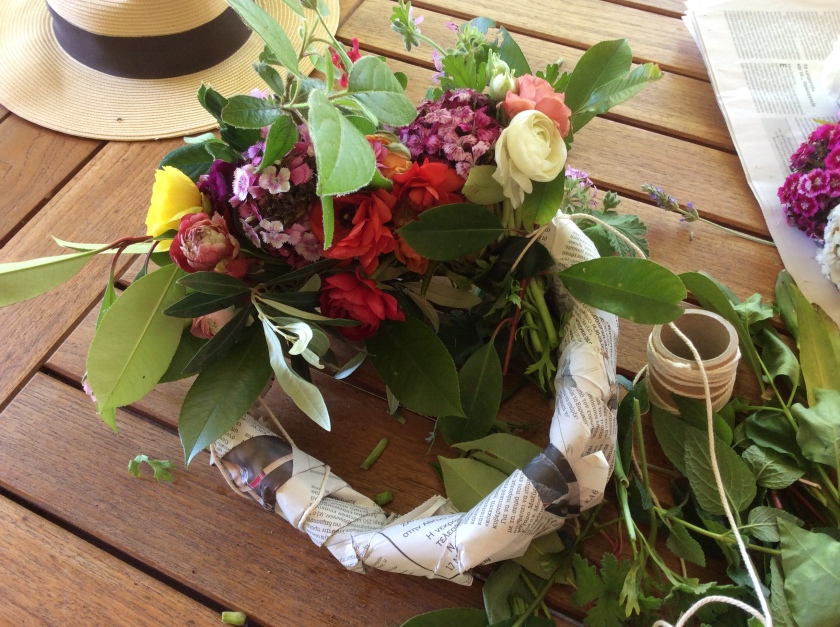
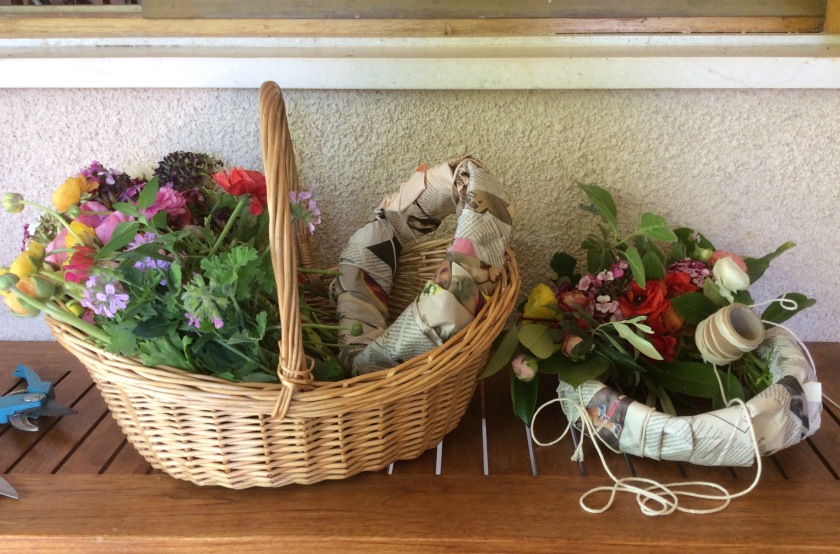


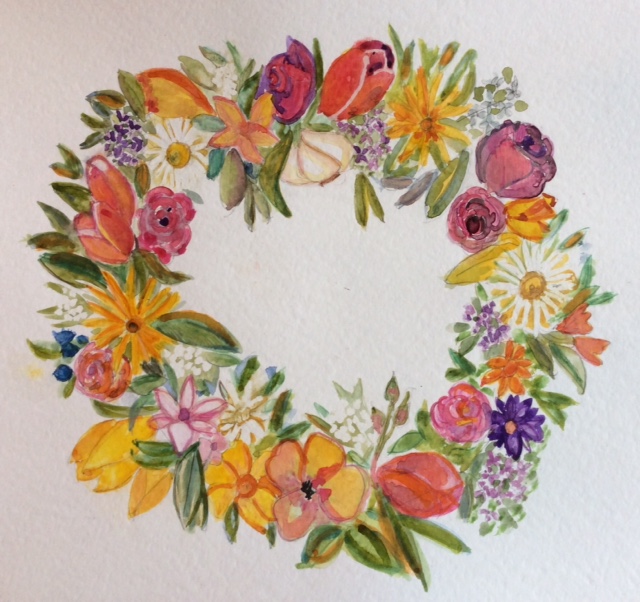 May Wreath by M.L.Kappa