Yayoi Kusama and Joseph Cornell

Some of you might remember a post about Japanese artist Yayoi Kusama (here for those who’ve missed it). This artist fascinates me both because of her work, which dislays a very original vision of life, and her history, about which I will say more later. I was therefore interested to come upon an article which described her relationship with another artist, Joseph Cornell, a man almost as strange as herself. Cornell, a reclusive who made the most exquisite collages and boxes, has also been an old favorite of mine, but I had no idea these two were connected in any way.


Kusama with Pumpkin, 2010Courtesy of Ota Fine Arts, Tokyo/ Singapore and Victoria Miro Gallery. Source: Google


Yayoi Kusama was born in Tokyo in 1929, the daughter of a horrendously abusive mother who used to tear up her paintings. She suffered from hallucinations since she was a child and, although these developed into the mental illness that led to her spending her life in an asylum, drawing upon these experiences also served as a basis for her art.

Nurturing a fierce determination to move to New York, Kusama wrote to Georgia O’Keefe and, having received a reply, showed up in the city with no money and little English. In the beginning she was beset by loneliness and poverty, but eventually she became involved in an artistic community which included Georgia O’Keefe, Donald Judd, Andy Warhol, Claes Oldenburg, and Eva Hesse. She became an advocate of free love in 1960 New York, leading nude happenings for which she was reviled as a national disgrace in her homeland.
She became renowned as painter, pop artist, cultural activist, and experimented in various mediums including sculpture, painting, collage, film, performance, happenings, fashion design, and publishing.


She gained recognition for her sexually charged public performances in Central Park protesting the Vietnam War, her large-scale infinity net paintings, psychedelic mirror room installations, and the ‘Narcissus Garden’ which was shown at the 1966 Venice Biennale.


Yayoi Kusama, Horse Play in Woodstock, a happening, 1967. Source:Google


Despite presiding over orgies, Kusama had a fear of sex, perhaps because she had suffered from her father’s philandering, and remained abstinent throughout her life. So it was that when she met Joseph Cornell, an odd-duck loner 26 years her senior, who lived with his domineering mother in Flushing, Queens, the two struck up an intense, albeit platonic relationship.

In the basement of his mother’s house, Cornell spent his days dreaming and making delicately detailed glass-covered boxes. These are small imagined worlds made up of found objects where a ping pong ball becomes the moon, or wooden animals and cutout birds are suspended over a landscape of newspaper clippings and little stamps. He often used star maps, small machine parts, pebbles and corks,  along with text from old newspapers and magazines, to create collages. Into these he channeled all his longings and dreams of romance, vanished European cities, and travel to faraway places.


Habitat Group for a Shooting Gallery, 1943. Photograph: Mark Gulezian
Source:Google


Cornell hated selling these precious objects, frequently changing galleries and dealers so that no one could gain too much control over his work. But he loved to give them away, especially to women. A deeply romantic man, he adored women but was crippled by physical reserve, accentuated by the behavior and influence of his jealous and possessive mother.


A Parrot for Juan Gris, 1953-54. Courtesy of Quicksilver/The Joseph and Robert Cornell Memorial Foundation/Vaga, NY/Dacs.
Source:Google


Cornell became besotted by Kusama, flooding her mailbox with letters and personalized collages, and calling her on the phone constantly.

They became close, often spending time at Cornell’s mother’s home in Queens, passing the day sketching each other in the nude. Of course his mother deeply disapproved of this, and apparently once poured a bucket of water over them as they sat kissing beneath the backyard quince tree.


Yayoi Kusama with Joseph Cornell in New York, 1970
Courtesy Yayoi Kusama Studio, Inc. Source:Google


After some time Kusama took a step back, feeling the situation had got claustrophobic, but the two isolated, driven, visionary misfits remained close until his death in 1972.


Box by Joseph Cornell. Source:Google


Kusama was deeply affected by Cornell’s death. She returned to Japan, and in 1977 checked herself into the Seiwa Hospital for the Mentally Ill, where she eventually took up permanent residence. She has been living at the hospital ever since, going to work in her studio only a short distance away. Cornell’s influence did not end with his death, however, since he had given her boxes of magazine cuttings and other materials which she subsequently used to make a series of luminous collages. These feature elements of his style including surrealist cutouts, layered with her signature pattern of polka dots and infinity nets.


Yayoi Kusama
“Self Portrait,” 1972. Source:Google


As I mentioned before, Kusama was also involved in publishing a number of works; and while I’m not about to pick up a book entitled ‘Love suicide at Sakuragazuka’, I remain entranced by her unique, delightful weirdness.


These days Yayoi Kusama is rarely seen without her trademark red wig and dotty clothing. Source:Google

Urban Riders

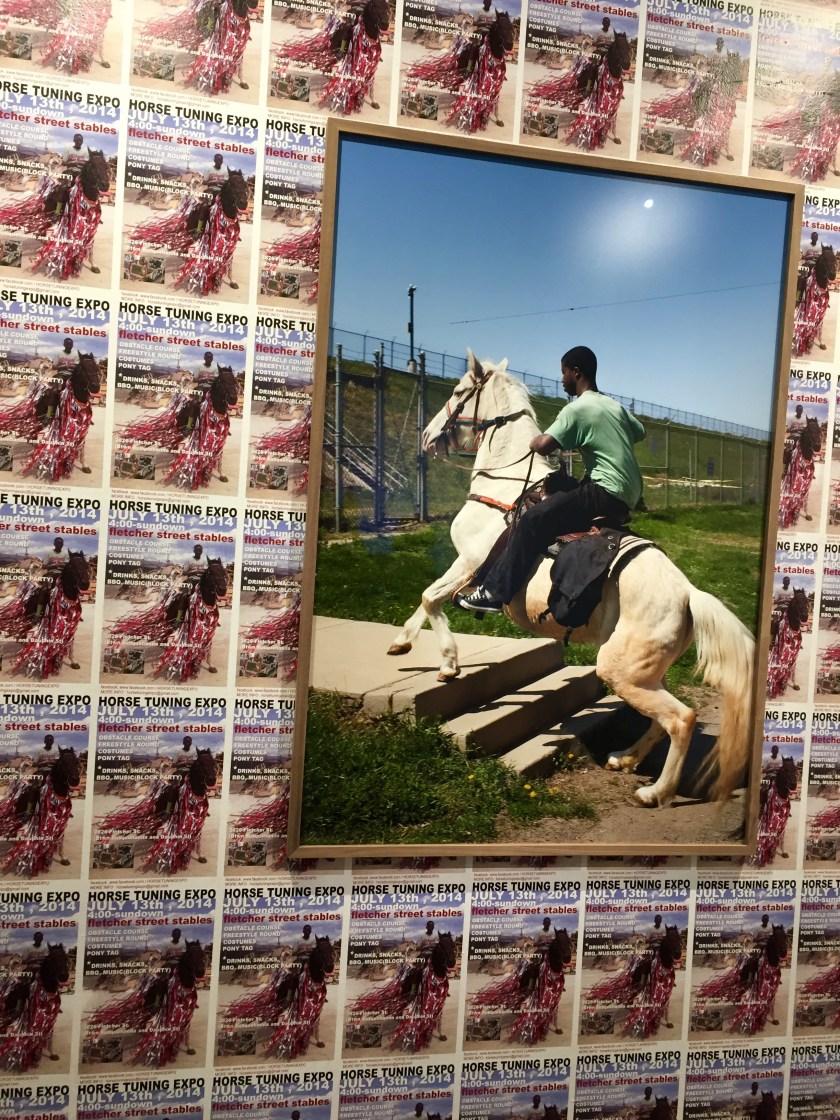
There’s a unique exhibition on at the moment at the Musée d’Art moderne de la Ville de Paris: it’s called ‘Urban Riders’, and it’s the work of Franco-Algerian artist Mohamed Bourouissa.


This is Bourouissa’s first solo exhibition in a French museum, although he has caught the critics’ eye many times before. In fact Bourouissa, who was born in Blida in 1979, is considered by many to be one of the major figures of his generation.

This particular project, which revolves around his film called ‘Horse Day’, was born when he became interested in the Fletcher Street community stables – based in the disadvantaged North Philadelphia neighbourhood of Strawberry Mansion – which he discovered thanks to the images of American photographer Martha Camarillo. Founded by African-American horsemen, the stables are a place of healing and support for local children and young adults and a refuge for abandoned horses (or horses destined for slaughter). Bourouissa addresses daily life at the stables, together with the myth and history of black cowboys and the conquest of wide open spaces, without, however, taking a documentary approach.


During an eight-month residency, he worked at making contact and sharing with the local community. As a result, the film offers a powerful account of an urban utopia.


For what Bourouissa called a  ‘horse tuning’, riders teamed up with local artists to ‘customize’ their equine vehicles, lavishly outfitting them for a festive riding competition that serves as the climax to Horse Day.  Below see some excerpts of the film (if the videos appear to be on their sides, just click on them, and for some mysterious reason they will right themselves).


Apart from the film, the exhibition presents many different items: on-the-spot sketches, preliminary drawings, storyboard, collages, ink roughs and watercolours which fill out the project’s origins and development; portraits of riders and of costumed horses and the actual costumes used on the day, as well as sculptural installations where images from the film are printed onto sections of car bodies.


Along with the seductive combination of horses and art, I do believe in the therapeutic effect of horses on the soul. So, after the exhibition, I was inspired to look up the site of the Fletcher Street Urban Riding Club, a place where local children (some from difficult backgrounds) can go to feel safe, empowered and free, even for a short while.

This is part of what’s on their page:

In the heart of downtown Philadelphia, among abandoned buildings and impoverishes neighborhoods where drugs and unemployment pervade, is a place called Fletcher Street. A block that upon first glance looks just like all the others, that is, until you see the horses and hear their hoof beats.

Horses? In the middle of the ghetto? Surprisingly, yes. They have been here for years, when the African American community thrived in Philadelphia, before drugs and unemployment steadily encompassed healthy neighborhoods and they disintegrated into urban war zones.

Despite it all, the horses have stayed, and they have because of the small, passionate, dedicated group of men determined to reclaim their neighborhood and their children. In this fight, they use the one thing that they know, love and trust, the horses.

Unsurprisingly, it hasn’t all been plain sailing for the non-profit organization. In 2008, clashes with animal-protection agencies led the city government (many say wrongly) to demolish the buildings that served as stables and a clubhouse on a patch of land called Fletcher Field. Despite this, the initiative survived thanks to the dedication of the horse enthusiasts. See it explained in the video below:


There is a similar setup of urban riding in Dublin, Ireland, I believe. There is fantastic work being done with horses and autistic kids, there is Riding for the Disabled, and there is a program for lifers working with mustangs in a prison in Nevada (and elsewhere, I think). All of this has to do with the restorative powers of nature and animals.


For any of you near Paris, the exhibition is on until April 22. Information about it here.

Painting step by step

I have been continuing with my feather series, as you can see from my Instagram feed, but, due to popular demand (drumroll, please), I will now describe the process by which I create the layered ones. Here’s one:

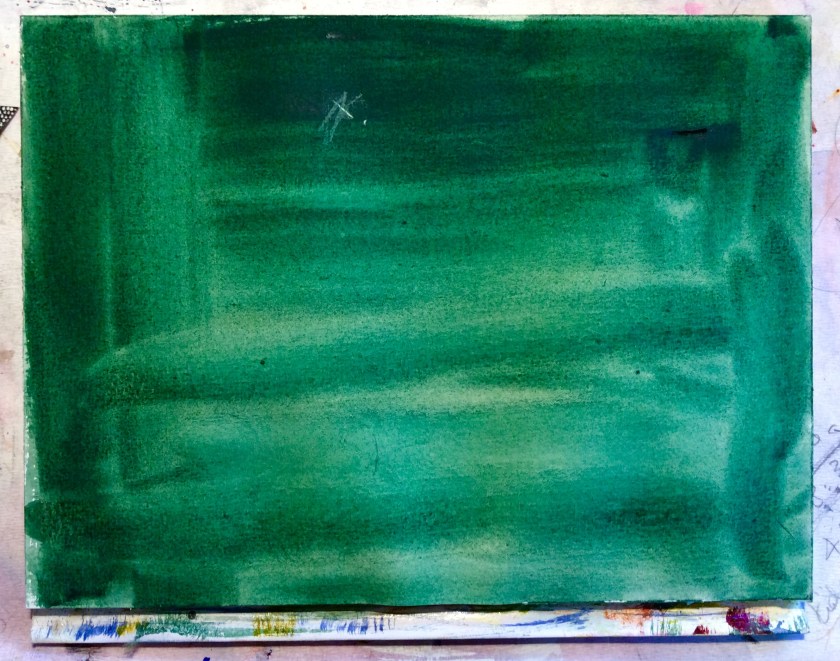
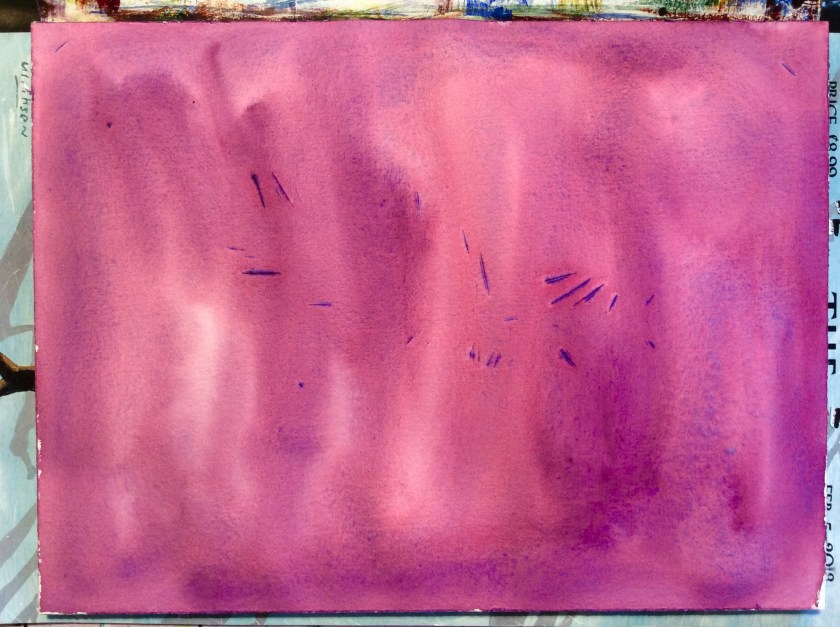
I started with watercolor on a piece of cold-pressed, 300gms paper.


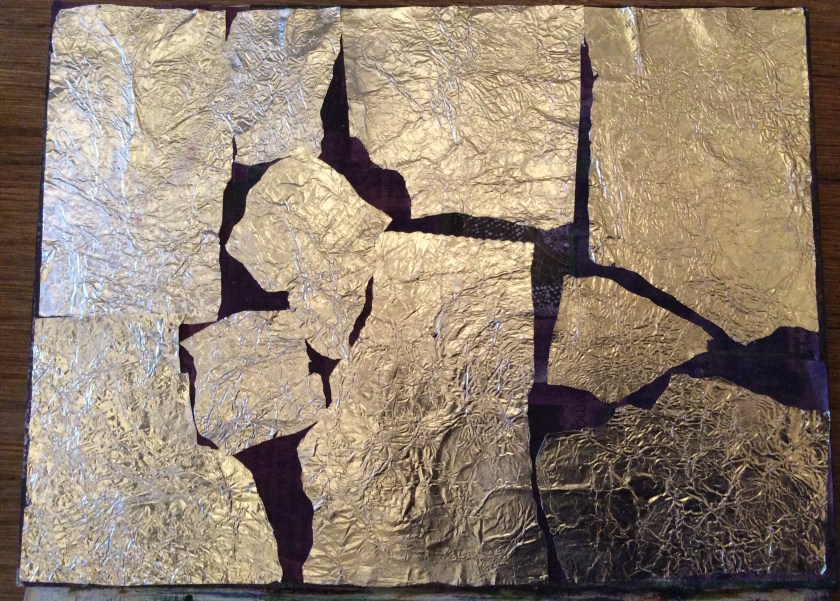
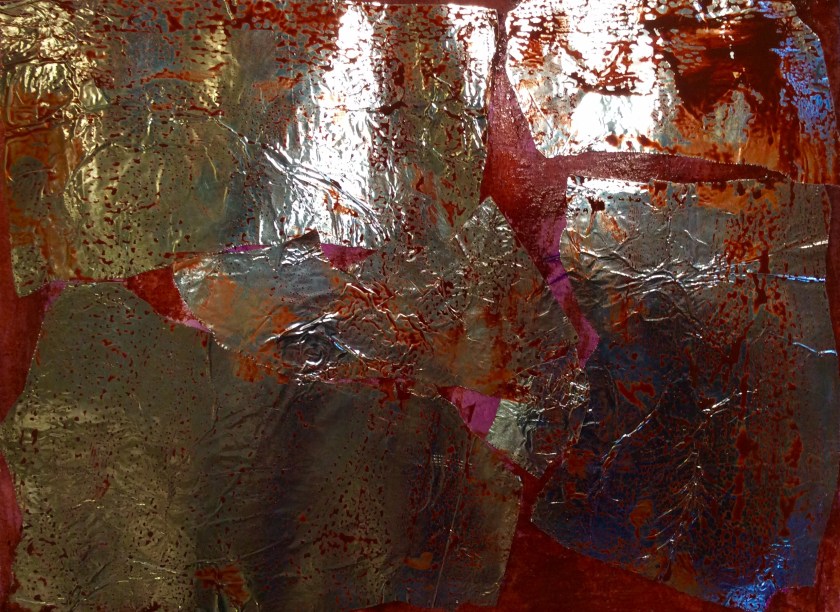
Added random pieces of aluminum foil, glued on with a glue stick.


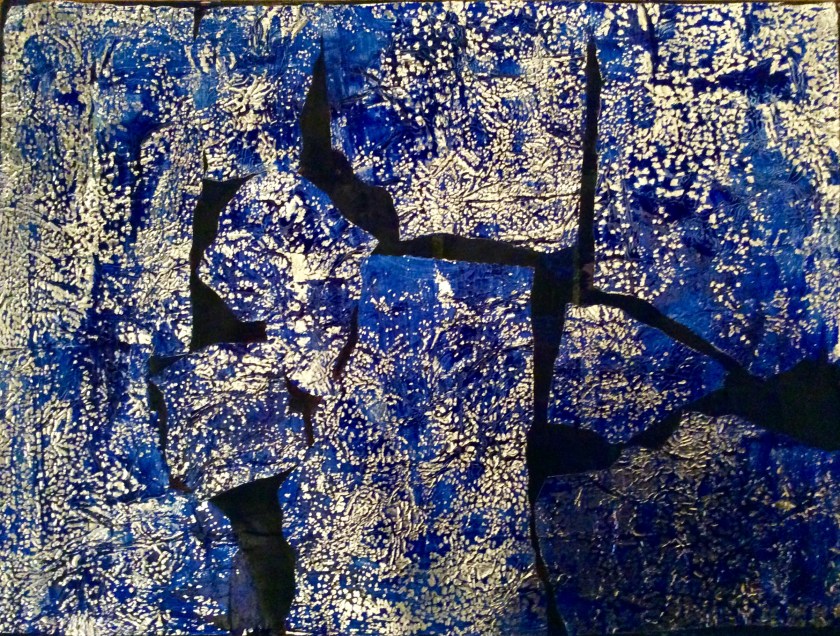
Which I painted over, with watercolor, so the paint is still transparent. Anything with foil is notoriously difficult to photograph, and I’m no photographer – I use my phone!


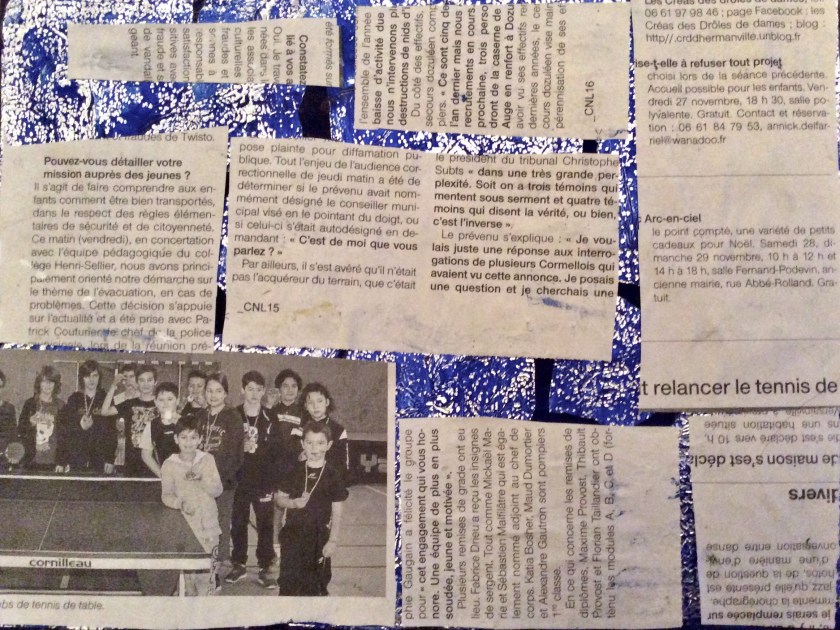
Then I added pieces of cut up newpaper


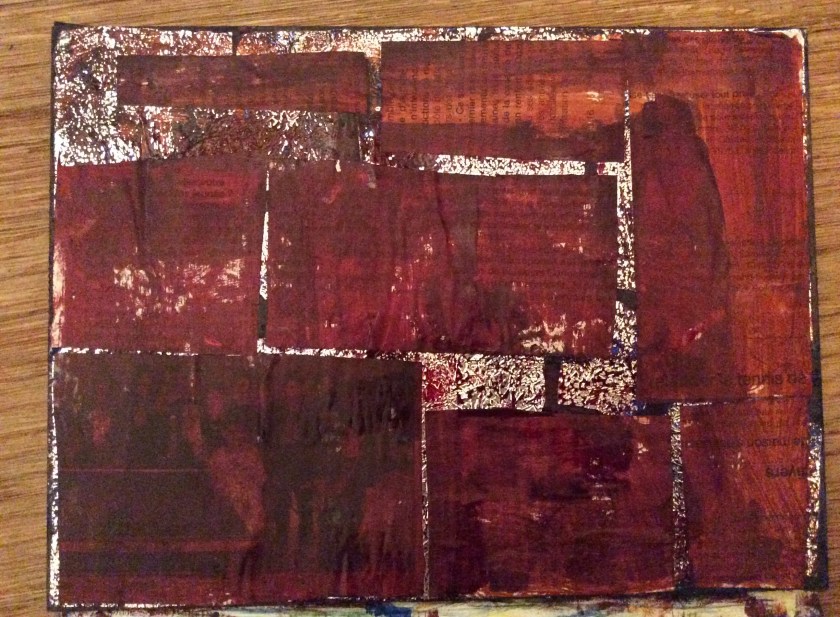
More paint


I glued on a sheet of crumpled tissue paper, which I painted over with white gouache.


Made a rough drawing of a feather


Added color, and another sheet of tissue paper. And now for the fun bit, gouging bits out with a cutter.


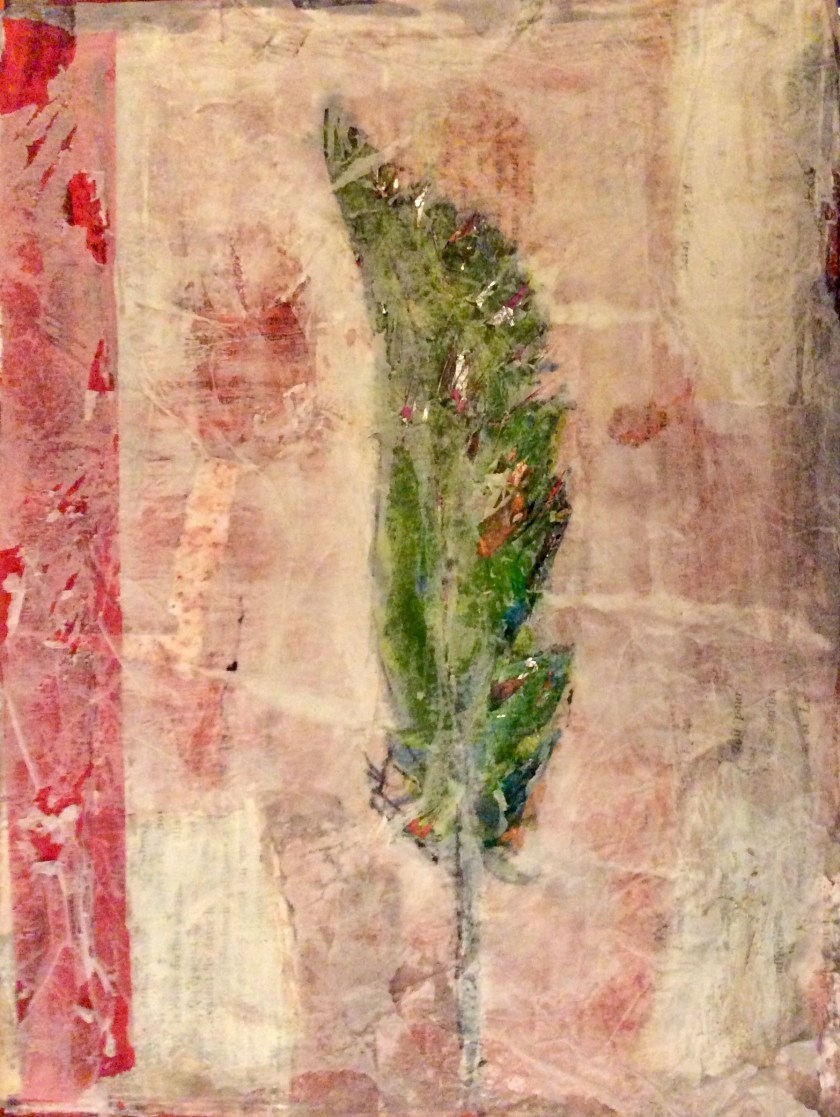
Ta-dah! (more drumrolls). You can zoom in to see more detail.

Original mixed media art by AthensLettersArt.


The process is quite random, since I follow my imagination and whim of the moment. I have lately been inspired by artists who use collage and layers, such as Anselm Kiefer, whose wonderful paintings I wrote about here. Sadly, I do not have the means to use molten lead, so I have to fall back on the humble aluminum foil.

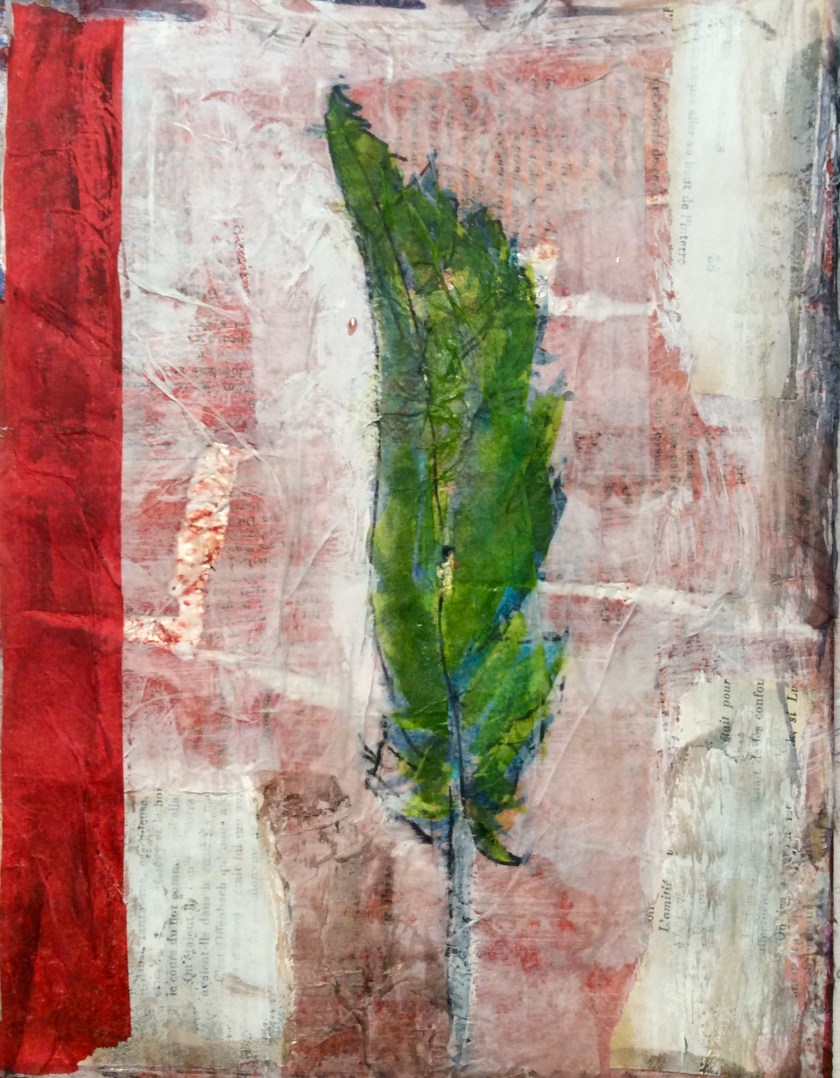
Here’s a différend feather:


Original mixed media paintin by AthensLettersArt


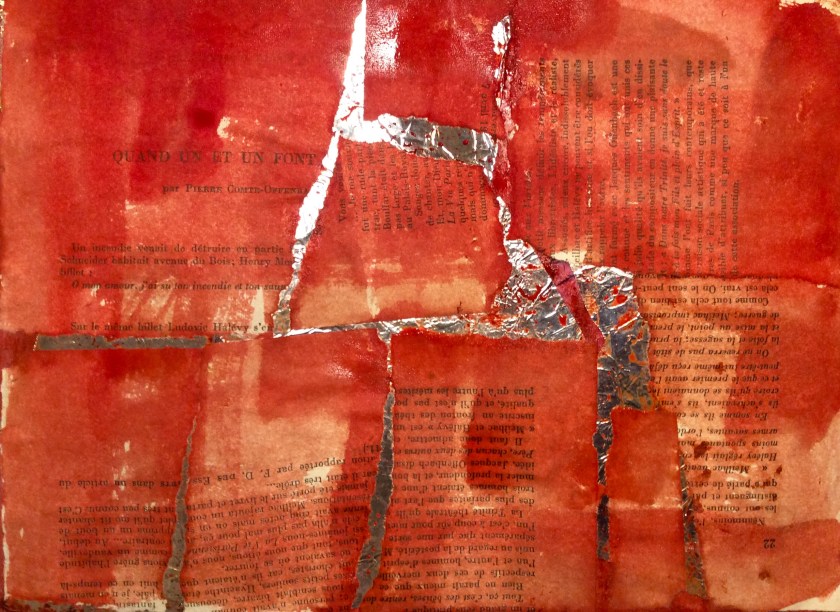
In this case I used torn bits of pages from an old book, and glued a strip of red tissue paper on the left side. I’m tentatively planning to create more feathers to make a up a large mosaic.

Other artists who have inspired me lately are Romare Bearden, Derek Fordjour and Njideka Akunyili Crosby.  l was thinking of writing about them in a future post.

A season for dance

For ballet lovers, Christmas is often a time of indulgence, with a lot of dance companies putting up festive shows. In Athens,  The Nutcracker is on at the Megaron, one of our opera houses, featuring principal dancers from the Bolshoi.

I do not consider myself a connaisseur of ballet but, as most people, I do love a performance by an outstanding artist.


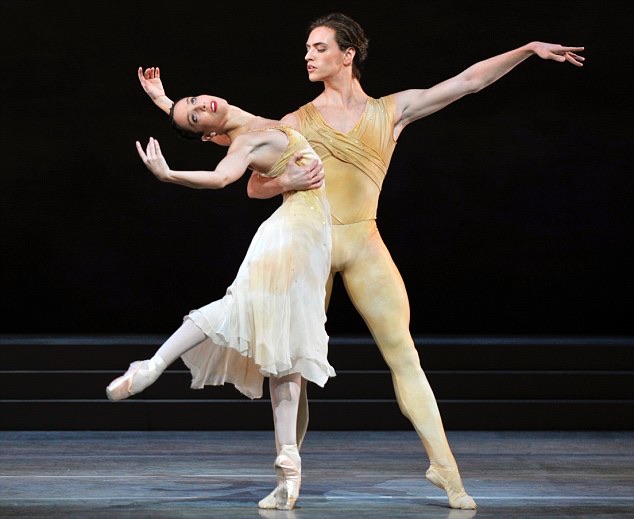
Laura Morera and Sergei Polunin at the Royal Ballet Triple Rhapsody at The Royal Opera House Covent Garden. Source:Google


Some years ago, I watched Baryshnikov dance at the ancient  Herodion Atticus theatre in Athens, on a moonlit summer night. To see him literally flying across that stage was a breathtaking spectacle, and I’ve not seen a male dancer of that caliber since.

So when I came across this video of Sergei Polunin, performing in a barn to the sounds of the song ‘Take me to church’, I thought I’d post it here as a little Christmas gift for all you ballet lovers out there.


Sergei Polunin was born in the Ukraine and started dancing at age three, pushed by his mother who hoped it would be a way for him to escape their difficult existence. The pressure put upon him by his extraordinary talent made for many ups and downs in his life, including quitting the Royal Ballet at just 21, despite having had the best roles laid at his feet. Fortunately, after trying different things such as acting, he always seems to return to ballet.

The ‘Take me to Church’ video went viral, but it is a showy piece of work for someone who is, above all, a true purist of classical dance. That is why I am also posting a more conventional clip of him dancing in Swan Lake.


Enjoy.


Scent of geraniums

I wanted to share this delightful short film, Scent of Geraniums, which is about being a homesick student in a foreign land. A lot of Greeks will identify with this, since the situation in Greek education forces many of them to study abroad – sometimes starting with very limited knowledge of the language they will have to deal with. And people of other nationalities, of course.

The film was made by Naghmeh Farzaneh, an independent Iranian filmmaker and animator based in Chicago. It has won multiple awards.


Nagmeh’s work is reminiscent of another Iranian artist, Marjane Satrapi, and her wonderful graphic novel, Persepolis, which has been made into an animated full length movie. I urge you all to check it out, even if you a not a comics fan. It’s original and very special.  Just read the reviews.


I discovered Scent of Geraniums on the blog The Slippery Edge, it is not unfortunately a WordPress site so I hadn’t the faintest idea how to repost it. Take a look at the blog, however, it has lots of interesting stuff and, on this post, there is more information about the film and its maker.


Naghmeh Farzaneh. Source:Google

Shameless Promotion

The holidays are nearly upon us. I confess I’m running late with gift ideas, and very busy finishing some commissions. I make a lot of my own presents, but I also buy from online friends.

I don’t like to blow my own trumpet, but what could be a nicer gift than original art? It doesn’t need to cost an arm and a leg, either.


I’m a terrible photographer, I know…


Just as a heads up, I’ve updated my Etsy shop, AthensLettersArt, with some small collages. If you’re stuck with ideas for a present for that new baby in the family, or a visiting auntie, take a look. There’s still time for them to arrive before the holidays! I can do gift wrapping, and even framing, if wanted.


Etsy anyway is a good place for handmade gifts 🎁

Happy shopping!


Santa’s workshop 🎄

Shameless bragging

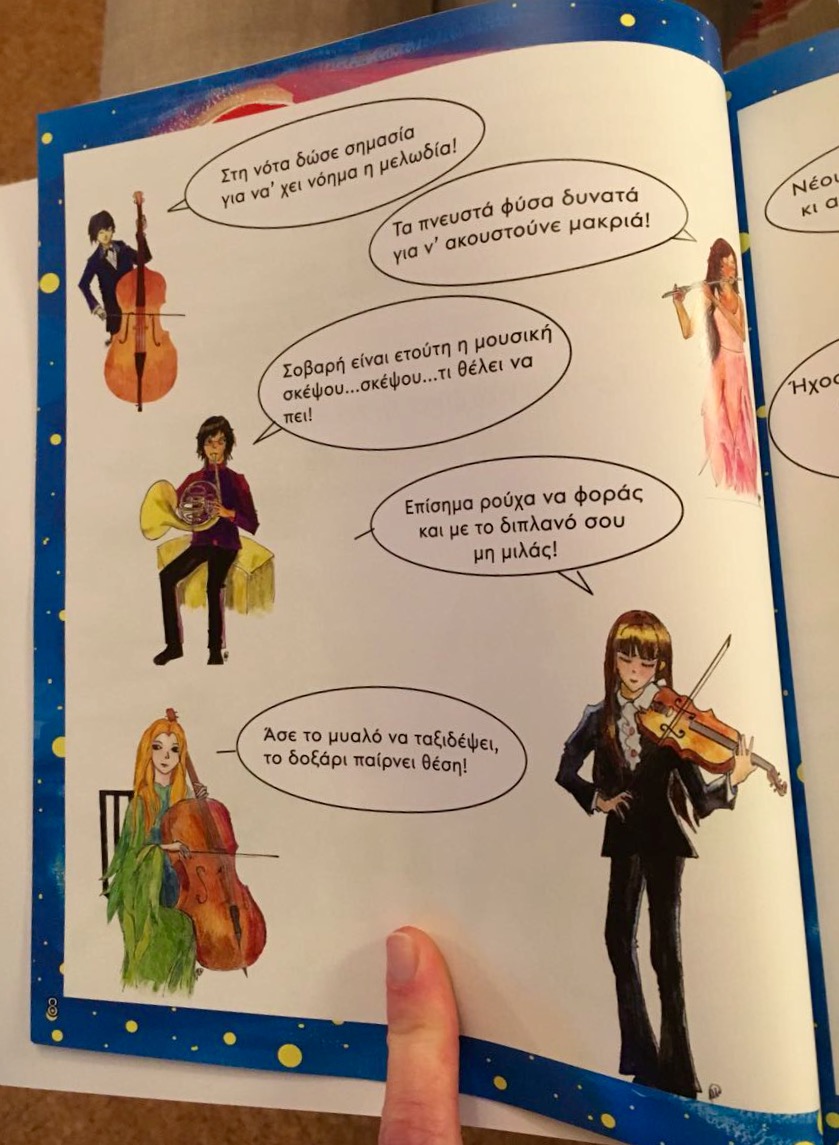
I’m happy to report that the kids’ music book for which I drew the illustrations two years ago (I wrote about it here), is finally out. There were a few problems along the way, involving a change of publisher, but I think the final result was worth the wait.


Front cover: A planet called Tik Tak


Sia Antonaka and Rubini Metzelopoulou have written a happy and rousing tale of musical shenanigans and there is a CD included, with music and songs.

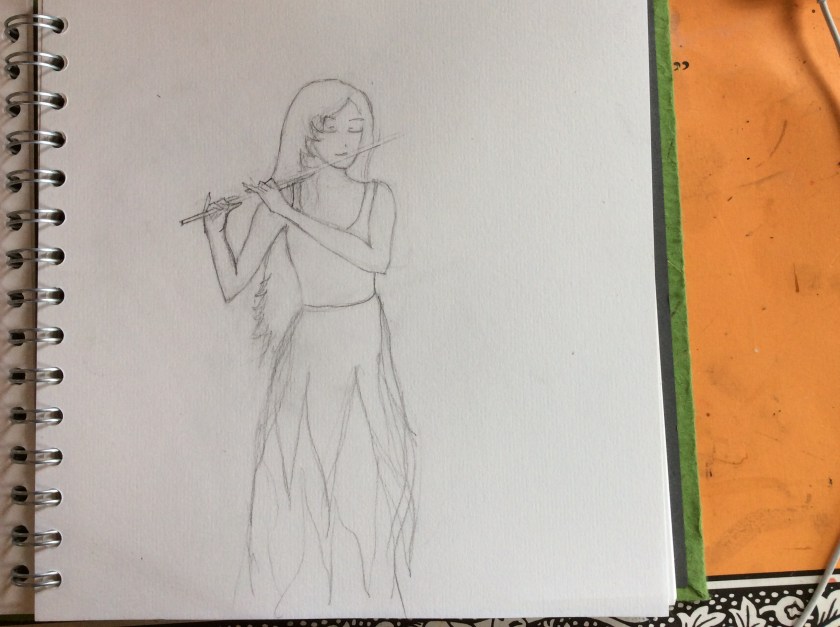
First sketch


A finished drawing


End result. A page in the book


It was fun seeing how my simple drawings were transformed. Unfortunately, I had no part in the process, which disappointed me since I would have enjoyed it, but there it is.


I would really like to do this again in the future, should the occasion arise (hint, hint – any children’s writers out there).


The book is in Greek, so I cannot recommend it to non-speakers, but for Greeks, it is sold  via e-books.gr, as well as in bookstores, such as Tsakalos Stratis and Cambia Books. It will also be distributed to schools.

And should anyone want to contact the authors, their emails are:

siaantonaka1@hotmail.com

Roubinimentzelopoulou@hotmail.com

Edward Dodwell – watercolors of Greece

As a follow up to my post Old Athens, I thought I’d write a few words about Edward Dodwell (1767 – 1832), an Irish painter, traveller and archaeologist, who travelled widely in Greece, making exquisite paintings in the process.


Edward Dodwell was born in Dublin to an ancient and wealthy Irish family, and studied Classics and Archaeology at Trinity College, Cambridge. Being in possession of a large fortune and free from professional commitments, he dedicated himself to the study of Mediterranean cultures.


The dance of the dervishes at the Tower of the Winds in Athens, which was used as a tekije (dervish lodge). Sixteen ostrich eggs hang from the ceiling to avert the evil eye.


Dodwell travelled from 1801 to 1806 in Greece, which was then a part of the Ottoman Empire.

In 1801 he sailed to the Ionian Islands and the Troad with Atkins and the well-known traveller William Gell. In 1805 he visited continental Greece in the company of the painter Simone Pomardi, during which time they produced almost one thousand illustrations. These bring to life a vanished world that, since then, have enchanted European travelers and inspired their passionate pursuit of classical antiquity.


The village of Portaria on Mount Pelion


“Almost every rock, every promontory, every river, is haunted by the shadows of the mighty dead,”  Dodwell wrote, conveying with aesthetic sensitivity the discovery of each place, the journey of exploration of an unknown landscape; and managing to combine monuments, history, and contemporary life.

Dodwell’s paintings contain an immense wealth of information on Greek public and domestic life during the years before the War of Independence. He was often invited to stay in the houses of prominent Greeks.


Dinner at Crisso, near Delphi, in the house of the bishop of Salona.


Apart from archaeological issues, he wrote about the dances, music and games of the Greeks, as well as about local insects and birds.

His observations are varied – he notes, for example, the presence of a number of black slaves in the town of Patras and elsewhere, writes of Ali Pasha’s extortions, and lists the products peculiar to each region.


The bazaar of Athens. On the forefront, on the right, an emancipated African slave. On the doorway, the owner of the coffeehouse who is brigning a tray with coffee to the Ottoman governor Disdar Aga.


Dodwell was in Athens in March 1805, while Lord Elgin’s crews were pillaging the sculptures of the Acropolis monuments.
 

Removal of sculptures from the Parthenon by Lord Elgin’s men


Dodwell published A Classical and Topographical Tour through Greece (1819); Views in Greece, with thirty colored plates (1821); and Views and Descriptions of Cyclopian or Pelasgic Remains in Italy and Greece (1834). These books are still of value to archaeologists today.


He subsequently lived in Naples and Rome, and married a woman thirty years his junior. Unfortunately he caught an illness and died in 1832, while exploring the mountains of Italy. His large archaeological collection, of coins, 115 bronzes and 143 vases, kept for a time in his house in Rome, was later sold to the Munich Glyptothek.

Garden Party

GARDEN PARTY is a weird and wonderful short film, which I discovered on SLIPPERY EDGE, a blog that, in their own words, is ‘focused on the exploration of beauty and creativity. As such our articles aim to showcase these qualities, and to do so we present you with a number of different contemporary professional artists, art students & creators from around the globe, in all domains of arts.’

It’s a great blog for discovering all sorts of new artists, and I urge you all to take a look. However, it is not a WP blog, so I could not discover how to re-post – I just managed to embed the film.

GARDEN PARTY is a short, animated film about two frogs who take over a deserted, if luxurious house. It has already picked up numerous awards. But I shall say no more, just let you discover it for yourselves. I’m curious to see what everyone thinks!