From Camp to Campus

Last year, at a ‘creative marathon’ called Hack the Camp, aimed at finding solutions to the challenges faced by refugees in Greece, a young woman spoke passionately of her desire to continue her university education. She had been a student of Economics at a university in Damascus, but her studies had been abandoned as she fled the war. Her emotional plea was the inspiration for the program “Education Unites: From Camp to Campus”, that will provide higher education scholarships to 100 eligible refugees in Athens and 100 in Thessaloniki.

The program is a collaboration between the U.S. Embassy in Athens, Anatolia College (The American College of Thessaloniki), Deree (The American College of Greece) and Perrotis College (American Farm School).


Lucy Kanatsoulis,  Dean of Enrollment and International Students at Deree – The American College of Greece, declared: “I can think of no better title for the recently launched scholarship program organized by the U.S. EMBASSY in Athens in collaboration with the American College of Thessaloniki – Anatolia College, Deree – The American College of Greece and Perrotis College – American Farm School.

Once refugees and asylum seekers enter the classroom, they become students – like all their classmates from Greece and other parts of the world – with hope for a future filled with opportunities…Education unites all students in their quest for knowledge to achieve their goals in life. And just like that their differences fade and they are all students first.

The refugee crisis in Greece has become one of integration: Providing them with knowledge and skills which they can use either in Greece or in any other country they move to in the future to help them get out of the camps and start working, thus becoming a contributing member of society. There is hope for this program to form a blueprint to be used across many countries who are committed to offering a permanent solution to the refugee crisis, making the campus the vehicle for humanity.

As a young Syrian wrote in his application: “… the thought that I will have the opportunity to study, and do what I do best, has already put a smile on my face.”

After reviewing over 400 applications and interviewing dozens of refugees and asylum seekers, the three U.S. affiliated colleges have selected the first group of students, who have now begun their academic studies.


Classes have started for the young Afghan man who dreams of becoming a pilot; the young lady from Pakistan who wants to become an electrical engineer; the Syrian law student from Aleppo who left her studies unfinished, and the Syrian man who wants to pursue economic and entrepreneurship studies – as well as dozens of other young students who can now aspire to a professional career, a better future, and the possibility of making an essential contribution to any community where they settle.

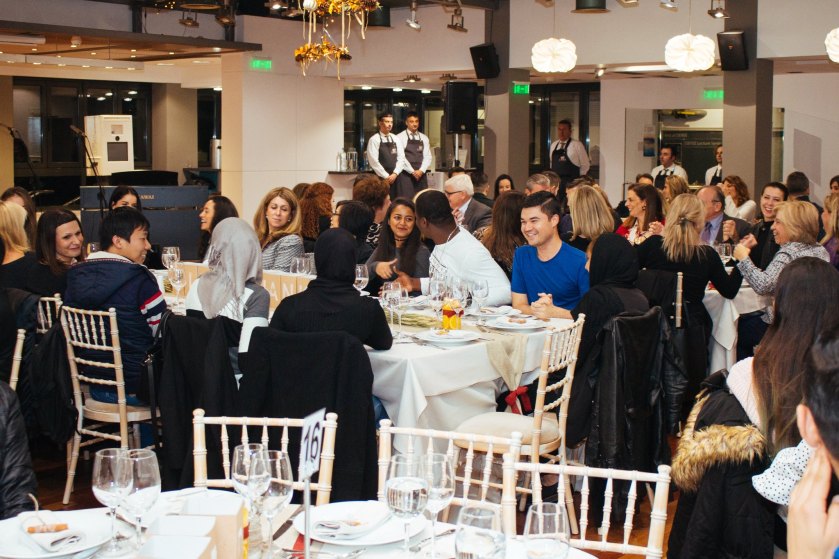
During the first week of October, seventy eight young refugees started their academic studies at Deree, and in November they celebrated at their college with an emotional Thanksgiving party.


Note: You’ve already met Lucy – she did the Monthly Interview in August 2016.

Scent of geraniums

I wanted to share this delightful short film, Scent of Geraniums, which is about being a homesick student in a foreign land. A lot of Greeks will identify with this, since the situation in Greek education forces many of them to study abroad – sometimes starting with very limited knowledge of the language they will have to deal with. And people of other nationalities, of course.

The film was made by Naghmeh Farzaneh, an independent Iranian filmmaker and animator based in Chicago. It has won multiple awards.


Nagmeh’s work is reminiscent of another Iranian artist, Marjane Satrapi, and her wonderful graphic novel, Persepolis, which has been made into an animated full length movie. I urge you all to check it out, even if you a not a comics fan. It’s original and very special.  Just read the reviews.


I discovered Scent of Geraniums on the blog The Slippery Edge, it is not unfortunately a WordPress site so I hadn’t the faintest idea how to repost it. Take a look at the blog, however, it has lots of interesting stuff and, on this post, there is more information about the film and its maker.


Naghmeh Farzaneh. Source:Google

Shameless Promotion

The holidays are nearly upon us. I confess I’m running late with gift ideas, and very busy finishing some commissions. I make a lot of my own presents, but I also buy from online friends.

I don’t like to blow my own trumpet, but what could be a nicer gift than original art? It doesn’t need to cost an arm and a leg, either.


I’m a terrible photographer, I know…


Just as a heads up, I’ve updated my Etsy shop, AthensLettersArt, with some small collages. If you’re stuck with ideas for a present for that new baby in the family, or a visiting auntie, take a look. There’s still time for them to arrive before the holidays! I can do gift wrapping, and even framing, if wanted.


Etsy anyway is a good place for handmade gifts 🎁

Happy shopping!


Santa’s workshop 🎄

Treasure in the sea

In 1900, Greek sponge divers came upon a shipwreck off the island of Antikythera. From a depth of 45 meters they retrieved numerous large artefacts, including bronze and marble statues, pottery, unique glassware, jewellery, coins and various other objects. Among them was a lump of corroded bronze and wood which went unnoticed for two years, while museum staff worked on piecing together the larger statues.

One such was the Antikythera Ephebe, dated 4th century B.C., who now stands in the archaeological museum of Athens.


After some time the above-mentioned ‘lump’ was examined, but investigation led nowhere until 1971, when British science historian and Yale University professor Derek J. de Solla Price and Greek nuclear physicist Charalampos Karakalos thought to use  X-ray and gamma-ray images.
They thus discovered the now famous Antikythera mechanism, an ancient Greek analogue computer and orrery used to predict astronomical positions and eclipses for calendar and astrological purposes. It could also track the four-year cycle of athletic games which was similar (though not identical) to an Olympiad, the cycle of the ancient Olympic Games.

It is a complex clockwork mechanism composed of at least 30 meshing bronze gears.


Antikythera Mechanism, Archaeological Museum of Athens.


Since then, underwater excavations have resumed on the wreck, a large 50-meter ship sailing from Asia Minor to Rome in 1BC. This year on 4 October, an international team excavating the site announced that during a 16-day dive season the previous month, they had found several major statue pieces, including two marble feet attached to a plinth, part of a bronze robe or toga, and a bronze male arm, with two fingers missing but otherwise beautifully preserved. A slim build and “turning hand” gesture suggest that the arm may have belonged to a philosopher, according to archaeologists.

Below is a fascinating film of the expedition, giving a glimpse into what it’s like to be a part of such discoveries. Teamwork, bolstered by technology and plain old elbow grease.


Shameless bragging

I’m happy to report that the kids’ music book for which I drew the illustrations two years ago (I wrote about it here), is finally out. There were a few problems along the way, involving a change of publisher, but I think the final result was worth the wait.


Front cover: A planet called Tik Tak


Sia Antonaka and Rubini Metzelopoulou have written a happy and rousing tale of musical shenanigans and there is a CD included, with music and songs.

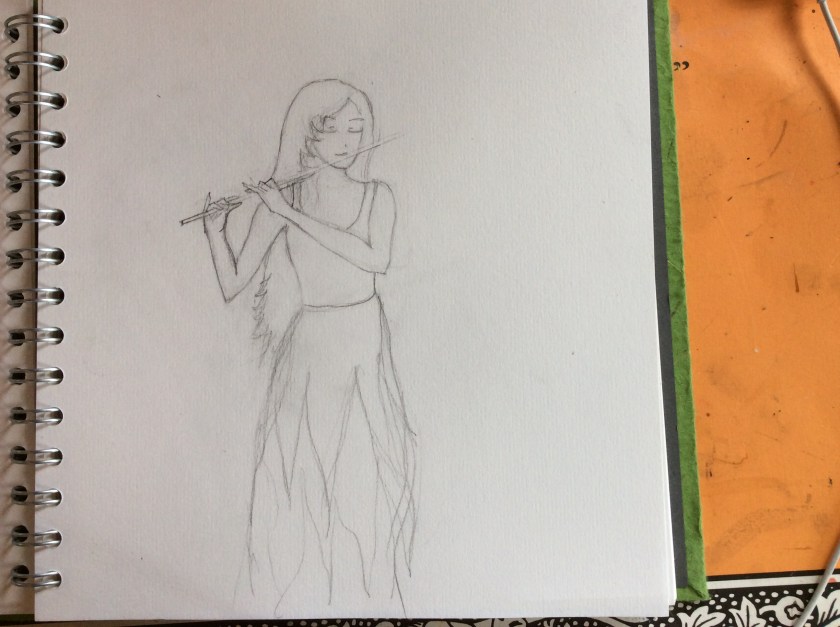
First sketch


A finished drawing


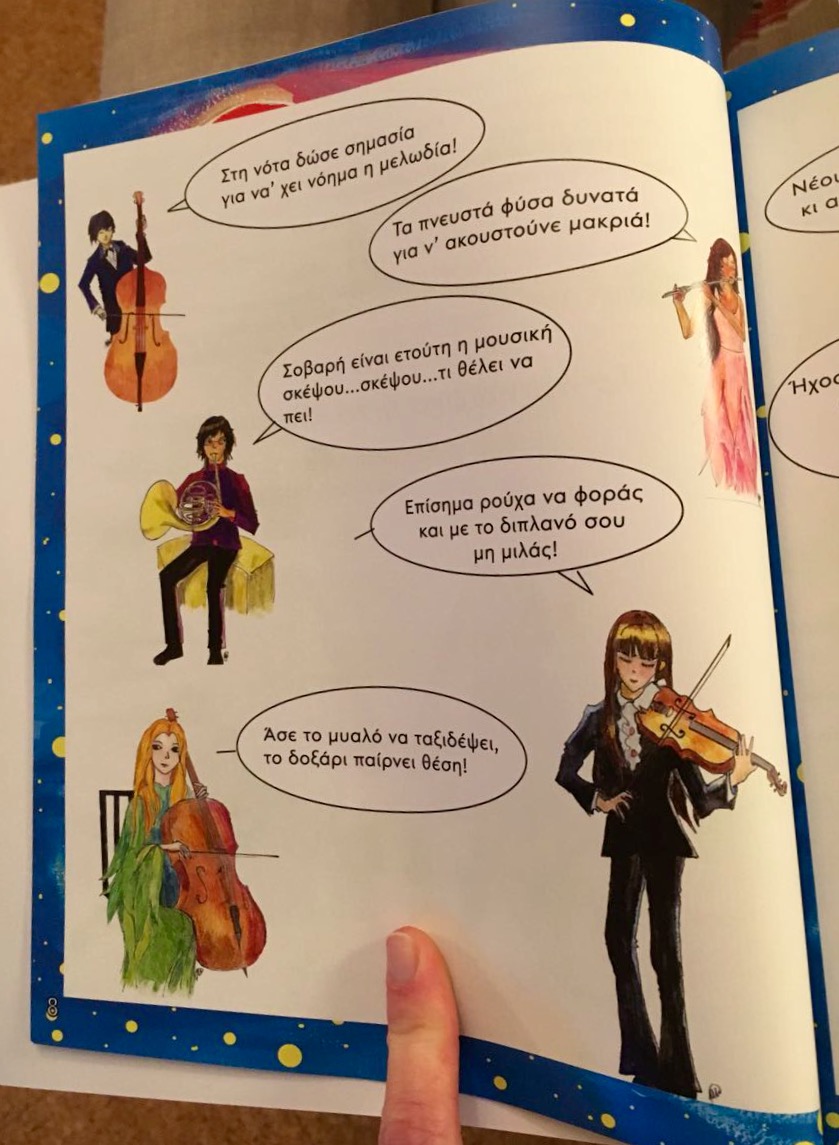
End result. A page in the book


It was fun seeing how my simple drawings were transformed. Unfortunately, I had no part in the process, which disappointed me since I would have enjoyed it, but there it is.


I would really like to do this again in the future, should the occasion arise (hint, hint – any children’s writers out there).


The book is in Greek, so I cannot recommend it to non-speakers, but for Greeks, it is sold  via e-books.gr, as well as in bookstores, such as Tsakalos Stratis and Cambia Books. It will also be distributed to schools.

And should anyone want to contact the authors, their emails are:

siaantonaka1@hotmail.com

Roubinimentzelopoulou@hotmail.com

Edward Dodwell – watercolors of Greece

As a follow up to my post Old Athens, I thought I’d write a few words about Edward Dodwell (1767 – 1832), an Irish painter, traveller and archaeologist, who travelled widely in Greece, making exquisite paintings in the process.


Edward Dodwell was born in Dublin to an ancient and wealthy Irish family, and studied Classics and Archaeology at Trinity College, Cambridge. Being in possession of a large fortune and free from professional commitments, he dedicated himself to the study of Mediterranean cultures.


The dance of the dervishes at the Tower of the Winds in Athens, which was used as a tekije (dervish lodge). Sixteen ostrich eggs hang from the ceiling to avert the evil eye.


Dodwell travelled from 1801 to 1806 in Greece, which was then a part of the Ottoman Empire.

In 1801 he sailed to the Ionian Islands and the Troad with Atkins and the well-known traveller William Gell. In 1805 he visited continental Greece in the company of the painter Simone Pomardi, during which time they produced almost one thousand illustrations. These bring to life a vanished world that, since then, have enchanted European travelers and inspired their passionate pursuit of classical antiquity.


The village of Portaria on Mount Pelion


“Almost every rock, every promontory, every river, is haunted by the shadows of the mighty dead,”  Dodwell wrote, conveying with aesthetic sensitivity the discovery of each place, the journey of exploration of an unknown landscape; and managing to combine monuments, history, and contemporary life.

Dodwell’s paintings contain an immense wealth of information on Greek public and domestic life during the years before the War of Independence. He was often invited to stay in the houses of prominent Greeks.


Dinner at Crisso, near Delphi, in the house of the bishop of Salona.


Apart from archaeological issues, he wrote about the dances, music and games of the Greeks, as well as about local insects and birds.

His observations are varied – he notes, for example, the presence of a number of black slaves in the town of Patras and elsewhere, writes of Ali Pasha’s extortions, and lists the products peculiar to each region.


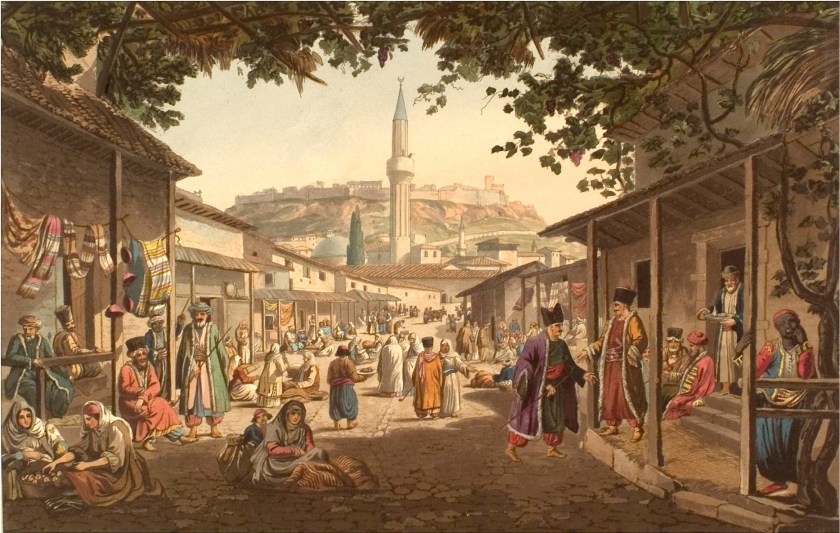
The bazaar of Athens. On the forefront, on the right, an emancipated African slave. On the doorway, the owner of the coffeehouse who is brigning a tray with coffee to the Ottoman governor Disdar Aga.


Dodwell was in Athens in March 1805, while Lord Elgin’s crews were pillaging the sculptures of the Acropolis monuments.


Removal of sculptures from the Parthenon by Lord Elgin’s men


Dodwell published A Classical and Topographical Tour through Greece (1819); Views in Greece, with thirty colored plates (1821); and Views and Descriptions of Cyclopian or Pelasgic Remains in Italy and Greece (1834). These books are still of value to archaeologists today.


He subsequently lived in Naples and Rome, and married a woman thirty years his junior. Unfortunately he caught an illness and died in 1832, while exploring the mountains of Italy. His large archaeological collection, of coins, 115 bronzes and 143 vases, kept for a time in his house in Rome, was later sold to the Munich Glyptothek.

Inktober

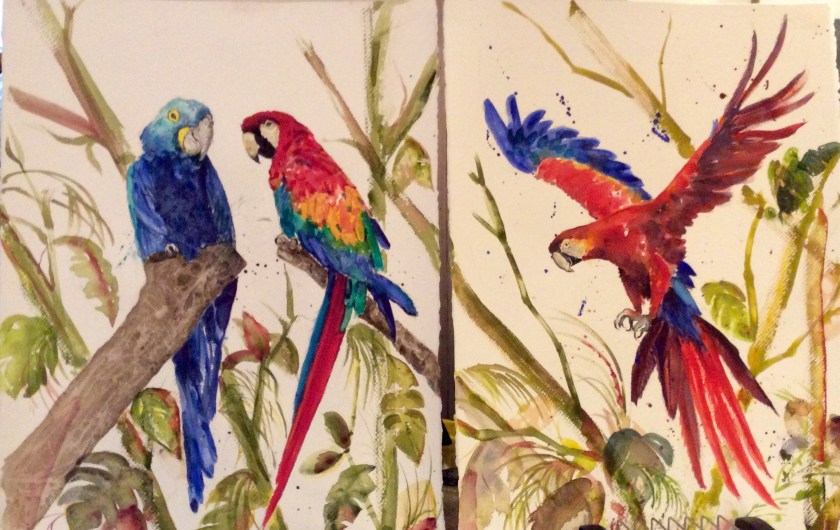
I have not managed to post a lot these last few months –  I’ve been super busy with various things, one of which has been finishing a large parrot diptych which was a wedding present for my niece (and goddaughter) – who got married a whole year ago! Shame on me…


Also I could not resist joining in the Inktober challenge, which consists in posting one ink drawing per day, for the whole month of October. There is a list of prompts available  for anyone who wants to use them, such as ‘swift’, ‘long’, ‘mysterious’, etc. I was so rushed, I couldn’t be bothered, but then I slightly regretted it – it was so fun seeing the wildly different interpretations people put on the same word. A couple of people even wrote a haiku or limerick to accompany their drawing each day. I wish I could share some of them here, but I have no clue whatsoever on how to link to Instagram.


A grumpy owl


The point about these challenges is that there are few rules, no obligation to keep up every day, and no prizes. People do it for the fun, just like a writing challenge, and the pleasure consists in the making, and in seeing what others have made, and commenting when one is so inclined. The #inktober2017 hashtag on IG allows you to find these drawings, if anyone is so inclined.  Many are wonderful – it is amazing what some people can do using nothing but a cheap ballpoint pen.

Below is my own, rather pathetic, attempt.

Sisters – ballpoint and watercolor


Some nights I only really managed a scribble.

Two scruffy dogs


I had planned to use the challenge to push myself in perfecting my technique with ink, which is not my strongest point. I was going to watch some YouTube courses, and practice with various mediums, such as wash, dip pens and ballpoint. Sadly, my lack of time meant that I usually ended up making a quick doodle before bedtime. However, I still had fun (mostly looking at other people’s stuff!)

One day I followed the prompt, which was ‘poison’.


Another, I was inspired by some  pomegranates I had picked.

Bad light, so not a good photo…


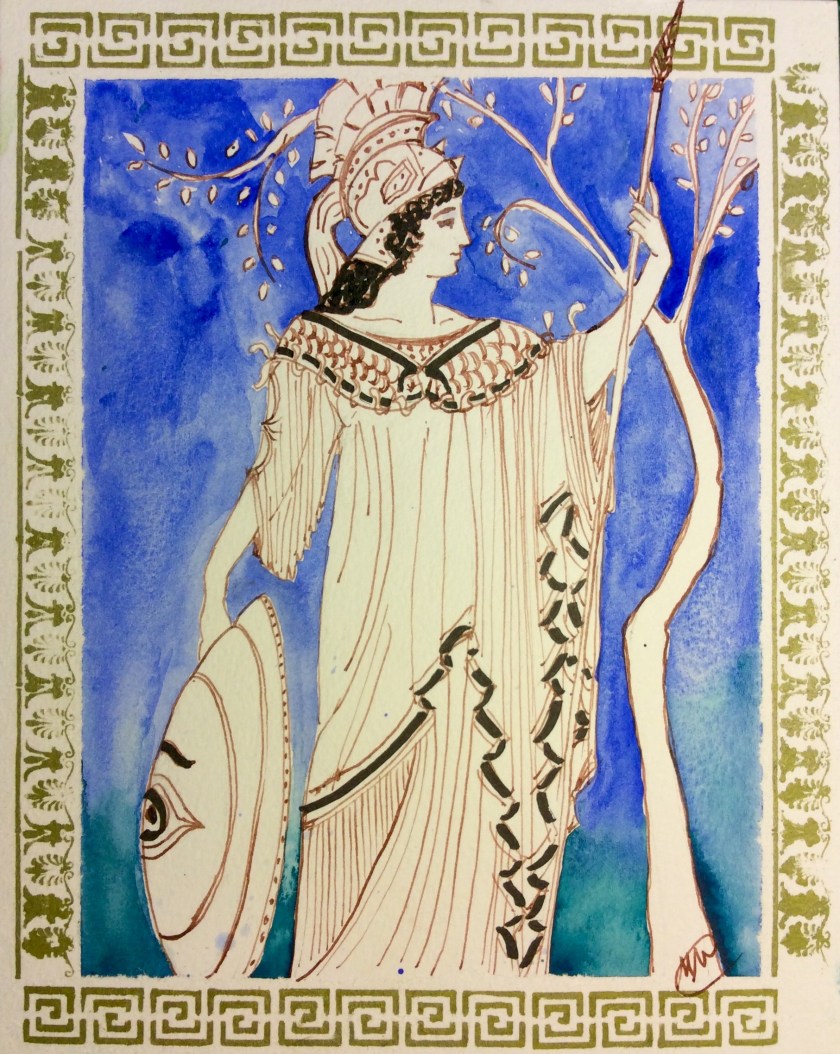
And one night when I had more time, I went back to my Greek roots.

The goddess Athena


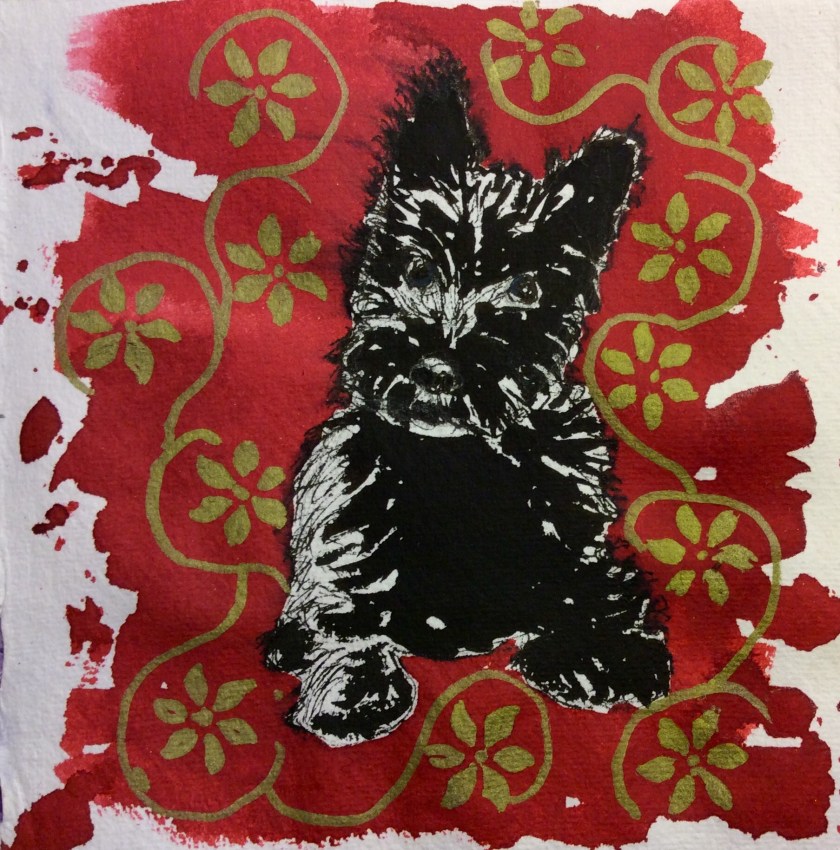
I added some gold to pep this little fellow up.


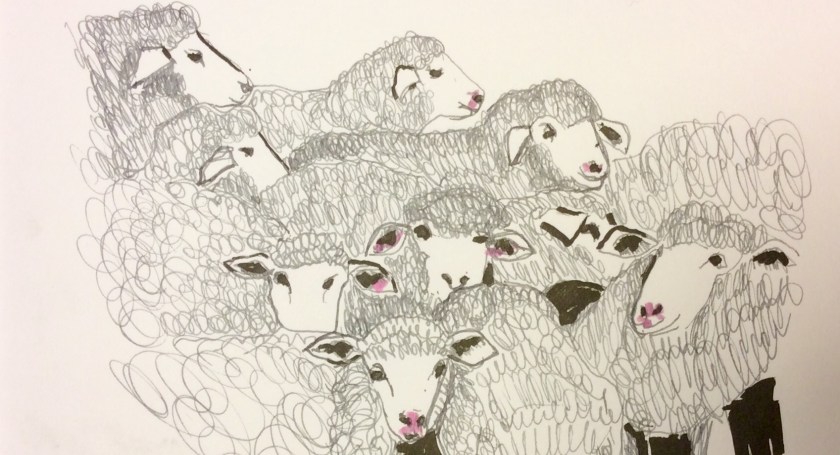
Sheep always make you sleep better!


As does whale song.


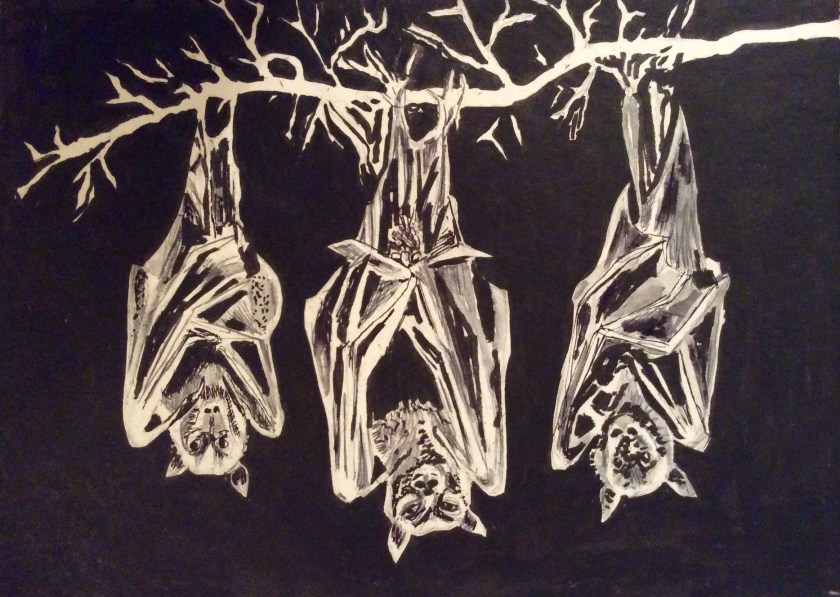
Today is the last day, so I made a special effort. These bats were surprisingly difficult to draw upside down (I forced myself not to turn the paper around), and I tried to concentrate on tone and negative spaces. Amazing how bats remind you of vampires, as well as mummies, isn’t it? They were inspired by a wonderful photo by the award-winning wildlife photographer Pedro Jarque Krebs.


Ok, ok, I know they’re spooky, but it is Halloween, and I’ve  made a pumpkin already!

Ink and collage pumpkin


Garden Party

GARDEN PARTY is a weird and wonderful short film, which I discovered on SLIPPERY EDGE, a blog that, in their own words, is ‘focused on the exploration of beauty and creativity. As such our articles aim to showcase these qualities, and to do so we present you with a number of different contemporary professional artists, art students & creators from around the globe, in all domains of arts.’

It’s a great blog for discovering all sorts of new artists, and I urge you all to take a look. However, it is not a WP blog, so I could not discover how to re-post – I just managed to embed the film.

GARDEN PARTY is a short, animated film about two frogs who take over a deserted, if luxurious house. It has already picked up numerous awards. But I shall say no more, just let you discover it for yourselves. I’m curious to see what everyone thinks!